 Ferndale Siding
 New Roof Installation for Cordata Homes
Cordata sits inland from the water compared to some of the county's shoreline neighborhoods, but it still lives inside the same weather system that shapes every roof in Whatcom County: air carrying salt influence off Bellingham Bay and the Strait, rain that arrives sideways as often as it falls straight down, and a stretch of tree cover and shaded lots that keeps roofs damp longer than homeowners moving here from drier climates tend to expect. A lot of Cordata's housing stock includes established trees close to rooflines, which adds debris and shade to the list of things a roof here has to handle on top of the rain itself. We install roofs in this area regularly, and the way we spec materials, ventilation, and flashing details reflects what actually happens to a roof on a Cordata lot over a full Pacific Northwest winter, not just what a manufacturer's brochure promises.
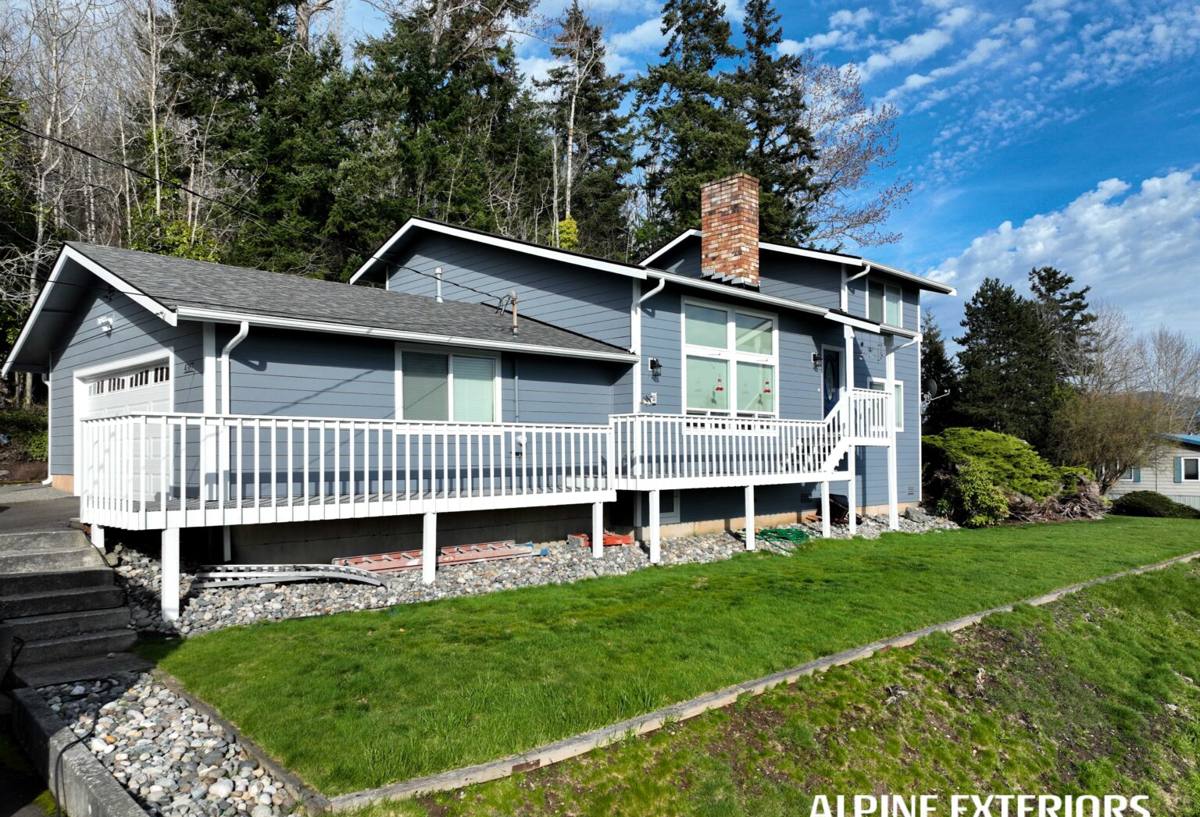
What This Climate Does to a Roof
Salt-Influenced Air
Cordata isn't waterfront, but it's still close enough to Bellingham Bay and the Strait that salt-laden moisture in the air reaches inland neighborhoods more than most people assume. That exposure speeds up corrosion in exposed metal — flashing, fasteners, vent boots, and drip edge — faster than it would in a landlocked climate. Roofing hardware chosen without that in mind tends to rust and fail years ahead of its rated life.
Wind-Driven Rain
Storms moving through Whatcom County frequently push rain in at an angle instead of straight down, and a roof only performs as well as its weakest sealed edge when that happens. Wind-driven rain finds its way under lifted shingles, through poorly lapped underlayment, and around flashing that was installed to look right rather than to actually shed water. Total rainfall numbers don't tell the whole story here — it's the direction and force of the rain that separates a roof that holds up from one that doesn't.
A Long Moss and Mildew Season
Between the region's damp climate and Cordata's tree cover, moss and mildew have a long season to work with — often eight months or more depending on the lot's shade and drainage. Moss doesn't just look bad; its root structure lifts shingle edges and holds moisture directly against the roofing material, which is exactly the condition that leads to premature granule loss and, eventually, decking rot underneath.
Debris Load from Tree Cover
Roofs on tree-shaded Cordata lots deal with more needle and leaf litter than roofs on open sites, and that debris collects in valleys and gutters where it holds water against the roofing material. A roof design that doesn't account for shaded, tree-heavy lots — enough valley protection, gutters sized and pitched correctly — ends up doing extra maintenance work that a better-designed system wouldn't need.
Choosing a Roofing System for a Cordata Property
There isn't one correct roofing material for every home, but there is a correct way to match the material to the site. On a shaded, moss-prone Cordata lot, we weigh moss resistance and long-term maintenance heavier than we would on an open, sun-exposed property, because the difference in performance between products widens under sustained shade and moisture.
| Roofing Type | Typical Lifespan | How It Handles This Climate |
|---|---|---|
| Architectural asphalt shingle | 25-30 years | Solid performer when installed with proper underlayment and moss-resistant granules; needs periodic moss removal on shaded lots |
| Standard 3-tab asphalt shingle | 15-20 years | Lower upfront cost but less wind resistance and shorter service life under sustained wet-season exposure |
| Standing seam metal | 40-50+ years | Sheds moisture and moss buildup better than shingle roofs; higher upfront cost, strong long-term value on heavily shaded lots |
| Composite/synthetic shake | 30-40 years | Good moisture resistance and appearance; installation detail matters more than with standard shingle |
We'll walk through these trade-offs against your specific lot — how much shade it gets, how the roof drains, and what you're trying to balance between upfront cost and years of low-maintenance performance — rather than steering every homeowner toward the same product.
What a Correct New Roof Installation Involves
The material on top is only part of a roof's performance. The layers underneath, and the details most homeowners never see once the job is done, are what actually determine whether a roof handles a Whatcom County winter or starts leaking in year four.
- Full tear-off: We remove existing roofing down to the deck rather than layering over it, so we can inspect and repair the sheathing underneath before anything new goes on.
- Deck inspection and repair: Soft, delaminated, or water-stained decking gets replaced before new underlayment goes down — covering damaged decking just hides a problem that will resurface.
- Synthetic underlayment: We use synthetic underlayment rated for sustained moisture exposure rather than older felt products that degrade faster under this region's wet-season conditions.
- Ice and water shield at vulnerable points: Eaves, valleys, and roof-to-wall transitions get self-adhering waterproof membrane, since these are the spots wind-driven rain exploits first.
- Correct flashing at every penetration: Vents, chimneys, skylights, and wall intersections are flashed with corrosion-resistant metal, not just sealed with caulk that will eventually crack and fail.
- Balanced ventilation: Intake and exhaust venting sized to the attic keep moisture from condensing inside the roof assembly, which matters as much as keeping rain out from above.
- Manufacturer-spec fastening: Nailing patterns follow the manufacturer's wind-rated specification, not a faster shortcut pattern that voids the warranty and underperforms in a storm.
Our Process, Start to Finish
Inspection and Estimate
We start by getting on the roof, not just looking at it from the ground. That means checking the decking, flashing, ventilation, and the condition of the current roofing material before we recommend anything, so the estimate reflects what your roof actually needs rather than a generic package.
Material Selection
Once we know the condition of the roof and the specifics of the lot — shade, tree cover, drainage — we walk through material options and their trade-offs so you're choosing based on real information about your property, not just a price sheet.
Tear-Off and Installation
We remove the old roofing, repair any deck damage we find, and install the new system to manufacturer spec, including underlayment, flashing, and ventilation. We keep the site protected and cleaned up throughout, including magnetic sweeps for stray fasteners.
Final Walkthrough
Before we consider the job finished, we walk the roof and the property with you, explain what was done, and make sure you understand what basic maintenance, if any, the new system needs going forward.
Cost Factors for a Cordata Roof Replacement
| Factor | What It Affects | Why It Matters in Cordata |
|---|---|---|
| Roof size and pitch | Material and labor quantity | Steeper pitches and larger footprints take more time and material to do correctly |
| Deck condition | Repair costs discovered during tear-off | Shaded, moisture-prone lots see more decking rot under aging roofing than dry, open lots |
| Material choice | Upfront cost vs. long-term maintenance | Moss-prone lots benefit from materials that resist growth better, even at a higher upfront cost |
| Tree cover and access | Labor time, debris protection, staging | Cordata's tree-lined lots often need extra care and time to protect landscaping during tear-off |
| Ventilation upgrades | Attic moisture control | Older homes in the area frequently have undersized ventilation for current code and climate demands |
Exact pricing depends on your specific roof, which is why we give a real number after an in-person inspection rather than a phone estimate.
Signs Your Cordata Roof Needs Replacing
- Granules collecting in gutters or at the base of downspouts
- Moss that returns quickly after cleaning, especially on shaded, north-facing slopes
- Curling, cracked, or missing shingles, particularly after a windstorm
- Soft spots or visible sagging when viewed from the ground
- Daylight visible through the attic decking or roof boards
- Water stains on interior ceilings or in the attic near penetrations
- A roof approaching or past 20-25 years old with no major work done
Why a Crew That Already Works Cordata Matters
A roofer who works this part of Whatcom County regularly knows which Cordata lots hold shade the longest, which valley and gutter designs actually keep up with tree debris, and where salt-influenced air does its damage even miles from open water. That knowledge shows up in decisions made on install day — extra attention to a north-facing valley, a fastening pattern chosen for local wind patterns, ventilation sized for how damp the attic space actually runs here — not just in a sales pitch. A crew without that local, hands-on experience is more likely to install a roof that performs fine on paper but underperforms once it meets a real Whatcom County winter.
Ready for an Honest Look at Your Roof?
If your Cordata home needs a new roof, or you're not sure whether you're looking at a repair or a full replacement, we're glad to take a look and give you a straight answer. Reach out using the form below to schedule a free, no-pressure estimate.