 Ferndale Siding
 Windows Built for Cordata's Weather, Not Just Its Style
Cordata sits close enough to Bellingham Bay and the Whatcom County lowlands that homes here deal with a specific mix of weather stress: salt-laden air drifting in off the water, long stretches of driving rain that comes in sideways during winter storms, and a moss season that can run from October well into spring. None of that is dramatic on its own, but stacked together year after year, it's exactly the kind of slow, steady exposure that finds every weak point in a window installation. A window that would hold up fine in a drier inland climate can fail early here if it wasn't installed with this specific environment in mind.
This page is about one job, done right, in one area: window installation for Cordata-area homes. Not a general overview of window brands, not a sales pitch — just what actually matters when you're replacing or installing windows on a house that has to shed water, resist salt corrosion, and stay ahead of moss and mildew for the next twenty-plus years.
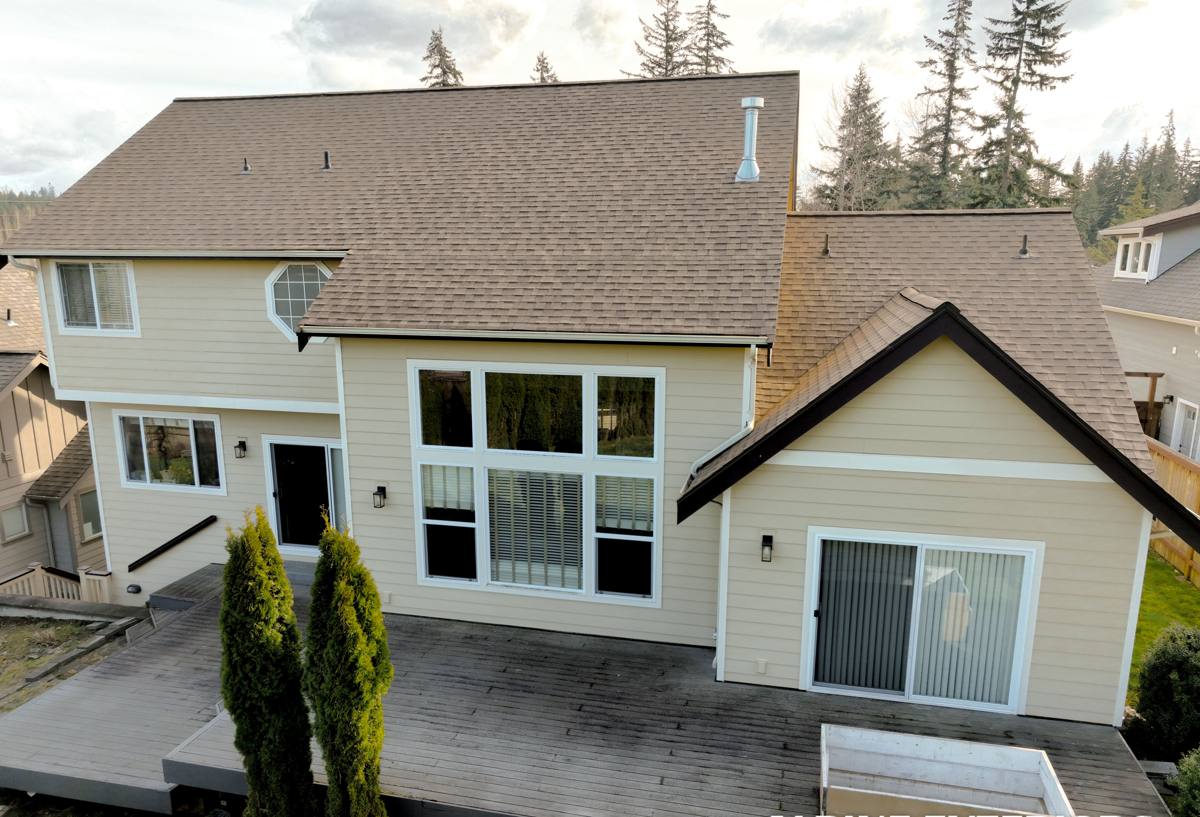
Why the Local Climate Changes the Job
Salt Air and Metal Fatigue
Proximity to Bellingham Bay means airborne salt is a constant, low-level presence, even a few miles inland. Salt accelerates corrosion on unprotected metal fasteners, cheaper window hardware, and aluminum components that aren't rated for coastal exposure. Over time this shows up as pitted or seized hardware, stained sills, and locks or cranks that stop working smoothly. It's not usually dramatic failure — it's a slow degrading that homeowners often chalk up to "the window getting old" when it's really a materials mismatch with the local air.
Driving Rain and Wind-Driven Water
Whatcom County storms frequently bring rain at an angle, not straight down. That matters enormously for window installation because it means water is being pushed against and around the window unit under pressure, not just running down the glass. A window that's caulked well but not properly flashed can look fine in a light rain and still leak during a real winter storm, because the water finds the path around the frame rather than over it.
Moss, Mildew, and Prolonged Dampness
The long wet season means anything that traps moisture against wood trim, sills, or siding gets a real head start on rot and moss growth. Window openings are one of the most common places this happens, because a poor seal or missing drip cap holds water right at the transition between window and wall for months at a time. By the time moss or soft wood is visible from outside, there's often already damage happening behind the trim.
Signs a Cordata Home Needs New Windows or a Re-Install
- Visible condensation between panes (a failed seal on the insulated glass unit, not fixable by cleaning)
- Soft or discolored wood trim or sill, especially on the side of the house that takes the most weather
- Drafts you can feel near the frame even when the window is fully latched
- Windows that are difficult to open, close, or lock — often a sign of frame warping or corroded hardware
- Moss or persistent green staining building up on the sill or the siding just below the window
- Noticeably higher heating bills without another clear explanation
- Peeling paint or bubbling caulk around the window perimeter
What a Correct Window Installation Actually Involves
Window installation is judged almost entirely on what you can't see once the trim goes back on. A window that's the wrong product but installed correctly will usually outperform the right product installed poorly. In this climate, a correct installation means:
Proper Flashing, Not Just Caulk
Caulk is a first line of defense, not a waterproofing system on its own. A correct install uses flashing tape and, where applicable, a sill pan to direct any water that gets past the exterior finish back out and away from the wall framing — before it ever reaches the caulk line. This is the single most common corner cut on rushed jobs, and it's the one most likely to cause hidden rot given how much driving rain this area gets.
Correct Sizing and Shimming
An undersized or oversized rough opening leads to gaps that get packed with excess caulk or spray foam as a workaround. That's a patch, not a fix — it fails faster than a properly shimmed, square, level installation, especially once the house settles or the seasons cycle the framing through wet and dry.
Insulation Without Gaps or Over-Packing
The gap between the window frame and the rough opening needs to be insulated evenly. Gaps left empty become cold spots and air leaks. Over-packed spray foam can actually bow the window frame inward, which then causes the window to bind or operate poorly — a problem that sometimes doesn't show up until months later.
Corrosion-Resistant Hardware and Fasteners
Given the salt air here, we use fasteners and hardware rated for coastal or marine-adjacent exposure rather than the base-grade hardware that ships with some window packages. It costs a little more up front and saves a service call in five years.
Exterior Sealing Sequenced Correctly
Sealant has to go on in the right order relative to the flashing and trim — sealing the wrong layer, or sealing before flashing is done, traps moisture instead of shedding it. This is a detail that's easy to get backwards if a crew is moving fast.
Our Process, Step by Step
- On-site assessment — We look at existing window condition, sill and trim health, and how that specific wall faces prevailing wind and rain before recommending anything.
- Product selection — We walk through frame material, glass package, and style options based on your home's exposure, budget, and how the window will actually be used (opening frequently, fixed picture window, etc.).
- Removal — Old windows come out carefully, and we inspect the rough opening and framing for hidden rot or damage before anything new goes in. This is often when we find problems the homeowner didn't know existed.
- Repair as needed — Any soft framing, damaged sheathing, or rot gets addressed before the new window goes in. Installing a new window over a compromised opening just hides the problem temporarily.
- Flashing and sill pan installation — Water management goes in first, before the window itself.
- Window setting — Square, level, plumb, and properly shimmed, then fastened per manufacturer specification.
- Insulation — Even, low-expansion fill around the frame perimeter.
- Exterior and interior trim and sealing — Finished in the correct sequence so water sheds outward.
- Final walkthrough — We test operation, check seals, and walk the homeowner through what to look for going forward.
Frame Material Comparison for This Climate
| Frame Material | Salt Air / Moisture Behavior | Maintenance | Typical Fit |
|---|---|---|---|
| Vinyl | Good corrosion resistance; won't rot; can be prone to warping in extreme temperature swings, which is less of an issue in this mild coastal climate | Low — occasional cleaning | Most Cordata homes, cost-conscious replacements |
| Fiberglass | Excellent — very stable in moisture and temperature, strong resistance to salt exposure over time | Low | Homes with heavier weather exposure or longer ownership horizon |
| Wood (clad exterior) | Attractive but exterior cladding must be intact and sealed — any breach exposes wood to our wet season | Higher — periodic inspection of cladding and seals | Homeowners prioritizing interior wood look, willing to maintain it |
| Aluminum | Prone to corrosion in salt air unless specifically coated; also a poor thermal performer | Moderate to high | Generally not our first recommendation for this area given the trade-offs |
We don't push one material for every home. A lot of it comes down to how exposed the specific wall or elevation is, how long you plan to own the home, and what you're comfortable maintaining.
What Drives Cost
| Factor | Why It Matters |
|---|---|
| Number and size of openings | More straightforward math — more windows, more material and labor |
| Frame material and glass package | Fiberglass and upgraded low-E or triple-pane glass cost more than base vinyl double-pane |
| Condition of existing framing | Rot repair discovered during removal adds time and material — this is common enough in this climate that we always budget contingency for it |
| Full-frame vs. insert replacement | Full-frame replaces flashing and sill pan too, which costs more but is often the right call when there's existing water damage |
| Access and second-story work | Height and access affect labor time and equipment needs |
We give straightforward, honest ranges during the on-site estimate rather than a number over the phone, because the condition of the existing opening genuinely changes the scope more than people expect.
Why Hiring a Crew That Already Works Cordata Matters
Window installation isn't unique to Ferndale or Whatcom County in principle, but the details that separate a lasting install from a callback-prone one are very much shaped by local conditions. A crew that regularly works in this specific climate has already seen what fails here: which flashing details actually hold up against driving rain, which hardware corrodes fastest in the salt air, and which framing details tend to hide rot behind trim in homes of a certain age or construction style common to this area. That's knowledge you don't get from a manufacturer's install manual alone — it comes from doing the work here, repeatedly, and seeing what happens five and ten years later.
It also means we're not guessing at code requirements, permitting expectations, or typical construction practices for homes in this part of Whatcom County. That familiarity shows up in fewer surprises during the job and fewer problems after it.
Mistakes We See on Prior Installations
A meaningful share of the window work we do in the Cordata area is correcting or replacing installations that were done without accounting for local weather. The most common issues we find when removing old or poorly installed windows:
- Caulk used as the primary water barrier with no flashing or sill pan underneath
- Rot in the framing that was covered by trim rather than repaired
- Standard hardware and fasteners already showing corrosion well before the window's expected lifespan
- Gaps around the frame packed with excess spray foam instead of properly shimmed and insulated
- Windows installed slightly out of square, causing premature seal wear and operational problems
None of these are visible from the street, which is exactly why they tend to go unaddressed until there's a leak or a visible sign of rot.
Caring for New Windows in This Climate
A correct installation is most of the battle, but a little seasonal attention extends the life of any window in this environment:
- Rinse frames and sills periodically to clear salt residue, especially after storms
- Check and clear weep holes so water can drain rather than pool
- Inspect exterior caulking annually, particularly after the wettest months
- Keep gutters and downspouts clear so runoff isn't sheeting down over window openings
- Address any moss or green staining near sills promptly rather than letting it sit through another wet season
Get a Straightforward Estimate
If you're dealing with drafty, foggy, or hard-to-operate windows on a Cordata-area home, or you're planning ahead for a full replacement, we're happy to take a look and give you an honest assessment — no pressure, no inflated urgency. Use the form below to request a free estimate, and we'll walk the property, check your existing windows and framing, and talk through what actually makes sense for your home and budget.