 Ferndale Siding
 Fiber Cement Siding for Custer Homes
Custer sits out in the low farmland and scattered acreage north of Ferndale, close enough to the open water of the Salish Sea that salt-laden air reaches homes here on a regular basis, and far enough from town that properties tend to sit on bigger lots with more tree cover than a typical in-town Ferndale address. That combination — salt air, driving rain that blows in sideways off the water, and shade from mature trees that keeps walls damp longer than they'd stay in full sun — adds up to one of the tougher exterior environments in Whatcom County for ordinary siding. We install fiber cement siding in Custer regularly, and the material and installation approach we bring to these jobs is built specifically around what that exposure does to a wall over time, not a generic siding job dropped into a different setting.
We install James Hardie fiber cement siding exclusively. For a Custer property dealing with salt air, sustained rain, and shaded, moss-prone wall areas, it's the system we recommend without hesitation.
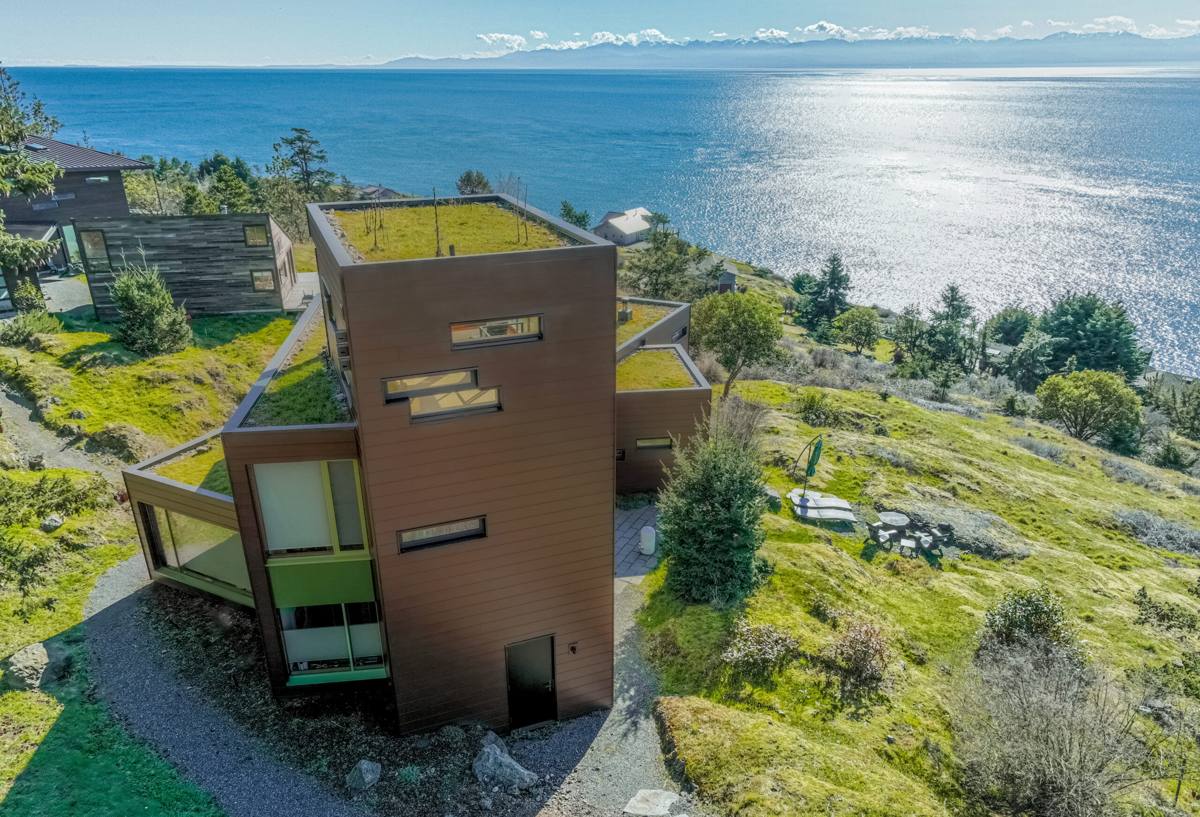
What Custer's Climate Actually Does to Siding
Salt Air and Metal Fastener Corrosion
Salt-laden air doesn't just sit on the surface of a wall — it works its way into fastener heads, exposed metal flashing, and any seam where two materials meet. Over years, that steady low-level salt exposure corrodes ordinary fasteners and cheaper flashing faster than it would on a home further inland, and once a fastener starts to fail, the siding around it loses its grip and starts working loose in wind. Materials and hardware that aren't rated for coastal-adjacent exposure tend to show this kind of failure first, often years before the siding itself would otherwise need attention.
Driving Rain on Exposed, Open Lots
Custer's open farmland setting means less wind buffering from neighboring buildings than a tighter in-town lot has, so storms coming off the water push rain sideways into siding, trim, and window flashing with real force. Siding that's detailed to shed rain falling straight down — rather than rain being driven horizontally into every seam and corner — tends to show water staining and soft spots first at butt joints, corners, and anywhere flashing is doing less work than it should.
A Long Moss and Mildew Season
Mature trees are common on Custer's larger lots, and the shade they throw keeps north- and east-facing walls wet well after a storm has passed and the rest of the property has dried out. Combined with the region's mild, damp climate, that shade produces a moss and algae season that runs longer here than on a more exposed, sun-facing in-town lot. It shows up as green or black staining on shaded siding, and it's not just cosmetic — sustained organic growth holds moisture directly against the wall assembly, which is exactly the condition that leads to rot underneath if it's never cleaned off or addressed.
Why We Only Install James Hardie in Custer
We used to offer a wider range of siding products before standardizing on one system. That decision came out of watching, across years of jobs throughout Whatcom County, which materials actually held up under sustained salt exposure, wind-driven rain, and shaded dampness, and which ones quietly turned into maintenance problems for the homeowner a few years down the road. For a Custer property specifically, the case for fiber cement is straightforward:
- Non-combustible core: Fiber cement doesn't feed a fire the way wood-based or wood-derived siding products can, which matters for household safety and insurance underwriting alike.
- Factory-applied ColorPlus finish: The color is baked on under controlled factory conditions rather than brushed on in the field, so it resists the fading, chalking, and moisture intrusion that salt air and UV exposure accelerate on site-painted materials.
- Climate-engineered HZ product lines: Hardie builds different formulations for different climate zones, including versions engineered for regions with sustained moisture exposure — a real match for Custer's combination of salt air and shaded dampness.
- Dimensional stability: Fiber cement doesn't swell, cup, or warp the way engineered wood siding can after repeated wet-season moisture cycles, which matters more here given how long shaded walls stay damp.
- Strong transferable warranty: Hardie backs its products with a solid warranty structure, provided installation follows spec, giving a homeowner real protection instead of a marketing claim.
We don't install LP SmartSide, vinyl siding, Cemplank, Allura, primed spruce, or cedar. Each of those products has a place in the broader market, and plenty of homeowners elsewhere are satisfied with them. But we made a professional call that one system we trust completely, installed correctly, is worth more to a Custer homeowner than a cheaper option that shifts maintenance risk back onto them once salt air and shade start working on it.
Choosing the Right Hardie Product for a Custer Property
| Product Line | Best Use | Why It Fits This Area |
|---|---|---|
| HardiePlank lap siding | Most single-family homes and farmhouses | Traditional lap profile sheds wind-driven rain effectively when installed with proper overlap and flashing |
| HardiePanel vertical siding | Gables, accent walls, outbuildings, and shops | Clean vertical lines that suit the mix of farmhouse and rural outbuilding styles common on Custer acreage |
| HardieShingle siding | Accent sections and craftsman-style homes | Textured look without the moisture absorption and upkeep of real wood shingle in a shaded, damp setting |
| HardieTrim boards | Corners, window and door casing, fascia | Factory-finished trim resists the same salt exposure and moisture cycling as the field siding |
Color and profile decisions come down to the individual home and the homeowner's taste, but the underlying product family and installation approach stay consistent — we spec what actually fits a Custer property's exposure rather than defaulting to whatever's easiest to install.
What Correct Installation Looks Like on a Custer Home
Water Management Behind the Wall
The siding itself is only part of the system. A correctly built wall has a weather-resistant barrier underneath the siding, flashing integrated at every window, door, and penetration, and — on most Custer jobs — a rainscreen gap that lets any water that does get past the siding drain and dry out instead of sitting against the sheathing. On a property that takes this much sustained rain and shaded dampness, that drainage plane is doing as much work as the siding is, and it's the detail that separates a job that lasts decades from one that hides a rot problem behind new-looking siding.
Fastening, Clearance, and Joint Detail
Fastener choice and spacing matter more here than on a sheltered inland lot — corrosion-resistant fasteners, correct penetration depth, and a fastening pattern that accounts for open-lot wind exposure all factor into whether the siding stays tight for the long haul. Ground clearance matters too: siding installed too close to grade wicks moisture up from wet soil, which is a particular risk on lower-lying Custer lots. Joints get lapped and properly sealed rather than simply butted together, since a butted joint with no water management behind it is one of the more common places we find hidden damage on older installations.
Factory Finish vs. Field-Applied Paint
ColorPlus factory finish is baked on and warranted separately from the substrate, which matters in a salt-air environment because field-applied paint over fiber cement has to be maintained and recoated on a schedule, while a factory finish holds its color and seal far longer with far less upkeep. For a Custer home, that difference shows up first on the walls that take the most weather — the ones facing open water or prevailing wind.
Cost Factors for a Custer Siding Job
| Factor | What It Affects | Why It Matters Here |
|---|---|---|
| Tear-off vs. overlay | Labor scope and access to the wall assembly | Tear-off reveals hidden rot and moisture damage common under older siding on shaded, damp walls |
| Substrate condition | Repair costs before new siding goes on | Long-term trapped moisture under shaded siding can rot sheathing and framing before it's ever noticed |
| Fastener and hardware spec | Material cost and long-term durability | Salt-air corrosion resistance is worth spending on here in a way it isn't for an inland property |
| Site access | Labor time and equipment staging | Rural acreage lots can have longer driveways, outbuildings, or septic and well locations that affect staging |
| Tree and vegetation clearance | Drying time and moss prevention | Overhanging trees on larger Custer lots keep walls wetter longer unless clearance is addressed as part of the job |
Exact costs depend on the specific property and its exposure, which is why we walk the home in person before giving a real number instead of quoting off a generic price sheet.
Our Process for a Custer Installation
- On-site assessment: we walk the property, check existing siding and trim for rot or moisture damage, and look specifically at shaded walls, grade clearance, and wind exposure.
- Tear-off and substrate check: old siding comes off so we can inspect sheathing and framing directly rather than covering up a problem that's already started.
- Weather barrier and flashing: a correctly lapped weather-resistant barrier and flashing at every penetration go on before any siding does.
- Rainscreen and fastening: drainage gap and corrosion-resistant fastening installed to spec for this property's actual exposure, not a generic pattern.
- Hardie siding and trim installation: panels and trim installed with correct overlap, clearance, and joint sealing.
- Final walkthrough and warranty registration: we review the finished job with the homeowner and register the installation for Hardie's warranty coverage.
Living With Salt Air and Moss: Ongoing Maintenance
Correct material and installation get a Custer home most of the way to a low-maintenance exterior, but a coastal-adjacent, tree-shaded property still benefits from some basic upkeep. None of this is difficult or frequent, but skipping it lets small issues turn into bigger ones.
- Rinse salt film off exterior walls a couple of times a year, especially on sides facing open water or prevailing wind
- Keep gutters clear so overflow doesn't run down the face of the siding and hold moisture against it
- Check caulking at joints, trim, and penetrations annually and re-seal anything that's cracked or pulled away
- Trim back tree limbs and vegetation that shade walls and slow drying after a storm
- Watch shaded, north-facing elevations for early moss or algae growth and clean it off before it spreads
- Inspect fastener heads and exposed metal trim periodically for early signs of corrosion
Why a Crew That Already Works Custer Matters
A contractor who works this stretch of Whatcom County regularly knows which walls on a Custer property will take the worst of the salt air and driving rain before ever picking up a level, and which shaded corners are going to grow moss no matter what siding goes up. That knowledge shapes real decisions on install day — where extra flashing attention pays off, which fastener spec is worth the added cost, and how to detail a rainscreen gap for a lot with more open wind exposure than a sheltered in-town address. Rural Custer properties also come with practical logistics an out-of-area crew won't necessarily plan for: longer driveways, septic and well locations to work around, and outbuildings or shop structures that sometimes get sided along with the house. A crew with hands-on local experience treats those details as part of the job, not an afterthought discovered on install day.
If your Custer home needs new siding, or you're not sure whether what you're seeing is a repair or a sign of something bigger happening behind the wall, we're glad to take a look. Reach out using the form below to schedule a free, no-pressure estimate.