 Ferndale Siding
 Roofing in Custer: A Climate That Doesn't Forgive Shortcuts
Custer sits in the northern end of Whatcom County, close enough to the Strait of Georgia and the Salish Sea that salt-laden air is a real factor in roof longevity here, not just something coastal towns further out have to think about. Add in the wind-driven rain that moves through this part of Washington for much of the fall, winter, and spring, plus the shade and dampness that keeps moss and moisture active on rooflines nearly year-round, and you get a roofing environment that has no patience for shortcuts. A roof that would hold up fine in a drier inland climate can fail early out here if it's missing the right underlayment, flashing, or ventilation.
That's the backdrop for every new roof installation we do in and around Custer. We're not just putting shingles or panels on a house — we're building an assembly that has to shed constant rain, resist the corrosive effect of salt air on metal components, and keep moss from getting a foothold in the first place. Get any one of those pieces wrong and the homeowner ends up dealing with the consequences years earlier than they should.
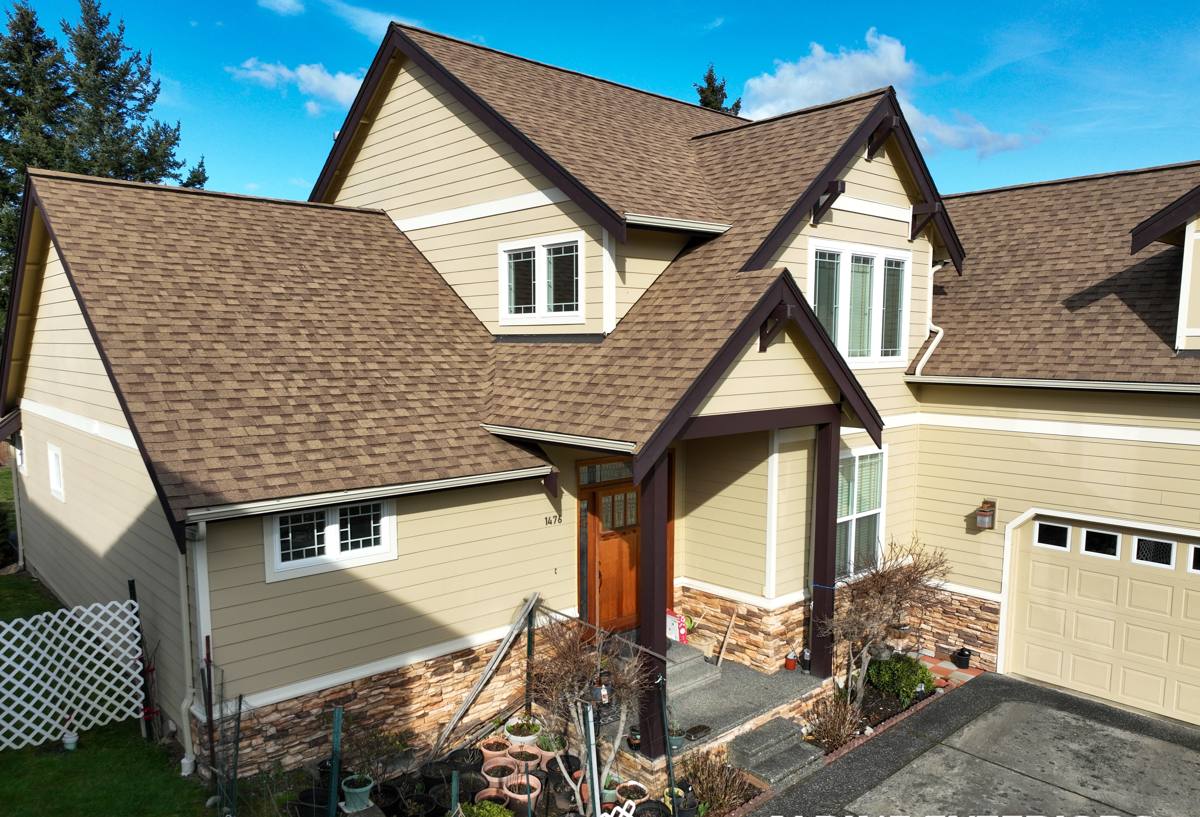
Signs Your Custer Roof Needs Replacement, Not Another Repair
Most homeowners don't wake up planning a full roof replacement — it's usually the result of one too many repairs, or a roof that's simply reached the end of what patching can fix. In this climate, the tell-tale signs tend to show up a bit earlier than the manufacturer's rated lifespan would suggest, because constant moisture accelerates wear on aging materials.
- Granule loss on shingles heavy enough that you can see bare, shiny patches or find granules collecting in gutters
- Dark streaking or moss growth that comes back within a season or two of cleaning
- Shingle edges that are curling, cupping, or lifting, especially on north- and west-facing slopes
- Soft or spongy spots underfoot when walking the roof, which usually means the decking underneath has taken on moisture
- Daylight or water staining visible from inside the attic
- A roof that's already had two or three rounds of patch repairs in the last several years
Any one of these on its own might still be repairable. Several at once, or a roof that's simply at or past its expected service life, usually means a repair is just delaying — and often masking — a bigger problem underneath.
What a Correct New Roof Installation Actually Involves
A roof is a system, not a single product laid on top of the house. Every layer has a job, and in a climate that sees this much rain and moss pressure, skipping or under-building any one of them is where premature failures start.
Tear-Off and Deck Inspection
We remove the old roofing down to the deck rather than layering over it. That's the only way to actually see what's underneath — soft or delaminated sheathing, hidden leaks, old flashing that should have been replaced years ago. Any damaged decking gets replaced before anything new goes down, because new roofing installed over a compromised deck is a warranty problem waiting to happen.
Underlayment and Ice-and-Water Protection
Underlayment is the roof's backup layer if wind or wear ever compromises the primary roofing material, and in a region with this much sustained rainfall, it matters more than in drier climates. We use ice-and-water shield membrane at eaves, valleys, and around penetrations — the spots most prone to wind-driven rain working its way backward under the shingles — and a synthetic underlayment across the rest of the field.
Flashing Details
Flashing around chimneys, skylights, sidewalls, and roof-to-wall transitions is where most roof leaks actually originate, not in the field of the shingles themselves. We install new flashing rather than reusing old pieces, and we pay particular attention to corrosion resistance given the salt-air exposure common in this part of Whatcom County.
Ventilation
Proper intake and exhaust ventilation keeps the attic space at a consistent temperature and moisture level, which does two things: it protects the roofing material from premature aging due to heat and trapped moisture, and it reduces the condensation that can feed rot in the decking and framing below. A new roof without correct ventilation is a new roof that ages faster than it should.
Choosing a Roofing Material That Holds Up in Custer
There's no single "best" roofing material for every home — the right choice depends on the home's structure, the homeowner's budget, and how much long-term maintenance they're willing to take on. Here's how the common options compare for a property dealing with salt air, driving rain, and moss pressure.
| Material | Typical Lifespan | Moss & Moisture Resistance | Relative Cost | Maintenance Notes |
|---|---|---|---|---|
| Asphalt composition shingle | 20–30 years | Good with proper ventilation; algae-resistant granule options available | Economical | Periodic moss treatment recommended in shaded areas |
| Architectural (dimensional) shingle | 25–35 years | Better wind and moisture performance than standard 3-tab | Mid-range | Same moss-prevention needs as standard shingle, thicker profile resists granule loss longer |
| Standing seam metal | 40–60 years | Excellent — sheds moisture fast, minimal surface for moss to grip | Premium | Coastal-grade fasteners and coatings needed to manage salt-air corrosion |
| Cedar shake | 20–30 years with upkeep | Attractive but requires diligent moisture management | Premium | Highest maintenance burden in a wet, mossy climate; not our default recommendation here |
For most Custer homes, a quality architectural asphalt shingle with algae-resistant granules strikes the right balance of upfront cost, appearance, and performance against this climate. Standing seam metal is a strong option for homeowners planning to stay long-term and wanting to minimize moss and maintenance altogether. We'll walk through the honest trade-offs of each based on your home's roof pitch, structure, and your own priorities — not push whatever has the best margin.
Our Installation Process, Start to Finish
Homeowners generally want to know two things upfront: what actually happens, and how disruptive it's going to be. Here's the sequence we follow on a standard new roof installation.
- On-site inspection and written estimate, including a look at the attic and any problem areas you've noticed
- Material selection and confirmation of scope — no surprise changes once work begins
- Delivery and staging of materials, with protection laid down for landscaping and driveways
- Full tear-off of existing roofing and inspection of the deck
- Replacement of any damaged sheathing found underneath
- Installation of ice-and-water shield, underlayment, and new flashing
- Installation of intake and exhaust ventilation components
- Installation of the new roofing material per manufacturer specifications
- Full site cleanup, including a magnetic nail sweep of the yard and driveway
- Final walkthrough with the homeowner before we consider the job done
Most residential roof replacements in this size and complexity range are completed in a matter of days once work begins, weather permitting — and weather is a real variable here, so we build a rain-aware schedule rather than rushing a tear-off into an open forecast.
Moss, Algae, and the Maintenance Reality of a New Roof
Even a well-installed new roof isn't a permanent solution to moss in a climate like this — nothing is. What a correct installation does is stack the odds in your favor: proper ventilation keeps the deck and underside of the roofing dry, algae-resistant materials slow biological growth, and clean flashing and gutter details keep water moving off the roof instead of sitting on it. Beyond that, periodic gentle cleaning and keeping overhanging branches trimmed back go a long way toward extending the life of the investment. We're upfront with every homeowner that moss-free forever isn't a realistic promise in Whatcom County — moss-resistant and well-drained is the realistic, achievable goal.
Why Hiring a Crew That Already Works in Custer Matters
Roofing crews who mostly work drier, inland regions sometimes under-spec ventilation and moisture protection because it's never been tested by a climate like this one. A crew that regularly works Custer, Ferndale, and the surrounding parts of Whatcom County has already seen which details actually matter here — where wind-driven rain tends to find its way in, which materials hold up against salt air over the long haul, and how much ventilation a given roof pitch and attic actually needs to keep moss and moisture in check. That local pattern recognition is the difference between a roof that looks right on installation day and one that's still performing well a decade later.
Permits, Timeline, and What to Expect
Most full roof replacements require a permit, and we handle that process as part of the job rather than leaving it on the homeowner's plate. Timeline depends on roof size, pitch, material choice, and — as always in this region — weather windows, since a tear-off shouldn't sit exposed if rain is moving in. We'll give you a realistic start-to-finish estimate before work begins, along with manufacturer warranty details and our own workmanship coverage, so there are no surprises about what's protected and for how long.
If your Custer home's roof is showing its age, we're happy to take a look and give you a straightforward, no-pressure assessment of whether repair still makes sense or it's time for a full replacement. Use the form below to request a free estimate.