 Ferndale Siding
 Building Decks for the Fairhaven Waterfront Climate
Homes in the Fairhaven area sit close enough to the water that salt air, wind-driven rain, and a long moss season are simply part of owning outdoor living space. A deck built here works harder than a deck built inland in Whatcom County. Fasteners corrode faster, wood surfaces stay damp longer between dry spells, and north-facing or shaded sections can hold moss and algae almost year-round. None of that means you have to give up on a deck — it means the design, materials, and fastening choices have to be picked for this specific environment rather than a generic build sheet.
We've built and repaired decks throughout the Ferndale area long enough to know which details matter here and which are just upsells. This page walks through what a correctly built deck for a Fairhaven property actually involves.
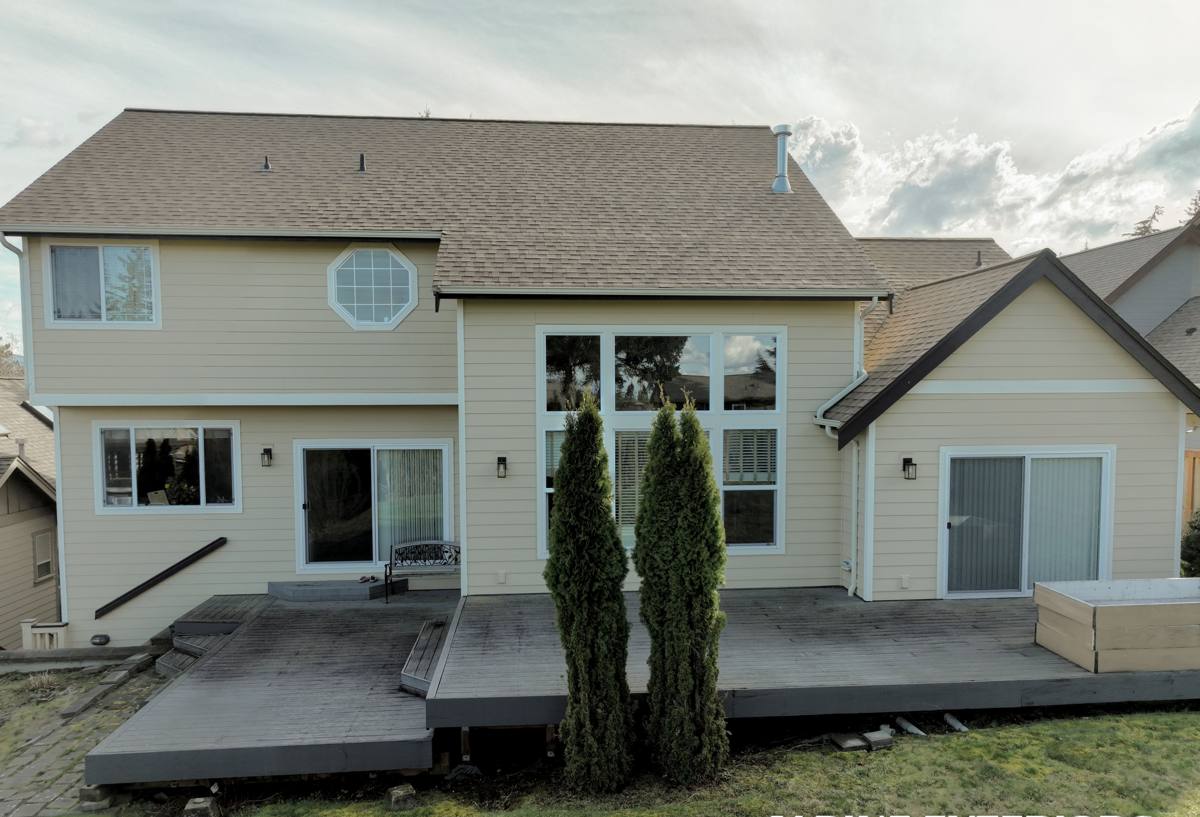
What Salt Air and Coastal Moisture Do to a Deck Over Time
It helps to understand the failure pattern before talking about the fix. Three things drive most of the deck problems we see on homes near the water:
- Corrosion — standard zinc-coated screws, nails, and joist hardware break down faster in salt-laden air, leading to rust streaks, loosened connections, and eventually hardware that fails from the inside out.
- Trapped moisture — driving rain pushed sideways by wind gets into joints, end grain, and ledger connections that a calmer inland climate would rarely test.
- Moss and biological growth — shaded or low-airflow sections of decking stay damp for weeks at a time during the wet season, and moss roots hold moisture against the board surface, which accelerates rot in untreated or poorly finished wood.
A deck designed without these three in mind will look fine for a season or two and then start showing problems exactly where you'd expect: fastener heads bleeding rust, soft spots near the house connection, and green film on the shaded end of the boards.
Choosing Decking Material for a Coastal Property
There's no single "best" decking material — there's a best material for your budget, your maintenance appetite, and how exposed your particular deck is to weather. Here's how the common options actually compare for a Fairhaven-area build:
| Material | Salt Air / Moisture Behavior | Maintenance | Typical Lifespan Here |
|---|---|---|---|
| Pressure-treated wood | Needs sealing and upkeep to resist moisture intrusion; moss grows on unsealed surfaces | Annual cleaning, periodic re-staining/sealing | 10-15 years with upkeep, less if neglected |
| Cedar | Naturally moisture- and insect-resistant, but still needs finish maintenance near salt air | Regular oiling or sealing to hold color and resist checking | 15-20 years with consistent care |
| Composite decking | Handles moisture and salt exposure well; doesn't absorb water like wood | Periodic washing to prevent moss/algae film buildup | 25-30 years, backed by manufacturer warranty |
| PVC/capped polymer | Fully resistant to moisture absorption and rot | Lowest maintenance; occasional washing | 25+ years, typically the longest warranty |
Composite and PVC decking cost more up front than pressure-treated wood, but for a shaded or heavily wind-exposed deck near the water, the reduced maintenance burden often makes up the difference over the life of the deck. Real wood is still a good choice for homeowners who want that look and are willing to keep up with sealing — we're honest with clients about that tradeoff rather than pushing one product across the board.
Framing and Structure: Where Most Deck Failures Actually Start
The decking surface is what you see, but the framing underneath is what decides whether the deck is safe and long-lasting. This matters more in a wet coastal climate because hidden framing problems progress faster and are harder to catch early.
Ledger Board Attachment
The ledger board — where the deck attaches to the house — is the single most common point of structural failure in decks nationwide, and wind-driven rain makes proper flashing here even more important. Correct flashing directs water away from the house band joist instead of letting it wick behind the ledger, which is a slow, invisible way to rot both the deck framing and the home's structure.
Joists, Beams, and Footings
We use fasteners and structural connectors rated for exterior and corrosive-exposure use, sized correctly for the span and load rather than whatever is cheapest at the yard. Footings need to be set below frost depth and sized for our soil conditions, not just "deep enough to look right."
Airflow Under the Deck
Poor ventilation under a low deck traps moisture against the joists and accelerates both rot and moss growth. Where grading and deck height allow it, we build in enough clearance and airflow to let the structure dry out between rain events instead of staying damp for days.
Railings, Fasteners, and Hardware Built for Salt Exposure
Hardware is where a lot of coastal decks quietly fail years before the decking itself gives out. Standard electro-galvanized screws and brackets are made for general exterior use, not sustained salt air exposure, and they'll show rust streaks and weakening well ahead of schedule near the water.
For decks in this area we specify:
- Stainless steel or high-grade coated fasteners rated for coastal/corrosive environments
- Structural connectors and joist hardware matched to the same corrosion-resistance standard as the fasteners
- Railing systems and hardware chosen for how they hold up to salt air, not just how they look on day one
- Concealed fastening systems where appropriate, which also reduce the surface rust staining that shows up around exposed screw heads over time
Mismatching a nice composite deck board with budget-grade fasteners is one of the more common shortcuts we see on decks we're asked to repair — the board itself is fine, but the hardware holding it down failed years early.
Our Process, Start to Finish
- On-site visit — we look at your specific exposure: how much direct salt air, wind, shade, and rain the deck location actually gets, plus the condition of the ledger area and existing structure if this is a rebuild.
- Design and material walkthrough — we go over decking, railing, and hardware options honestly, including maintenance expectations, so you're picking based on real tradeoffs rather than a sales pitch.
- Permit and planning — we handle the paperwork required for your project and build to code for structural loads and railing/guard requirements.
- Framing first — footings, ledger flashing, joists, and structural connections are done right before a single decking board goes down, since this is the part that determines how long the deck actually lasts.
- Decking, railings, and finish work — installed with corrosion-rated fasteners and attention to drainage and airflow throughout.
- Walkthrough and care guidance — we show you what routine maintenance actually looks like for the specific material you chose.
Maintenance Checklist for a Coastal Deck
Whatever material you choose, a few habits go a long way toward getting the full lifespan out of a deck exposed to salt air and moss-favoring conditions:
- Sweep off standing debris and organic matter regularly, especially in shaded corners where moss takes hold first
- Wash the deck surface at least once or twice a year to remove salt residue, algae film, and moss spores before they establish
- Check fastener heads and railing connections annually for early rust or looseness
- Reseal or re-stain wood decking on the manufacturer or product's recommended schedule — don't wait until it looks dry and gray
- Keep gutters and downspouts near the deck clear so runoff isn't dumping extra water onto the structure
- Confirm under-deck airflow isn't blocked by stored items, landscaping, or debris buildup
Permits and Building for Whatcom County Conditions
Deck projects in this area typically require a permit, along with inspections tied to footing depth, structural connections, and railing/guard height where the deck sits above a certain height off grade. We handle that process as part of the build rather than leaving it to the homeowner to sort out. Beyond the paperwork, building to code here means accounting for our actual wind and rain exposure, not just the bare minimum span tables — a deck built to pass inspection and a deck built to actually hold up in this climate aren't always the same thing, and we build for the second one.
Why Hire a Crew That Already Works in This Area
A deck built by a crew unfamiliar with wind-driven coastal rain and a long moss season will often look identical to a properly built one on installation day — the differences show up two, five, and ten years later, in the fastener choices, the ledger flashing detail, and whether the framing was given room to dry out. We work on homes throughout the Ferndale area regularly enough to know which details are worth the extra attention here, and we'd rather explain the honest tradeoffs up front than have you discover them later as a repair call.
If you're planning a new deck or replacing one that's showing its age, we're happy to walk the site with you and put together a straightforward, no-pressure estimate using the form below.