 Ferndale Siding
 Windows Built for Kendall's Weather, Not Just the Showroom
Kendall sits close enough to the water and the foothills that its homes take a different kind of weather beating than a house twenty miles inland. Salt-laden air drifts in off the Strait and Bellingham Bay, wind-driven rain comes at windows sideways rather than straight down, and the long gray stretch from fall through spring keeps wood, vinyl, and trim damp for weeks at a time. Add in the moss and algae that thrive in that moisture, and you've got a set of conditions that will find any weakness in a window's seal, frame material, or flashing detail within a few seasons.
Custom windows aren't about luxury upgrades or fancy shapes — although we do those too. For most Kendall homeowners, "custom" simply means windows sized and detailed to fit an actual opening correctly, rather than the nearest stock size forced into place with extra caulk and shims. In a climate like ours, that precision is the difference between a window that sheds water for thirty years and one that starts leaking behind the trim in five.
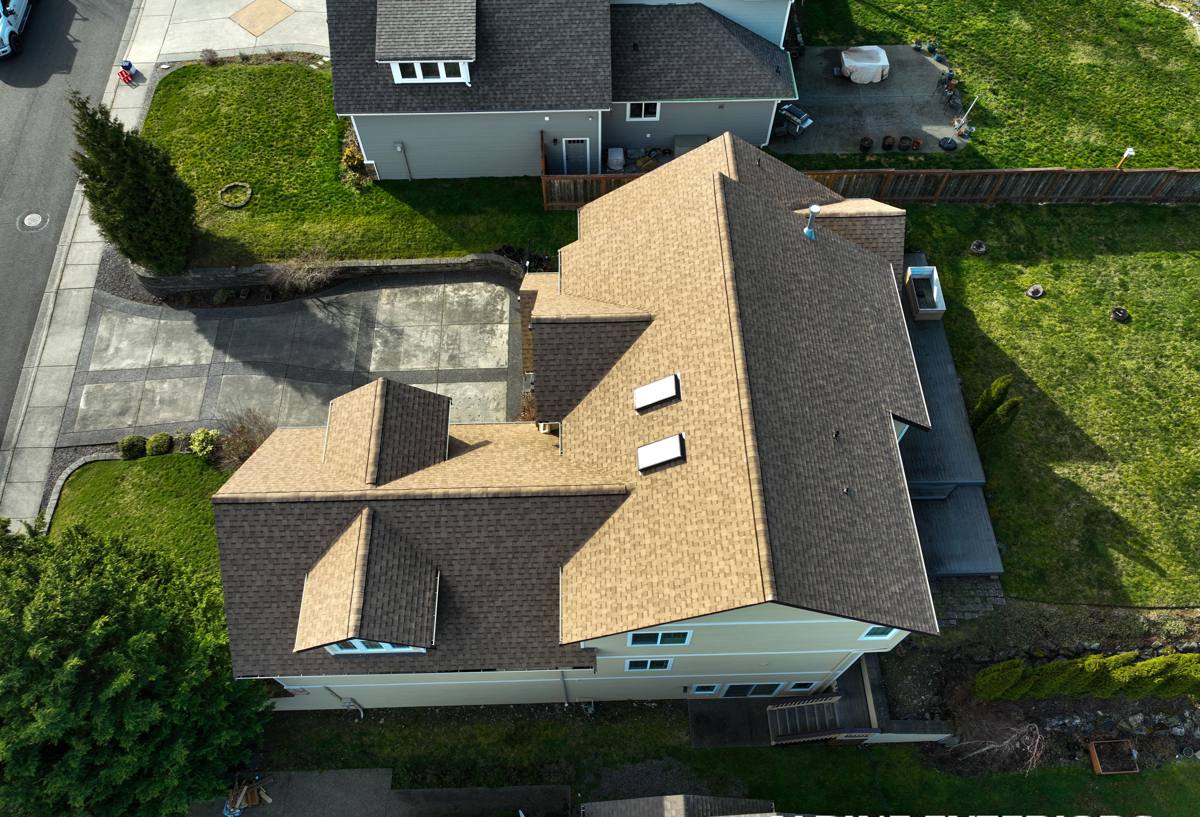
How Whatcom County Weather Wears Down a Window
Salt Air and Corrosion
Proximity to saltwater accelerates corrosion on hardware, screens, and metal window components. Cheap fasteners and low-grade hinges or balances can start pitting and sticking years before they would inland. We spec corrosion-resistant hardware on every install out here, not just on homes right on the water.
Driving Rain
Storms coming off the water regularly push rain horizontally, which means water pressure against the window and the wall assembly around it is higher than on a calm-weather install. Flashing, sill pans, and sealant details that would be "good enough" in a drier climate aren't good enough here — water will find any gap given enough repetition.
Moss and Prolonged Dampness
Our long wet season keeps north-facing and shaded walls damp for extended stretches, which is exactly the environment moss and algae need to take hold on sills, trim, and cladding. Damp trim around a window is also where wood rot starts, so material choice and detailing at the sill matter more here than in a drier region.
Signs Your Current Windows Are Losing the Fight
- Soft or discolored wood trim around the frame, especially at the bottom corners
- Fogging or moisture between panes on double- or triple-glazed units (a failed seal)
- Drafts you can feel with a hand near the sash, even with the window latched
- Difficulty opening, closing, or locking — often a sign the frame has shifted or swollen
- Visible moss, algae, or black staining building up on the sill or exterior casing
- A noticeably higher heating bill compared to similar homes nearby
- Condensation forming on the inside of the glass regularly during cold snaps
Any one of these on its own might not mean replacement is urgent. Several together, especially paired with visible rot at the sill, usually means the window and possibly the wall assembly behind it need attention.
What "Custom" Means in Practice
A custom window job starts with accurate measurement of the actual rough opening — not the size stamped on the old unit's frame, which can be misleading if the original install was shimmed or slightly out of square. From there, we work through frame material, glazing package, operating style, and exterior trim to match both the performance the wall assembly needs and the look of the house.
Operating Styles Worth Considering
Casement windows seal tighter against wind-driven rain because the sash closes against the frame under compression, which is one reason we recommend them often for exposed walls in this area. Double-hung windows remain popular for their classic look and easier cleaning, and they perform fine when installed and flashed correctly. Sliders and picture windows each have their place depending on the room and view. We'll walk through the trade-offs for your specific walls rather than push one style across the whole house.
Material Comparison for Whatcom County Conditions
| Material | Moisture & Salt Air Resistance | Maintenance | Typical Lifespan |
|---|---|---|---|
| Vinyl | Good — won't rot or corrode, though color can fade over decades | Low — occasional cleaning | 20-30+ years |
| Fiberglass | Excellent — very stable in wet, salt-air conditions, minimal expansion/contraction | Low | 30-40+ years |
| Wood | Fair — attractive but vulnerable to rot without diligent upkeep | High — regular painting/sealing needed | Varies widely with maintenance |
| Wood-clad (wood interior, aluminum or vinyl exterior) | Good — exterior shell protects the wood from weather | Moderate | 25-35+ years |
We install all of the above depending on what a homeowner wants for looks, budget, and upkeep tolerance. For homes with heavy exposure to weather off the water, we'll usually steer the conversation toward fiberglass or vinyl on the exterior face, simply because they hold up with the least maintenance burden — that's a trade-off we lay out honestly rather than a knock on wood windows done right.
Flashing and Moisture Management — The Part You Won't See
Most window failures in this climate don't start with the glass or the frame — they start with poor flashing or sealant detailing around the opening. A correct install includes a sloped sill pan to direct any water that gets past the sash outward instead of into the wall, proper head flashing to shed water above the window, and integration with the home's weather-resistive barrier so water can't track behind the siding. Skipping or rushing these steps is the single most common cause of hidden rot we find when we're called out to replace a window that's "only" ten or fifteen years old.
Sealant matters too, but sealant is a backup, not the primary defense — a window relying on caulk alone to stay dry will eventually fail once that caulk shrinks or cracks, which happens faster in our freeze-thaw and wet-dry cycling than in milder climates.
Energy Performance and Condensation Control
Whatcom County's mix of cold, damp winters and mild summers means the glazing package matters as much as the frame. Look for a U-factor suited to Pacific Northwest heating needs and a warm-edge spacer system, which reduces the cold-glass effect that drives interior condensation on wet winter mornings. Low-E coatings help with both heat retention and comfort near the glass, without the tinted look some older energy glass had.
Condensation on the inside of new windows in the first cold snap or two is normal as a home's humidity balances out — persistent condensation well after that usually points to a ventilation issue in the home rather than a bad window.
Our Installation Process
- On-site assessment — we look at each opening individually, checking for existing rot, settling, or flashing issues before quoting anything.
- Accurate measurement — every opening is measured on-site; nothing is ordered off assumptions.
- Material and glazing selection — we walk through options suited to that wall's sun and weather exposure.
- Removal and inspection — old units come out carefully so we can check the framing and sheathing underneath for hidden moisture damage before anything new goes in.
- Correct flashing and sealing — sill pan, head flashing, and WRB integration done to manufacturer and code standards, not shortcuts.
- Final fit, insulation, and trim — gaps are properly insulated (not just foam-blasted) and trim is finished to match the home.
- Walkthrough — we show you the operation, hardware, and any care notes specific to the material you chose.
Cost Factors to Expect
| Factor | How It Affects Cost |
|---|---|
| Frame material | Vinyl typically lowest upfront; fiberglass and wood-clad run higher |
| Number of openings | Whole-house projects usually bring a better per-window rate than one-offs |
| Existing rot or structural repair | Wall or sill repair found during removal adds cost but prevents repeat failures |
| Glazing package (double vs. triple, Low-E options) | Higher-performance glass costs more but pays back in comfort and energy use |
| Custom shapes or sizes | Non-standard openings cost more than stock sizes due to custom manufacturing |
| Trim and exterior finish work | Matching existing trim profiles or upgrading exterior detailing adds labor |
We give a written, itemized quote before any work starts so you know exactly what you're paying for and why — including whether we found any rot or flashing issues that need addressing along the way.
Why It Matters That We Already Work in Kendall
Window installation isn't a one-size-fits-all trade, and the right approach for a house on the Kitsap Peninsula or in eastern Washington isn't automatically right for a house in Kendall. A crew that regularly works this part of Whatcom County already knows which wall orientations take the worst of the driving rain, how moss tends to establish itself on shaded sills here, and what flashing details actually hold up through our wet season rather than just on paper. That local pattern recognition shows up in fewer callbacks and windows that are still performing well a decade or two later.
We also stand behind our own installation work separately from the manufacturer's product warranty, so if something about the install itself isn't right, you're not stuck arguing with a call center — you're talking to the people who installed it.
Ready for an Honest Look at Your Windows?
If you're dealing with drafty, foggy, or hard-to-operate windows in Kendall, or you're planning ahead for a remodel, we're happy to come take a look and give you a straightforward assessment — no pressure, no sales script. Use the form below to request a free estimate, and we'll walk your home's openings with you and lay out real options and honest pricing.