 Ferndale Siding
 Building Decks for Semiahmoo-Area Homes
Homes in and around Semiahmoo sit close enough to the water that the weather behaves differently than it does even a few miles inland. Salt-laden air, wind-driven rain, and a moss season that can stretch from October well into spring put more stress on outdoor structures here than in a typical Whatcom County backyard. A deck built to a generic national standard often struggles in this environment within a few years — fasteners bleed rust, boards cup, and moss gets a foothold in shaded corners before the homeowner even notices. A deck built specifically for this stretch of coastline holds up because every material and detail is chosen with that exposure in mind.
We build and repair decks throughout the Semiahmoo area as part of our regular service territory out of Ferndale. That means we already know which fastener grades hold up near the water, which framing details shed rain instead of trapping it, and which decking products actually perform under a long, wet Pacific Northwest winter rather than just looking good in a showroom.
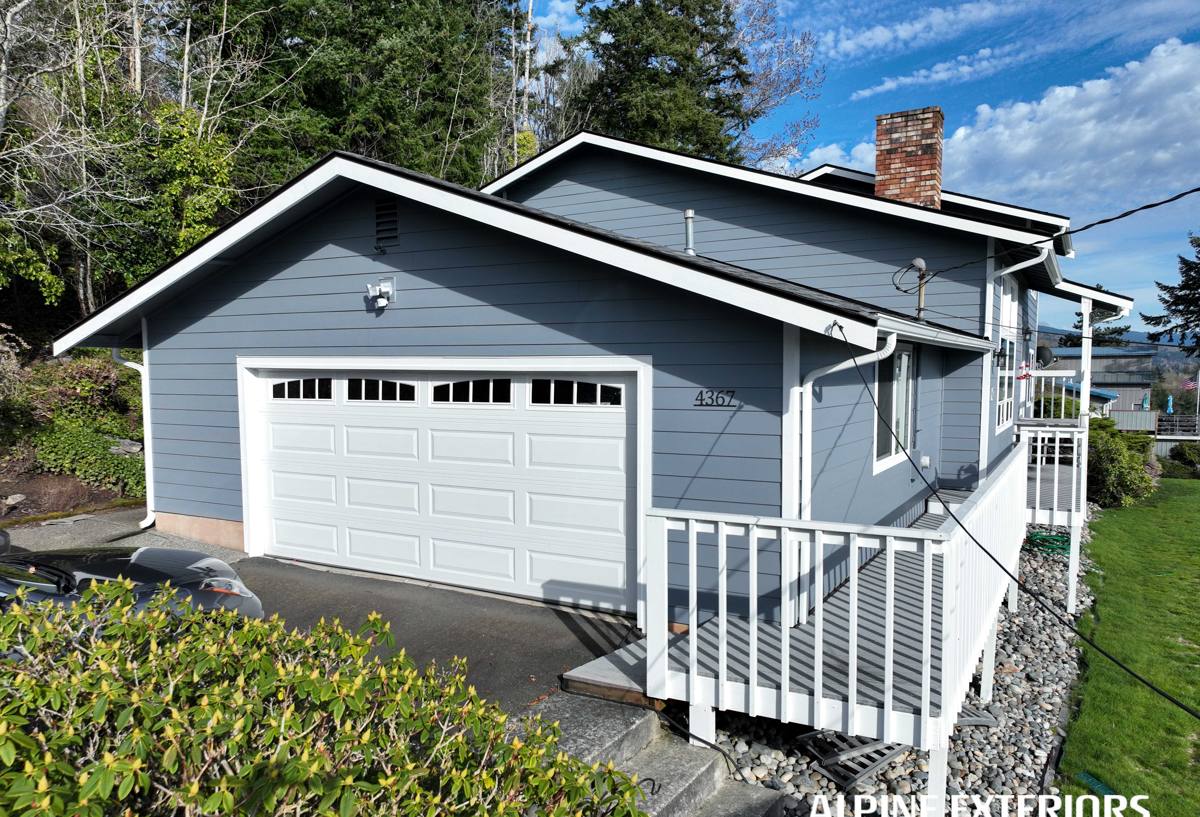
Why Salt Air and Coastal Exposure Change the Job
Proximity to saltwater speeds up corrosion on anything metal — screws, joist hangers, post bases, and railing hardware all take a beating faster near Semiahmoo than they would a few miles inland in Ferndale. Standard galvanized fasteners can start showing rust streaks and pitting well before a deck is a decade old. That's a cosmetic problem at first, but it becomes a structural one once corrosion reaches the point where hardware starts to lose holding strength.
Wind off the water also drives rain sideways at times, pushing moisture into joints, ledger connections, and under railing posts that a calmer inland site would rarely see soaked. Any gap in flashing or any spot where water can pool instead of draining becomes a slow rot problem, often hidden under decking boards where it's not visible until real damage has been done.
What This Means in Practice
- Fastener and hardware grade matters more here than the manufacturer's minimum spec suggests
- Ledger board flashing and waterproofing need to be done correctly the first time — this is the single most common source of hidden deck rot
- Drainage slope and gapping between boards has to account for wind-driven rain, not just straight-down rainfall
- Shaded, low-airflow areas near fences or the house need extra attention since they dry out slowest
Moss, Shade, and the Long Wet Season
Whatcom County's moss season is long, and decks near Semiahmoo tend to stay damp longer than decks in sunnier, more open parts of the region because of tree cover, coastal humidity, and shorter winter daylight. Moss and algae aren't just an appearance issue — they hold moisture against the decking surface and can make boards genuinely slick and dangerous underfoot, especially on stairs.
A deck designed with this in mind uses decking profiles and finishes that shed water quickly and don't have deep grain texture where moss spores can settle in. Gaps between boards are sized to let air move underneath rather than trapping humidity in the framing cavity. None of this eliminates the need for occasional cleaning, but it dramatically reduces how fast moss becomes a problem and how often a homeowner has to deal with it.
Choosing the Right Decking Material
There's no single "best" decking material for every home — the right choice depends on budget, how much maintenance the homeowner wants to do, and how exposed the deck is to sun, shade, and moisture. We walk through these trade-offs honestly rather than pushing whatever has the highest margin.
| Material | Maintenance | Moisture/Moss Resistance | Typical Lifespan |
|---|---|---|---|
| Pressure-treated wood | Higher — needs regular sealing/staining | Fair; can hold moisture if not sealed | 10–15 years with upkeep |
| Cedar | Moderate — periodic sealing recommended | Naturally decay-resistant, but surface still needs care in shade | 15–20 years with upkeep |
| Composite decking | Low — occasional washing | Good; resists rot, but can still grow surface moss if never cleaned | 25–30+ years |
| PVC/capped polymer | Lowest | Very good moisture resistance | 25–30+ years |
For homes closer to the water, we lean toward materials and finishes with strong moisture resistance simply because the exposure is higher — but we won't tell a homeowner they need the most expensive option if a well-built wood deck with a realistic maintenance plan fits their needs and budget better.
Fasteners and Hardware
This is one area where we don't cut corners regardless of decking material chosen. Near Semiahmoo, we use corrosion-resistant fastener and hardware grades built for coastal or high-moisture exposure, not the minimum-spec hardware that's fine for a dry inland lot. It costs a little more up front and saves the homeowner from hardware failure and rust staining down the road.
What a Correct Deck Build Actually Involves
A deck is a system, not just a surface to walk on. Getting it right means getting every layer right, from the ground up.
Footings and Framing
Proper footing depth and placement matter more in this region's wetter, sometimes softer soils than they would in a drier climate. Framing lumber needs to be rated for ground contact where applicable, and joist spacing has to match the decking material's span requirements — composite and PVC products often have tighter spacing requirements than solid wood.
Ledger Attachment and Flashing
Where a deck attaches to the house, the ledger board and its flashing are the most common failure point on decks in wet coastal climates. Done wrong, water works its way behind the ledger and into the house's rim joist, causing rot that's expensive to repair and can go undetected for years. Done right, flashing sheds water completely away from the connection, keeping both the deck and the house structure dry.
Railings and Guards
Railing systems need to meet current code height and spacing requirements, and hardware here should match the same corrosion-resistant standard as the rest of the build — a rusting railing bolt is both an eyesore and, eventually, a safety issue.
Stairs
Stair treads see the most foot traffic and the most moss risk, since they're often in partial shade and get walked on wet. Proper tread spacing, non-slip surface choices, and adequate drainage underneath all reduce slip risk through the wet months.
Our Deck Building Process
- On-site assessment — we look at sun exposure, drainage, existing structure (for replacements), and how close the deck sits to the water or tree cover
- Material and design conversation — honest trade-offs on decking material, railing style, and layout based on the homeowner's budget and maintenance preference
- Permitting — we handle the paperwork required for the scope of the project
- Footings and framing — built to span and load requirements for the chosen decking material
- Ledger flashing and waterproofing — done to keep water fully away from the house structure
- Decking, railing, and stair installation — with attention to drainage gaps and non-slip detailing
- Final walkthrough — we go over basic care and what to expect through the first wet season
Deck Repair and Restoration
Not every project near Semiahmoo is new construction. A lot of our work is repairing or restoring decks that were built without coastal exposure in mind — rusted hardware, soft spots from ledger leaks, or boards that have cupped from years of moisture cycling. We assess whether a deck is a repair candidate or whether the framing has degraded enough that a full rebuild is the more honest recommendation. We'll always tell you which situation you're in rather than patching over a structural problem.
Maintenance That Actually Extends Deck Life
Regardless of material, a little seasonal attention goes a long way in this climate.
- Clear leaves and debris from between boards and off stair treads before the wet season sets in
- Rinse off moss and algae buildup on shaded sections a couple of times a year rather than letting it establish
- Check railing and stair hardware annually for early rust or loosening
- Reseal or restain wood decking on the manufacturer's recommended schedule — don't wait until it looks bad
- Keep gutters and downspouts near the deck clear so runoff isn't dumping extra water onto or under the structure
Why Local Experience Matters
A deck builder who mostly works drier, inland sites can still build something that looks right — but looking right and performing right through a Semiahmoo winter are two different things. Knowing which hardware grade actually holds up here, how to detail ledger flashing against driving rain, and which decking profiles resist moss in shaded, humid corners comes from building and maintaining decks in this specific environment, not from a general contractor's handbook. That local track record is what keeps a deck solid and safe well past the first few winters.
If you're planning a new deck or need an honest look at an existing one near Semiahmoo or elsewhere around Ferndale, we're happy to come take a look. Reach out for a free, no-pressure estimate using the form below.