 Ferndale Siding
 Deck Repair in Cordata: Built for Whatcom County Weather
A deck in Cordata doesn't fail the same way a deck in a dry inland climate does. Out here, the damage is almost always driven by water — water that sits, water that wicks into end grain, water that gets trapped behind framing where nobody can see it until a board finally gives way underfoot. Add in the salt-tinged air that rolls through this part of Whatcom County and a moss season that can stretch from October well into spring, and you've got a structure that's under near-constant attack for most of the year.
Deck repair is different from deck building. It's diagnostic work first, carpentry second. Our job when we come out to a Cordata property isn't to sell a full replacement by default — it's to figure out exactly what's failed, why it failed in this climate, and whether a targeted repair will hold up or whether the smarter move is to rebuild the section that's actually compromised.
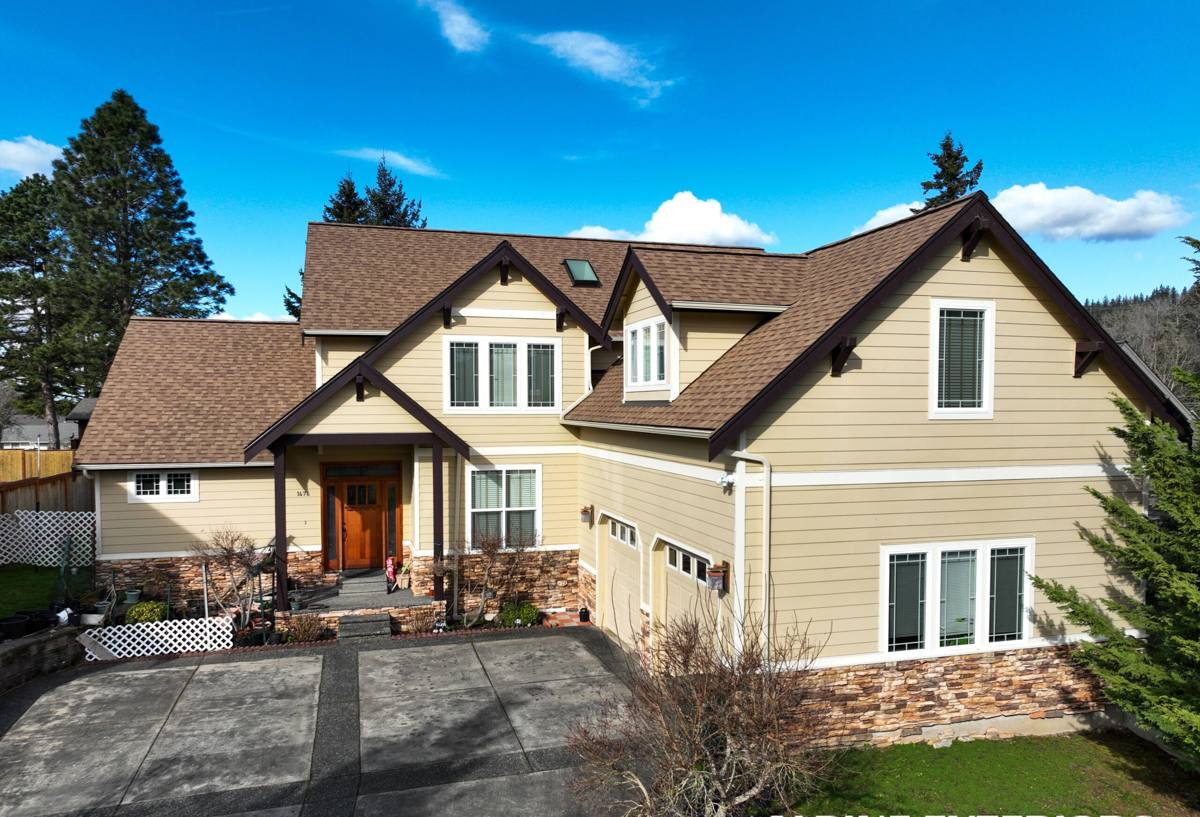
How Driving Rain, Salt Air, and Moss Wear Down a Deck
Moisture Intrusion at the Ledger and Framing
The ledger board — the piece that bolts your deck to the house — is the single most common failure point we find. Driving rain doesn't fall straight down here; wind pushes it sideways and up under flashing that was never detailed for that kind of exposure. Once water gets behind the ledger, it stays wet for days at a time, and the framing lumber behind it starts to soften long before anything looks wrong from the top.
Salt Air and Fastener Corrosion
Whatcom County's proximity to the Salish Sea means the air carries a low but steady dose of salt, even well inland from the shoreline. Over years, that salt accelerates corrosion on nails, screws, and joist hardware — especially anything that wasn't rated for coastal exposure to begin with. A fastener that rusts loses grip long before it visibly crumbles, which is why decks can develop a wobble or soft spot without an obvious cause.
Moss, Algae, and Slick Surfaces
A long, damp moss season does two things to a deck: it makes the surface dangerously slick, and it holds moisture against the wood far longer than open air would allow. Moss and algae act like a wet sponge sitting on your decking boards. Where growth has been left unaddressed for a season or two, we routinely find the top layer of wood fiber has already started to break down underneath it.
Signs Your Cordata Deck Needs Repair
Most homeowners call us after noticing one of the following. If you're seeing more than one on this list, it's worth having someone look before the next wet season sets in.
- Soft, spongy, or springy spots when you walk across the deck
- Boards that have visibly cupped, warped, or separated at the seams
- Dark staining or a persistent damp smell near the house-side ledger connection
- Railings or posts that flex or wiggle when pushed
- Rust streaks running down from screw heads or metal connectors
- Moss or algae that regrows within weeks of cleaning
- Stair stringers that feel uneven or have visible splitting
- Gaps opening up between the deck and the house siding or trim
Repair or Replace? What We Actually Look At
Not every issue means a full rebuild, and not every deck is worth patching. The decision comes down to how much of the structural system — framing, ledger, posts, footings — is still sound versus how much of the damage is cosmetic and limited to the surface boards.
| Condition Found | Usually Repairable | Usually Needs Replacement |
|---|---|---|
| Isolated soft or rotted decking boards | Yes — spot replacement | No, unless rot has spread beneath multiple boards |
| Rusted or failing fasteners, sound wood underneath | Yes — re-fastening with corrosion-rated hardware | No |
| Rot at the ledger board or rim joist | Sometimes — depends on how far it extends | Often — this is a structural connection point |
| Multiple rotted or undersized support posts | Rarely | Yes — affects overall stability |
| Railings loose at the post connection | Yes — usually a hardware fix | No, unless the post itself is compromised |
| Deck framing built without proper flashing originally | Partial — flashing can be added during repair | Sometimes, if extensive rework is needed to correct it |
What a Correct Deck Repair Involves
Structural Inspection First
Before any wood comes off, we check the framing from underneath where possible — joists, beams, post bases, and footing condition. Surface repairs on top of a compromised structure don't hold, and we won't recommend spending money on cosmetic fixes if the frame underneath needs attention.
Ledger Board and Flashing
If the ledger shows signs of moisture intrusion, we address the flashing detail as part of the repair, not just the wood. Replacing a rotted ledger board without correcting the flashing that let water in means you're paying to have the same failure again in a few years.
Decking, Railings, and Stairs
We replace individual boards, sections, or full surfaces depending on the extent of the damage, matching spacing and fastening patterns to the rest of the deck. Railings and stair stringers get the same structural scrutiny as the deck frame — a railing that looks fine but is loose at its base is a safety issue, not a cosmetic one.
Fasteners and Hardware
Given the salt air in this region, we use corrosion-resistant fasteners and connectors rated for exterior, coastal-adjacent exposure rather than standard hardware. It costs a little more up front and it's the difference between hardware that lasts and hardware that starts rusting within a couple of seasons.
Material Choices and Trade-offs
When boards need full replacement, homeowners usually choose between repairing with matching wood or upgrading the repaired section to composite decking. Each has real trade-offs worth understanding before you decide.
| Factor | Wood Repair | Composite Repair |
|---|---|---|
| Upfront cost | Lower | Higher |
| Maintenance | Needs regular cleaning, sealing, and moss treatment | Lower maintenance, but still needs periodic cleaning to prevent moss buildup |
| Moisture behavior | Can absorb water at cut ends and fastener holes if not sealed | Doesn't absorb water the same way, but requires correct end-capping at cuts |
| Matching existing deck | Easier to blend with existing wood decking | Can create a visible transition unless the whole surface is replaced |
| Long-term moss resistance | Moderate — depends on maintenance | Better, though not immune to surface algae growth |
There's no universally right answer here — it depends on how much of the deck is being repaired, your budget, and how much upkeep you're realistically going to do. We'll walk through the honest trade-offs for your specific situation rather than pushing one option.
Our Process for Cordata Deck Repairs
- On-site inspection of the full structure — framing, ledger, posts, footings, and surface — not just the visible problem area
- Written explanation of what's failing, why, and which parts of the repair-vs-replace table above apply to your deck
- A clear, itemized estimate before any work begins, with no pressure to upgrade beyond what the deck actually needs
- Repair work done in a sequence that addresses structural issues before cosmetic ones
- Use of corrosion-rated fasteners and properly detailed flashing at any connection point we touch
- Final walkthrough so you know what was repaired, what to watch, and how to maintain it going forward
Why a Crew That Already Works Cordata Matters
Deck problems in this part of Whatcom County have a pretty consistent signature — moisture at the ledger, corrosion on hardware, moss holding water against the surface. A crew that repairs decks in Cordata regularly recognizes these patterns quickly instead of treating every job as a mystery. That means a faster, more accurate diagnosis and a repair that's built for the actual conditions your deck sits in, not a generic fix pulled from a manual written for a drier climate.
It also means we're not guessing at what materials and fasteners hold up here — we're using what we've already seen perform, and steering away from anything that we've seen fail early in this specific environment.
Keeping Your Deck Repair Lasting
A repair is only as good as the maintenance that follows it. A few habits go a long way toward protecting the work and slowing the wear that Whatcom County's weather causes:
- Clean moss and algae off the surface at least once during the wet season, not just once a year
- Keep gutters and downspouts clear so water isn't dumping directly onto or near the deck
- Check railings and stair connections periodically for looseness, especially after storms
- Re-seal wood decking on the schedule appropriate for the product used, not just when it looks faded
- Address small soft spots or loose boards right away — they're far cheaper to fix early than after a season of freeze-thaw and rain cycles
If your deck in Cordata is showing any of the signs above, or it's just been a while since anyone looked at it closely, we're happy to come take a look. The estimate is free, there's no pressure to do more than the deck actually needs, and you'll walk away with a clear, honest picture of what's going on and what it'll take to fix it right.