 Ferndale Siding
 Fiber Cement Siding Built for Everson's Climate
Everson sits inland from the Salish Sea but still catches the same weather pattern that defines exterior work across Whatcom County: long stretches of driving rain from fall through spring, humid air that doesn't fully dry out for months, and a moss and algae season that can run longer here than it does on the drier side of the Cascades. Add in salt-laden air moving up the Nooksack valley on windy days from the Strait, and you have a combination that is genuinely hard on exterior materials — especially anything wood-based or anything that depends on a perfect, unbroken paint film to keep moisture out.
We install James Hardie fiber cement siding exclusively, and Everson is one of the areas where that decision pays off the most visibly. Fiber cement doesn't rot, doesn't feed moss the way bare wood or worn paint does, and holds a factory finish that isn't relying on a homeowner's repainting schedule to stay protected. This page is specific to fiber cement siding work in Everson — what the local climate actually demands, what a correct installation looks like, and how we run the job from first call to final walkthrough.
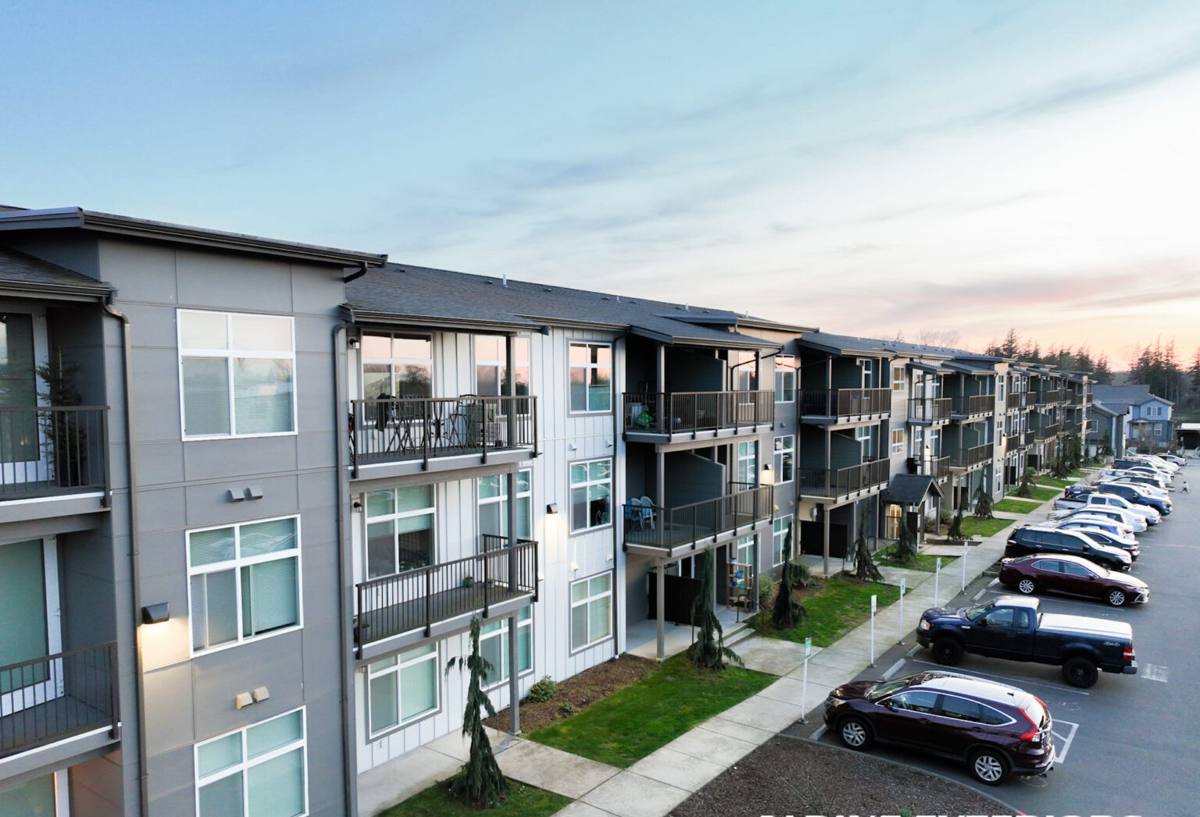
What Everson Homes Actually Deal With
Before talking about siding, it's worth being honest about what the exterior of an Everson home is up against over a typical year:
- Prolonged wet season: months of low-intensity rain plus fog and dew keep siding surfaces damp longer than a simple "inches of annual rainfall" number would suggest.
- Moss and algae growth: shaded north- and east-facing walls, tree cover, and consistent moisture create ideal conditions for organic growth on any porous or textured surface.
- Wind-driven rain: storms moving through the valley push rain sideways into wall assemblies, stressing joints, trim, and butt seams rather than just the flat field of the wall.
- Seasonal salt air influence: proximity to the Strait of Georgia and Bellingham Bay means occasional salt-bearing wind, which accelerates corrosion on fasteners and metal flashing that aren't rated for it.
- Temperature swings: cold snaps followed by mild, wet stretches cause repeated expansion and contraction, which is where poorly installed siding and caulk-dependent products start to fail first.
None of these are dramatic on their own. What matters is that they're constant and cumulative — the siding on an Everson home isn't tested by one bad storm, it's tested by years of this same cycle repeating.
Why Fiber Cement Is the Right Answer Here
Moisture behavior
Fiber cement is dimensionally stable and doesn't absorb and swell the way wood-based products can. That matters directly in a climate where siding stays damp for extended periods — it's not a material that's relying on staying bone-dry to perform.
Moss and algae resistance
James Hardie's factory-applied ColorPlus finish is baked on under controlled conditions, giving a harder, more consistent surface than field-applied paint. It doesn't stop moss from ever growing near a wall, but it holds up to washing and doesn't degrade the way a worn paint film does — which is exactly the failure point that lets moisture and organic growth get a foothold on older siding.
Non-combustible, low-maintenance
Fiber cement is non-combustible, which matters for insurance and peace of mind regardless of climate. Combined with the factory finish, it means Everson homeowners aren't on a repainting treadmill every few years just to keep water out — a real consideration in a wet climate where exterior paint jobs don't last as long as they would in a drier region.
What a Correct Fiber Cement Installation Involves
Fiber cement siding is only as good as the installation behind it. In a climate like this one, the details that get skipped on a rushed job are exactly the details that cause callbacks two or three winters later.
- Weather-resistive barrier and rainscreen consideration: a properly lapped water-resistive barrier, with drainage space where the wall assembly calls for it, so any moisture that gets behind the siding has somewhere to go instead of sitting against sheathing.
- Correct fastening: James Hardie specifies fastener type, spacing, and embedment depth. Corrosion-resistant fasteners matter more here given occasional salt air exposure — the wrong fastener is a slow, hidden failure.
- Proper clearances: minimum gaps between siding and grade, roofing, decks, and other penetrations so water doesn't wick up into the bottom edge of the boards.
- Joint and butt seam treatment: seams are one of the few places on a fiber cement wall that do rely on sealant and flashing detail — done wrong, they become the first entry point for wind-driven rain.
- Flashing at penetrations: windows, doors, and any wall-mounted fixture need flashing that sheds water down and out, not just caulk covering a gap.
- Field cuts sealed and primed: any cut edge that exposes raw fiber cement needs to be treated per manufacturer spec before it's closed up, or it becomes a weak point in an otherwise sealed system.
This is the level of detail that separates siding that performs for decades from siding that looks fine for a year or two and then starts showing problems at the seams and bottom edges — usually right where the wet-season stress concentrates.
Product Lines and Options for This Area
James Hardie's HZ10 climate-engineered products are built for regions with more moisture exposure, which fits Whatcom County generally and Everson specifically. Depending on the home, we typically discuss:
| Product | Best fit | Why it matters locally |
|---|---|---|
| HardiePlank lap siding | Most homes, traditional or modern look | Widest color and texture range, engineered for wet climates |
| HardiePanel vertical siding | Accent walls, gables, modern facades | Clean lines that also shed wind-driven rain well when detailed correctly |
| HardieTrim boards | Corners, window and door surrounds | Matches siding durability at the joints most exposed to moisture intrusion |
| ColorPlus finishes | Any of the above | Factory-cured finish holds up to repeated wet/dry cycling better than field paint |
The right combination depends on the home's existing architecture, exposure, and how much of the wall sits in shade versus direct sun and wind — all of which affect how quickly moss and moisture problems show up in the first place.
Our Process for Everson Projects
We approach every fiber cement job the same methodical way, whether it's a single wall repair or a full re-side:
- On-site assessment: we look at the current siding's failure points, the wall assembly underneath where accessible, drainage around the foundation, and which elevations get the most moss and moisture exposure.
- Written scope and product selection: a clear plan covering which Hardie products, colors, and trim details fit the home, with honest reasoning — not just an upsell.
- Prep and protection: proper removal of old siding, inspection and repair of sheathing or framing if water damage is found, and correct installation of the water-resistive barrier before a single course goes up.
- Installation to manufacturer spec: fastening, clearances, flashing, and joint treatment done to James Hardie's published requirements, not shortcuts.
- Final walkthrough: we go over the finished work with the homeowner, including basic maintenance expectations, before calling the job done.
Why Local Experience in Everson Matters
A crew that already works this area knows which walls in Everson tend to hold moisture longest, how tree cover and shade patterns affect moss growth on a given lot, and what wind-driven rain actually does to a poorly flashed joint after a few Whatcom County winters. That's not something you get from a spec sheet — it comes from doing this work repeatedly in this specific climate. It also means fewer surprises during the job: local crews already understand typical foundation heights, common wall assemblies in the area, and the kind of moisture issues that tend to hide behind older siding in homes of this vintage and region.
Maintenance After Installation
One of the practical benefits of fiber cement is how little ongoing maintenance it needs compared to wood siding, but "low-maintenance" isn't "no-maintenance," especially in a moss-prone climate:
- Periodic gentle washing of shaded, moss-prone elevations keeps the ColorPlus finish looking its best.
- Keeping gutters clear prevents overflow from running down and staying against siding longer than it should.
- Trimming back vegetation that shades walls reduces the moisture and organic growth those areas are prone to.
- A periodic visual check of caulked joints and trim intersections catches small sealant failures before they become water intrusion.
None of this is heavy work, but it's the kind of small attention that keeps a correctly installed fiber cement exterior performing for the long haul in a climate that never fully lets up.
Ready to Talk About Your Home
If you're weighing a re-side or repair in Everson, we're happy to take a look, walk you through what we're seeing, and give you a straightforward assessment of what fiber cement siding would involve for your specific home. Reach out for a free, no-pressure estimate using the form below.