 Ferndale Siding
 Siding Built for the Nooksack Area's Weather, Not Just Any Weather
The Nooksack area sits in a stretch of Whatcom County that takes weather seriously. Homes here deal with a marine layer that carries salt off the Strait of Georgia and Bellingham Bay, long stretches of driving rain off the water, and a moss season that can run from October clear through April. Siding that works fine in a drier inland climate often struggles here — it just takes longer to show it. We install James Hardie fiber cement siding specifically because it's engineered to hold up to this combination, not because it's the easiest product to sell.
This page is about one job in one area: fiber cement siding replacement and new installation for homes in and around Nooksack, near Ferndale. We're not going to give you a generic rundown of fiber cement in general — you can find that elsewhere on this site. Here we want to talk about what actually matters for a Nooksack-area home.
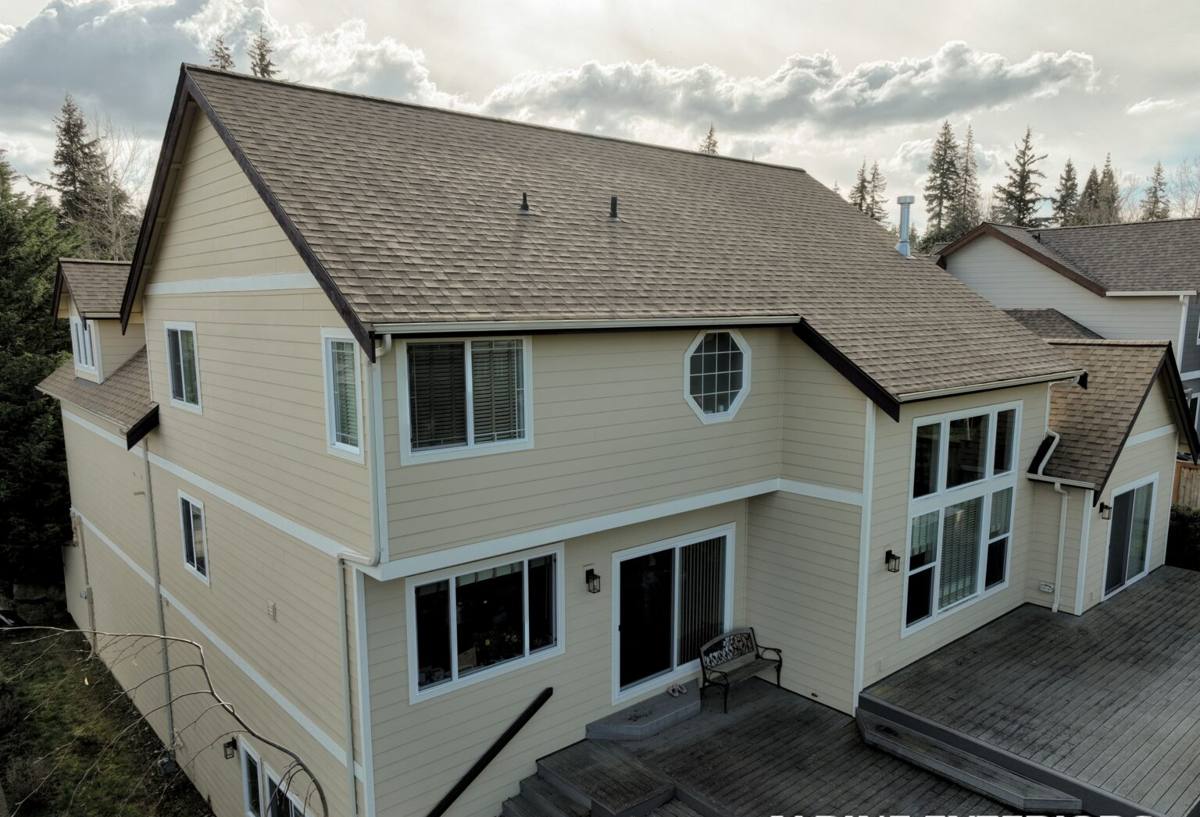
What Whatcom County's Climate Does to Siding
Salt Air and Moisture
Proximity to Puget Sound and the Strait of Georgia means airborne salt is a real factor for siding, trim, and fasteners on homes throughout this part of Whatcom County. Salt-laden moisture accelerates corrosion on unprotected metal fasteners and trim, and it's harder on paint films than dry inland air. Fiber cement itself is inert to salt — it doesn't rust, rot, or corrode — but the fasteners, flashing, and caulking around it do need to be chosen and installed with that exposure in mind.
Driving Rain
Storms coming off the water don't just fall straight down — wind-driven rain hits siding at an angle and gets pushed up under laps and around penetrations if the water-resistive barrier and flashing details aren't done correctly. This is where most "siding failures" actually start: not with the siding material itself, but with what's behind it. A house can have great siding and still have a moisture problem if the house wrap, flashing, and seams weren't detailed for wind-driven rain.
Moss and Sustained Dampness
Whatcom County's moss season is long, and north-facing walls, shaded elevations, and areas under overhangs stay damp for months at a time. Wood-based and wood-composite siding products absorb that moisture and can support moss, algae, and eventually rot in those conditions. Fiber cement doesn't feed mold or moss growth the way wood fiber can, but siding still needs to be installed with correct clearances and drainage so damp conditions don't sit against the wall assembly indefinitely.
Why We Only Install James Hardie
We standardized on James Hardie fiber cement for every home we side, including in the Nooksack area, for a specific reason: it's a non-combustible, cement-based product with a factory-applied ColorPlus finish, and Hardie engineers regional product lines (the HZ5 line is built for colder, wetter climate zones like ours) specifically for moisture and temperature cycling. That combination — inert material, factory finish, climate-specific engineering, and a real transferable warranty — is what we're willing to put our name behind. We don't install vinyl, LP SmartSide, Cemplank, Allura, or untreated wood siding, and we're happy to explain why on request. It comes down to long-term performance in exactly the kind of weather this area gets, not marketing.
What a Correct Fiber Cement Job Looks Like Here
A fiber cement installation done right in this climate isn't just nailing boards to a wall. For Nooksack-area homes, the details that matter most are:
- A continuous, correctly lapped water-resistive barrier (house wrap) with all seams and penetrations properly taped or flashed
- Rainscreen or drainage gap where the wall assembly and budget support it, so bulk water has somewhere to go besides sitting against the sheathing
- Stainless or hot-dip galvanized fasteners rated for coastal/salt exposure, not standard interior-grade fasteners
- Correct flashing at every window, door, deck ledger, and roof-to-wall intersection — the single most common source of hidden moisture damage
- Manufacturer-specified nailing patterns and clearances (ground clearance, deck/patio clearance, roof-line clearance) so board edges aren't sitting in standing water or snow
- Factory-primed or ColorPlus-finished cut edges sealed per Hardie's installation instructions, since exposed raw edges are a weak point
- Proper caulking and sealant at trim joints using products rated for this climate's temperature and moisture swings
Skip any one of these and you can end up with a wall that looks fine from the street but is trapping moisture behind it — which shows up years later as soft trim, staining, or paint failure, usually right when it's most expensive to fix.
Our Process for a Nooksack-Area Siding Project
1. On-Site Assessment
We walk the exterior and look specifically at exposure — which elevations take the worst of the driving rain, where moss and staining are already showing, and where the existing siding or trim has failed. We check for hidden moisture damage at windows, decks, and roof lines before we ever talk about products or price.
2. Scope and Product Selection
We spec the Hardie product line, plank size or panel style, and color that fit the home and the budget, and we explain the fastener and flashing plan up front — not as an afterthought once the crew is already on site.
3. Tear-Off and Sheathing Check
Old siding comes off and we inspect the sheathing underneath. If there's rot or damage from a prior moisture problem, we address it before anything new goes up — covering a bad substrate with new siding just hides the problem for a few more years.
4. Water Barrier and Flashing
This is the step that determines whether the siding performs for 30+ years or 10. We install the water-resistive barrier and flashing details to standard, with particular attention to the wind-driven rain exposure common on this side of the county.
5. Installation
Hardie boards or panels go up per manufacturer spec — correct fasteners, correct clearances, correct nailing pattern — with cut edges sealed as we go.
6. Final Walkthrough
We walk the finished job with the homeowner, check caulking and trim details, and make sure drainage paths and clearances are correct before we call it done.
Why Hiring a Crew That Already Works This Area Matters
A lot of what separates a siding job that lasts from one that doesn't isn't the product — it's whether the installer understands the specific exposure conditions of the site. A crew that regularly works Ferndale and the Nooksack area already knows which elevations catch the worst wind-driven rain, how long moss season really runs, and what salt exposure does to fasteners over time. That's not something you can fully account for by following a national installation manual alone — it comes from having actually installed and later inspected siding on homes in this same weather.
Fiber Cement vs. Other Siding Options for This Climate
| Factor | James Hardie Fiber Cement | Vinyl | Wood / Wood Composite |
|---|---|---|---|
| Moisture absorption | Does not absorb water; inert to rot | Doesn't absorb, but can trap moisture behind panels if installed poorly | Absorbs moisture; prone to rot in sustained damp conditions |
| Moss/algae resistance | Doesn't feed organic growth | Doesn't feed growth, but seams can trap debris | Wood fiber can support moss and mildew growth |
| Salt air durability | Material is inert; finish holds up well | Can become brittle and fade faster in coastal exposure over time | Finish/coating wears faster; more frequent recoating needed |
| Fire resistance | Non-combustible | Combustible, can melt/warp near heat sources | Combustible |
| Long-term maintenance | Periodic caulk/paint touch-up per warranty schedule | Low maintenance but limited repair options if damaged | Regular painting/staining and rot inspection required |
Cost Factors for a Nooksack-Area Project
Every home is different, so we won't quote a number here we can't stand behind, but the main factors that drive cost on a fiber cement job in this area are: how much of the existing wall assembly needs repair once old siding comes off, the amount of trim, window, and roofline detail work, the Hardie product line and finish selected, and the number of stories and access complexity. Homes with significant hidden moisture damage from a prior siding failure will cost more to bring back to a sound substrate before any new siding goes up — which is exactly why we check sheathing condition before finalizing a quote.
Signs Your Current Siding Is Already Losing the Fight
- Persistent moss or dark staining on north-facing or shaded walls that comes back soon after cleaning
- Soft or spongy trim boards, especially around windows, decks, and roof lines
- Paint that's peeling, bubbling, or failing faster than expected
- Visible gaps, warping, or cupping in existing boards
- Rusty streaking around fasteners or trim
If any of that sounds familiar, it's worth having someone look at what's happening behind the siding, not just the surface.
If you're in the Nooksack area and want a straight answer about what your home's exterior actually needs, we're glad to come take a look. The estimate is free, there's no pressure, and you can use the form below to get started.