 Ferndale Siding
 Board & Batten on an Island Exposed to the Salish Sea
Lummi Island homes face a different set of conditions than a house a few miles inland in Ferndale. Sitting out in the water means more direct wind, more salt in the air, and less shelter from the weather systems that roll in off the Salish Sea. Board and batten siding has become a popular choice out here for good reason — the vertical lines read as clean and contemporary on newer builds, and they echo the barn-style and shoreline-cottage look that fits the island's character on older ones. But the style only holds up if the material underneath it is built for the exposure it's getting. A board and batten profile that looks great in a showroom photo can fail fast on a property that takes ocean spray and wind-driven rain on a regular basis.
We install board and batten siding on Lummi Island using James Hardie fiber cement exclusively. This page covers what the climate actually does to siding out here, what a correctly built board and batten wall assembly looks like, and how our process is different when the job site is on an island rather than a standard mainland lot.
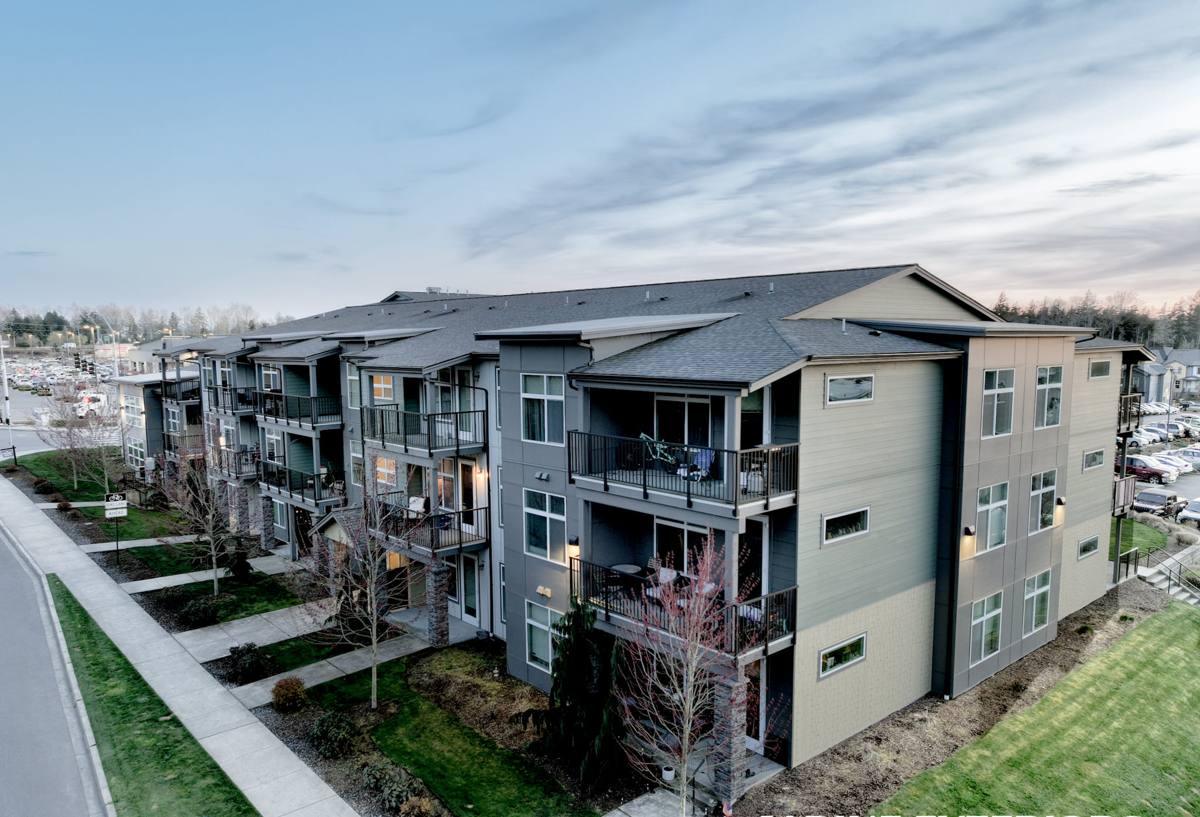
What Salt Air, Driving Rain, and Moss Actually Do to Siding
Salt Air and Marine Exposure
Airborne salt is corrosive to metal fasteners, flashing, and trim, and it accelerates the breakdown of finishes that aren't formulated to resist it. On siding materials that rely on a surface coating rather than a factory-cured finish, salt exposure shows up as chalking, fading, and premature peeling — often years before the same product would fail on an inland home in the same county.
Driving Rain and Wind-Driven Moisture
Open water exposure means rain doesn't just fall on Lummi Island homes — it's driven sideways into wall assemblies, joints, and seams. Any siding product that's sensitive to sustained moisture contact, or that swells and doesn't fully recover its shape, is going to show problems at the seams and butt joints first. Board and batten in particular has more vertical seams than a lap profile, so the material and the installation detailing around those seams matter more here than they would on a different siding style.
Moss and Algae in a Long Wet Season
Whatcom County's wet season runs long, and shaded or north-facing walls on a wooded or waterfront lot can stay damp for weeks at a time. That's ideal growing conditions for moss and algae, which take hold fastest on porous or organic materials and on siding that doesn't have a factory-cured finish to resist staining. Once moss establishes itself in a seam or at the base of a batten, it holds moisture against the wall and makes the underlying problem worse over time.
Why James Hardie Board & Batten Holds Up Out Here
Fiber Cement, Not Wood or Wood-Derived Substrate
James Hardie board and batten panels are fiber cement — a mix of cellulose fiber, sand, and cement that doesn't rot, doesn't swell with moisture the way wood-based products do, and isn't a food source for the organisms that cause mold or moss to take hold. On an island property where the wall assembly is going to see sustained damp conditions at some point every year, that's the baseline requirement before style even enters the conversation.
ColorPlus Factory Finish
Hardie's ColorPlus finish is baked on at the factory in multiple coats, rather than field-applied with a brush or sprayer on site. That finish is formulated to resist fading and hold color consistency in coastal UV and salt exposure far longer than a standard field-applied paint job, and it comes with its own finish warranty separate from the substrate warranty. For board and batten specifically, where the battens create a lot of visible vertical trim lines, an even, factory-cured finish is what keeps the whole wall looking uniform instead of showing touch-up lines a few years in.
Engineered for the Pacific Northwest
Hardie manufactures climate-specific product lines, and the HZ5 formulation used across this region is engineered for wet, moisture-heavy climates rather than a generic national spec. That matters more on Lummi Island than almost anywhere else in Whatcom County, because the island gets the full combination of rain, humidity, and salt air at once.
What a Correct Board & Batten Installation Involves
Drainage Plane and Furring
Board and batten should be installed over a proper weather-resistive barrier with a drainage gap behind the panel — typically achieved with vertical furring strips. That gap lets any moisture that does get behind the siding drain and dry out instead of sitting against the back of the panel and the wall sheathing. Skipping this detail is one of the most common corners cut on board and batten jobs, because it adds labor and material cost that doesn't show up in a finished photo.
Fastening and Batten Layout
Panels and battens need to be fastened per Hardie's published specifications — correct fastener type, spacing, and penetration depth — with battens positioned to cover panel seams fully and consistently. On a windy, exposed island site, under-fastening or incorrect fastener spacing shows up faster as loose or rattling battens.
Flashing, Gaps, and Sealant at Penetrations
Every window, door, vent, and light fixture that penetrates a board and batten wall is a potential entry point for wind-driven rain. Correct head flashing, proper gaps at panel ends, and the right sealant used only where Hardie's install specs call for it — not as a substitute for flashing — is what keeps those penetrations from becoming the failure point five or ten years down the road.
What Correct Installation Should Include
- Weather-resistive barrier installed and lapped correctly before any furring or siding goes up
- Vertical furring strips or an equivalent drainage gap behind the panel field
- Fasteners and spacing matching James Hardie's published installation specifications
- Battens aligned to fully cover panel seams with consistent reveal
- Metal flashing at all horizontal trim, window heads, and roof-to-wall transitions
- Manufacturer-approved sealant used only at specified joints, not as a flashing substitute
- Proper clearance maintained between the siding bottom edge and grade, decks, or roofing
How Board & Batten Compares for Marine-Exposed Homes
Homeowners on Lummi Island often ask how the material choice actually plays out over time in this specific environment. Here's an honest comparison across the factors that matter most for a coastal, high-moisture, salt-air property:
| Factor | James Hardie Fiber Cement | LP SmartSide / Engineered Wood | Vinyl |
|---|---|---|---|
| Moisture & salt resistance | Non-organic substrate, engineered HZ5 formulation for wet climates | Wood-strand substrate, vulnerable at cut edges and unsealed joints | Doesn't absorb moisture, but seams and fasteners can allow water intrusion behind panel |
| Combustibility | Non-combustible | Combustible (engineered wood) | Can deform or melt under heat exposure |
| Finish longevity in coastal UV/salt | Factory-cured ColorPlus finish, separate finish warranty | Factory or field-applied finish, more prone to weathering at exposed edges | Color molded through material, but can chalk and fade with age |
| Moss/algae resistance | Non-porous, non-organic surface | More susceptible due to wood fiber content | Resistant to growth but can trap moisture behind panel |
| Long-term maintenance | Periodic washing; no repainting cycle required with ColorPlus | Requires diligent sealing/caulking upkeep at edges and seams | Low maintenance but can crack in impact or extreme cold |
Our Process for Lummi Island Projects
Working on an island changes the logistics of a siding project, even when the installation itself follows the same specifications we use everywhere. We plan material deliveries and crew scheduling around ferry access rather than treating it as a standard mainland job site, which means a Lummi Island estimate includes a realistic timeline up front rather than surprises mid-project. On site, we start with a full assessment of the existing wall assembly — checking for any moisture damage, inadequate flashing, or drainage issues from a prior installation — before any new board and batten goes up. Getting that substrate right is what determines whether the new siding performs for decades or just looks good for a season.
Maintenance in a Salt-Air, Moss-Prone Climate
James Hardie board and batten doesn't require repainting on the schedule that field-finished wood or older vinyl systems do, but it isn't zero-maintenance. On Lummi Island specifically, we recommend a periodic gentle wash to clear salt residue and any early moss growth before it has a chance to establish, along with an annual check of caulking at trim and penetration points. Catching a failed sealant joint early is a five-minute fix; catching it two years late can mean repairing water damage behind the wall.
Why Hire a Crew That Already Works This Island
A contractor who's done island work understands the logistics — ferry-dependent scheduling, material staging, and the reality that a callback for a missed detail costs a lot more time here than on a mainland job. More importantly, a crew that's installed siding on multiple Lummi Island properties has already seen how salt air, driving rain, and moss behave on this specific stretch of the Salish Sea, and builds the wall assembly accordingly instead of applying a generic inland spec to an exposed shoreline site.
If you're planning a board and batten project on Lummi Island, we're happy to walk the property, look at what's there now, and give you a straightforward, no-pressure estimate for doing it right. Use the form below to get started.