 Ferndale Siding
 Custom Decks Built for Lummi Island's Coastal Climate
Lummi Island sits out in the Salish Sea, reached only by a county ferry with no bridge connecting it to the mainland. That isolation shapes more than how you get groceries home — it shapes how a deck ages. Most of the island's homes sit close to water, with little in the way of windbreaks between the house and open water, and that means decks here take a heavier, more constant version of the marine exposure that the rest of Whatcom County sees only on its worst weeks. Salt-laden air moves across these properties almost daily, wind-driven rain gets pushed sideways into any gap that will take it, and a mild, damp climate keeps moss and algae active for most of the year. We build decks with all of that in mind, not as an afterthought bolted onto a standard framing plan.
A deck built the same way you'd build one on a dry inland lot in Ferndale or further east in the county will show its age faster out here. The framing, fasteners, decking material, and even the spacing between boards all need to account for a climate that's actively working against the structure year-round.
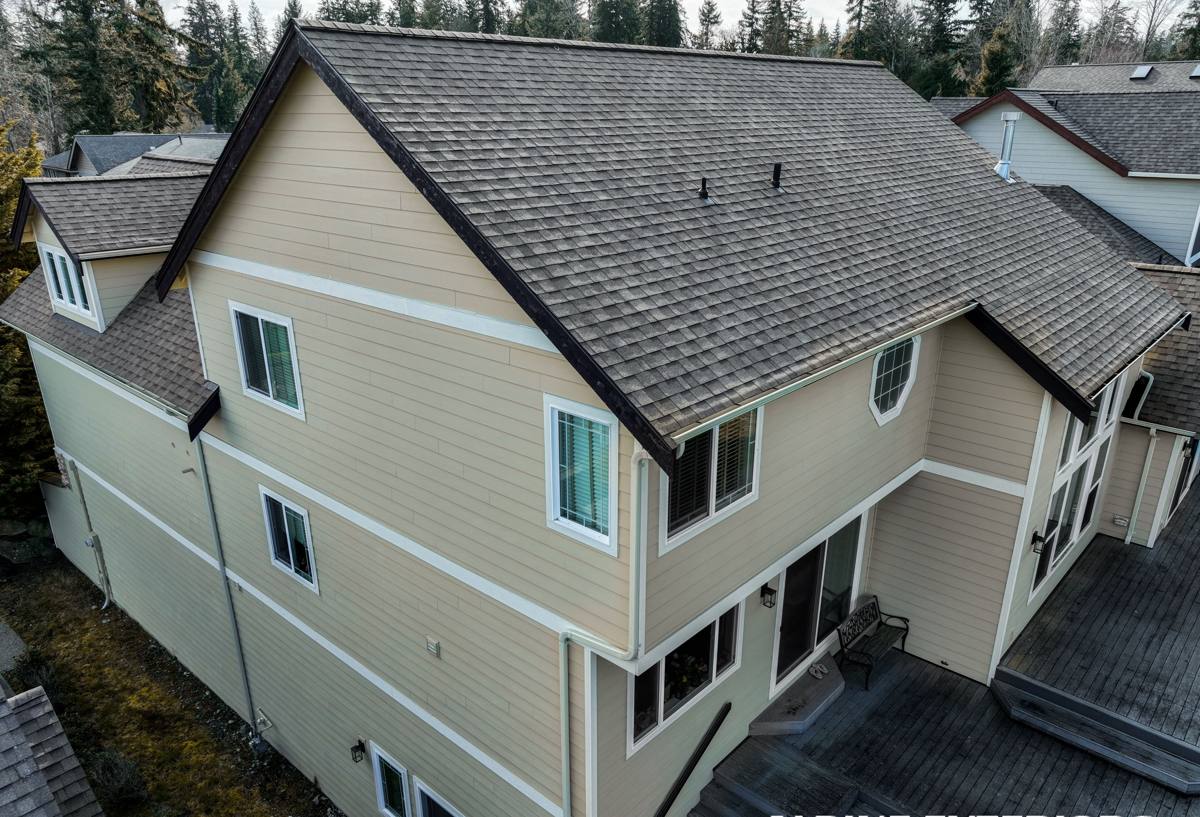
What Island Exposure Does to an Ordinary Deck
Salt Air and Hardware Corrosion
Salt in the air accelerates corrosion in fasteners, joist hangers, and any exposed metal hardware. On a standard inland deck, mismatched or lower-grade fasteners might last years before showing rust. Out here, that same hardware can start staining the decking and weakening its grip on the wood in a fraction of that time. It's one of the most common things we find when we're asked to look at an aging deck on the island — rusted nail heads, corroding hanger straps, and staining that traces directly back to hardware that wasn't rated for this kind of exposure.
Driving Rain at Ledgers and Joints
Wind off open water turns rain into a sideways problem instead of a straight-down one. That matters most at the ledger board, where the deck attaches to the house, and at any joint, seam, or fastener penetration in the decking and framing. Water pushed sideways finds its way behind flashing that's only doing half its job, and once it's tracking down behind a ledger board, it's usually rotting framing and sheathing long before anyone notices a problem from the outside.
A Moss Season That Doesn't Really End
Shaded decks, north-facing exposures, and anything under tree cover stay damp here for most of the year, and that's exactly the condition moss and algae need to take hold. Beyond the cosmetic issue, sustained moss growth on a deck surface holds moisture against the boards and creates a slick, slippery walking surface — a real safety concern on stairs and landings, not just an appearance problem.
Choosing the Right Decking Material for an Island Property
There's no single correct decking material for every home, but the trade-offs matter more here than they do a few miles inland. We walk every client through these honestly rather than pushing whichever product is easiest to install.
| Material | How It Handles Salt & Moisture | Maintenance Commitment | Best Fit |
|---|---|---|---|
| Composite / PVC decking | Doesn't absorb moisture into the board itself; resists salt staining well | Low — periodic cleaning, no sealing or staining | Waterfront and near-waterfront lots where low upkeep matters most |
| Cedar | Naturally rot-resistant but still needs a sealed finish to shed salt and moisture long-term | Moderate to high — regular cleaning and re-sealing | Owners who want a natural wood look and are willing to maintain it |
| Pressure-treated fir or pine | Treatment protects against rot but exposed cut ends and fasteners need extra attention | Moderate to high — sealing and upkeep to keep the treatment effective | Framing and substructure use, or budget-conscious surface decking with a maintenance plan |
For most Lummi Island homes, especially anything with real water exposure, we lean toward composite or PVC decking on the visible surface simply because it removes so much of the ongoing maintenance burden that salt air and moss create. That's our professional standard for this climate, not a blanket rule — a homeowner who wants real wood and is committed to maintaining it can still get a deck that lasts, as long as the framing and hardware underneath are built to the same standard.
The Structural Details That Actually Matter
Ledger Flashing and Attachment
The ledger board is the single most important flashing detail on most decks, and it's also the detail most likely to be rushed on a lower-quality build. Proper flashing here means water is directed away from the house, not just caulked over and hoped for. On a home taking this much wind-driven rain, a poorly flashed ledger is often the first place we find hidden rot when we're called out to look at an older deck.
Footings and Post Bases
Footings need to be sized and set to local frost and soil conditions, and post bases should hold the post above the decking surface rather than letting it sit in standing water. On island lots with variable soil and drainage, we don't shortcut footing depth or size just to save a day of labor.
Joist Protection and Fastener Choice
Joist tape or a comparable protective barrier over the top of each joist keeps water from soaking into cut lumber through fastener holes — a detail that matters more here given how often these structures stay wet. We also use stainless steel or high-grade coated fasteners and hardware throughout, not the standard galvanized hardware that's fine on a drier inland build but corrodes faster under sustained salt exposure.
Board Spacing and Drainage
Correct gapping between decking boards lets water and debris pass through instead of pooling on the surface, which also speeds drying time after our long wet stretches and reduces how long moss and algae have to take hold. It's a small detail that gets skipped more often than it should on lower-bid jobs.
Permitting and Shoreline Considerations
Lummi Island falls under Whatcom County's permitting jurisdiction, and because so many island lots sit on or near the water, shoreline regulations can come into play in addition to standard building permit requirements. The specifics depend on where a given property sits relative to the water and what's already built on it, so we don't guess — we confirm what applies to your specific lot before finalizing a design, and we handle the permitting process as part of the job rather than leaving a homeowner to sort it out alone.
Getting Materials and Crews to an Island Job
Building on Lummi Island means working around a fixed ferry schedule instead of just driving a truck straight to the site. Material deliveries, crew transport, and equipment all need to be planned around ferry sailing times, which means a contractor unfamiliar with that rhythm can lose real time to poor scheduling — or worse, show up without everything needed for the day. We plan material staging and crew logistics around the ferry as a normal part of scheduling an island project, not as a surprise that shows up mid-job.
Signs Your Existing Deck Needs Attention
- Soft, spongy, or spring-loaded decking boards, especially near the house or at stair landings
- Rust staining running from fasteners or hardware down the face of a board
- Moss or algae that returns quickly after cleaning, particularly on shaded sections
- Visible gaps, staining, or soft wood at the ledger board where the deck meets the house
- Wobbly railings or posts that move more than they should under light pressure
- Fasteners that have backed out, sheared, or corroded visibly
- A structure that's noticeably older than its decking material's expected service life
Our Process From First Call to Finished Deck
- An on-site walk of the property to assess exposure, drainage, existing structure if any, and how the deck will tie into the home
- An honest conversation about decking material trade-offs for your specific lot and budget
- A design that accounts for ledger flashing, footing depth, fastener grade, and board spacing suited to island exposure
- Permit coordination through Whatcom County, including shoreline review where applicable
- Construction scheduled around ferry logistics so the job moves efficiently once it starts
- A written estimate before any work begins, with no pressure to sign on the spot
Why a Crew That Already Works Lummi Island Matters
A contractor who already builds on the island understands the ferry schedule, has already worked through the county's permitting and shoreline process, and knows firsthand how salt air, driving rain, and a long moss season actually behave on a real deck over several winters — not just how a product performs on a spec sheet. That experience shows up in decisions that aren't always obvious from a proposal: which fastener grade is worth the added cost, where extra flashing attention pays for itself, and how to sequence a build so materials and crew are in the right place on the right ferry. Lummi Island's exposure is a heavier version of what the rest of Whatcom County deals with, and treating it that way — rather than applying a standard inland approach — is what keeps a deck sound past its first few winters.
If you're planning a new deck or need an honest look at one that's showing its age, we're glad to visit your Lummi Island property. Reach out using the form below to schedule a free, no-pressure estimate.