 Ferndale Siding
 Deck Repair for Lummi Island Homes
A deck takes a different kind of punishment than the rest of a house. It's horizontal instead of vertical, so it collects standing water, sun, and falling debris in a way that siding and roofing never have to deal with. It's also attached directly to the framing of the house at the ledger board, which means a deck problem left alone doesn't stay a deck problem for long. On Lummi Island, that punishment comes with an extra layer: salt-laden marine air, rain that gets driven sideways by open-water wind, and a moss season that runs longer here than it does a few miles inland toward Ferndale. We work on decks in this area regularly, and the repairs that hold up are the ones built around those specific conditions, not a generic repair job done the same way it would be anywhere else in Whatcom County.
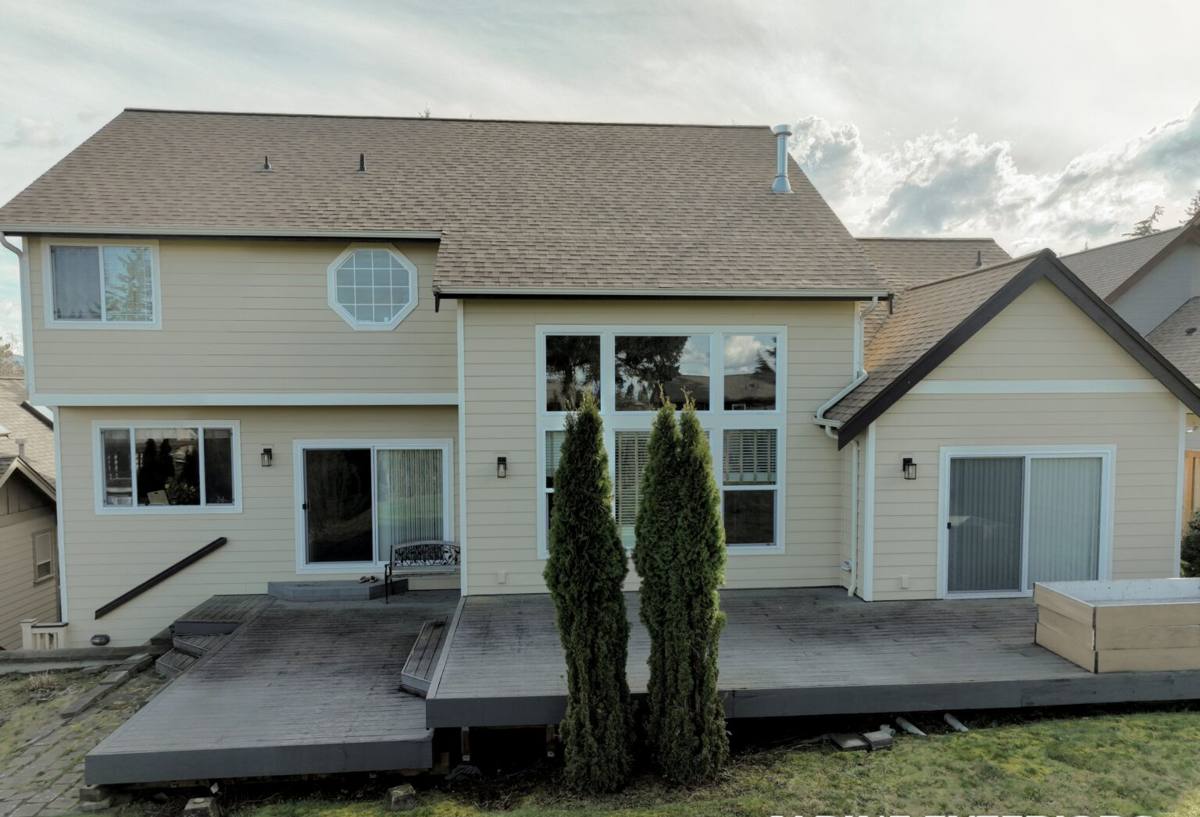
What Salt Air, Driving Rain, and Moss Do to a Deck Here
Salt-Laden Air and Corrosion
Being surrounded by saltwater means the air itself carries more corrosive moisture than an inland property sees. On a deck, that shows up first in the metal: joist hangers, structural screws, bolts, and post bases that would last for decades elsewhere can start rusting and losing strength years ahead of schedule out here. Once a fastener corrodes, it doesn't just look bad — it stops doing its job, and a deck's structural integrity depends on every one of those connections holding.
Driving Rain and the Ledger Connection
Open-water exposure means wind-driven rain is a regular event rather than an occasional one. On a deck, the place that matters most is the ledger board, the framing member bolted to the house that carries a large share of the deck's structural load. Wind-driven rain gets pushed up and under a ledger that isn't flashed correctly, and because that ledger sits directly against the house's rim joist and wall framing, water intrusion there can rot structural wood before anyone notices a problem from the outside.
A Long Moss Season
Shaded, damp conditions keep moss active on Lummi Island for a longer stretch of the year than drier parts of the county see. On a deck surface, moss does more than stain the boards — it holds moisture against the wood or composite surface, and it turns a walking surface slick and genuinely dangerous underfoot, especially on stairs. Left to build up season after season, it accelerates the exact kind of rot and surface breakdown that eventually turns a repairable deck into one that needs to be rebuilt.
Common Signs a Lummi Island Deck Needs Repair
- Soft, spongy, or spring-feeling boards, especially near the house or around stair stringers
- Rust staining running down from screws, bolts, or joist hangers
- Gaps, cracks, or staining in the caulk or flashing where the deck meets the house
- Moss or algae that returns quickly after cleaning, particularly on shaded sections
- A railing or post that flexes or feels loose when pushed
- Visible daylight or gaps between deck boards that have shrunk, cupped, or warped
- Standing water that doesn't drain within a few hours after rain stops
- Any post sitting in a footing that shows cracking, heaving, or visible movement
What a Correct Deck Repair Involves
Ledger Board and Flashing
If a ledger repair is on the table, the flashing detail matters more than almost anything else on the project. Correct work means metal flashing that sheds water away from the house, a water-resistant barrier behind it, and lag bolts or structural screws rated for the load, not just nailed-on lumber and a bead of caulk. Caulk is a backup, not a strategy, and on a site that takes this much wind-driven rain, treating it as the primary defense is how ledger rot happens in the first place.
Framing, Posts, and Footings
Joists, beams, and posts all need to be checked for rot, checking, and connection integrity, not just the decking surface people actually walk on. Footings deserve particular attention on island and coastal properties, where ground moisture and freeze-thaw cycling can affect how a post base performs over time. A repair that replaces surface boards but ignores a compromised joist or a shifting footing is solving the visible problem while leaving the structural one in place.
Fasteners and Hardware
Given the corrosion risk from salt-laden air, we spec stainless steel or high-grade coated fasteners and hardware for structural connections on Lummi Island decks rather than standard-grade galvanized products that are fine for an inland property but underperform here. The cost difference is modest compared to the labor cost of redoing a connection that failed early.
Decking Boards and Surface
Whether we're repairing sections of existing decking or replacing the surface entirely depends on the material and how far the damage has spread. Wood decking can often be spot-repaired if the damage is localized and the framing underneath is sound. Composite and PVC decking generally needs to be replaced board by board rather than patched, since it doesn't take stain or partial repair the way wood does. Either way, matching new material to old for color and profile is part of doing the job right, not an afterthought.
Repair vs. Full Rebuild: Making the Right Call
Not every deck problem on Lummi Island calls for a full tear-off. A section of rotted decking, a single failing post, or a ledger repair caught early can often be addressed without replacing the whole structure. But when the ledger board or main support beam has been compromised for a while, when multiple footings show movement, or when the deck is old enough that its structural lumber was never treated for this level of moisture exposure, patching individual symptoms usually just delays a bigger job. We inspect the structure first, not just the surface, and we'll tell you honestly which situation you're in rather than defaulting to whichever answer is more profitable for us.
Getting Materials and Crews to an Island Job
Lummi Island isn't connected to the mainland by a bridge, so every job out here works around a ferry schedule. That's a real logistical factor, not a minor detail: it means planning material deliveries so a full load arrives in as few trips as possible, sequencing the work so the crew isn't waiting on a return ferry mid-project, and building the timeline around ferry availability rather than assuming a job here moves at the same pace as one across the water. A crew that's done this before plans for it up front. A crew that hasn't often ends up eating into the homeowner's timeline with avoidable return trips.
Permits and Code Considerations for Whatcom County Decks
Many Washington jurisdictions, including areas of Whatcom County, require a permit for deck work that involves structural changes, a new ledger attachment, or a deck built above a certain height off grade — even when the project looks like a straightforward repair from the outside. Requirements can vary depending on the scope of work and the property's specific situation, so we confirm what applies before work starts rather than assuming a repair is exempt. Skipping a required permit doesn't just risk a fine; it can also create problems later if the deck work comes up during a home sale or insurance claim.
Cost Factors for Lummi Island Deck Repair
| Factor | What It Affects | Why It Matters Here |
|---|---|---|
| Ledger and flashing condition | Whether the repair involves opening up the wall connection | Wind-driven rain concentrates at this joint more than anywhere else on the structure |
| Framing and footing condition | Whether posts, beams, or joists need replacement | Salt air and ground moisture accelerate corrosion and rot in structural members |
| Decking material | Whether damaged boards can be spot-repaired or must be replaced in full | Wood can often be patched; composite and PVC generally need full-board replacement |
| Fastener and hardware grade | Material cost for structural connections | Standard-grade hardware corrodes faster in this marine environment |
| Ferry logistics | Scheduling and material delivery planning | Trips on and off the island need to be minimized to control labor time |
| Permit requirements | Timeline before work can begin | Structural or ledger work often requires sign-off before it starts |
Exact costs depend on what we find once we're actually into the structure, which is why we inspect the deck in person before giving a real number rather than quoting off a phone description.
Our Process and Why Local Experience Matters
A crew that repairs decks on Lummi Island regularly knows which connections fail first in this environment, how long the moss season really runs, and how to plan a project around ferry access instead of getting caught off guard by it. That experience shapes real decisions on the job: which fastener grade is worth the extra cost, where flashing deserves extra attention, and how to sequence material deliveries so the project doesn't stall waiting on a return trip. Our process starts with a full inspection of the structure, not just the decking surface, followed by an honest assessment of repair versus rebuild, a clear explanation of what we're specifying and why, and a written estimate before any work begins.
If your Lummi Island deck has soft boards, rust stains, a shaky railing, or you just want an honest opinion on what's happening underneath it, we're glad to take a look. Reach out using the form below to schedule a free, no-pressure estimate.