 Ferndale Siding
 Window Replacement for Marietta Homes
Marietta sits close enough to Bellingham Bay that the weather off the water shapes almost every exterior decision a homeowner makes, and windows are no exception. Between the salt-laden air drifting in off the bay, driving rain that hits west- and south-facing walls straight on, and a moss season that can stretch from October well into spring, this stretch of Whatcom County is genuinely harder on windows than most inland neighborhoods. We replace windows for homes in and around Marietta regularly enough to know what fails first here, what holds up, and what a correct installation actually requires in this specific microclimate.
This page is about one job in one area: replacing windows on Marietta homes. Not a general overview of window brands, not a sales pitch for a particular style — just a straight explanation of what your home needs, how we approach the work, and what to expect.
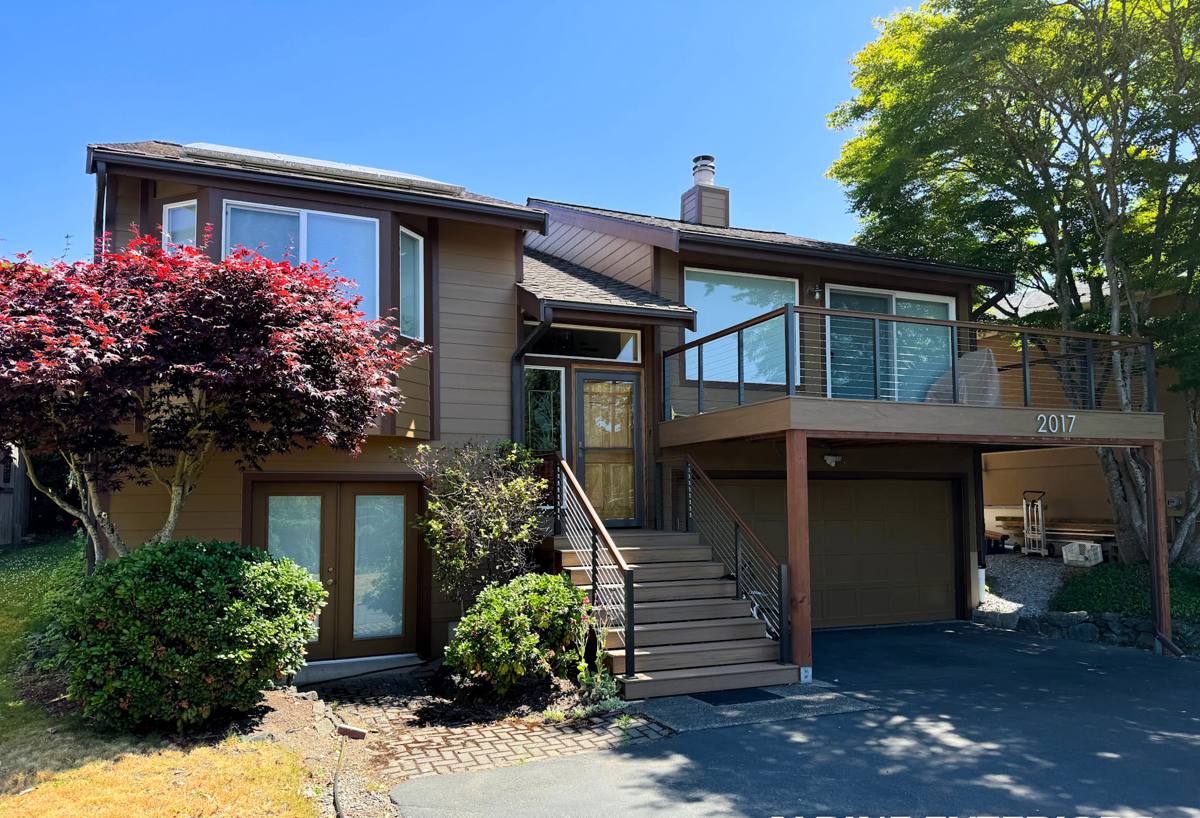
What the Local Climate Does to Windows
Salt Air and Corrosion
Homes closer to the water pick up airborne salt that settles on exterior surfaces day after day. Over years, that exposure accelerates corrosion on window hardware — hinges, locks, balance mechanisms, and especially lower-grade aluminum or unfinished steel components. It also degrades weaker sealant systems faster than a manufacturer's inland warranty testing would predict. This doesn't mean every window near the bay fails early; it means hardware quality and finish matter more here than they would forty miles inland.
Driving Rain
Whatcom County storms don't always fall straight down. Wind-driven rain off the water pushes water sideways into wall assemblies, and that's when a marginal window installation gets exposed. Flashing details, sill pans, and the integration between the window and the wall's weather-resistive barrier are what keep that water out — not the window unit itself. A great window installed with sloppy flashing will leak. A modest window installed correctly usually won't.
Moss Season
Whatcom County's long wet season keeps north-facing and shaded exterior surfaces damp for months at a time, and moss and algae growth follows. On window exteriors, that shows up as staining on sills, trim, and cladding, plus moisture sitting against wood components longer than it should. It's less a threat to the glass and sash itself and more a sign that surrounding trim and sealant need attention — which is exactly why we look at trim and flashing condition, not just the window opening, during a replacement.
Signs a Marietta Home Needs Window Replacement
- Visible fogging or moisture between panes on double- or triple-glazed units — the seal has failed and the insulating gas is gone
- Soft or discolored wood trim around the window frame, often worse on the sides facing prevailing wind and rain
- Windows that are difficult to open, close, or lock — a common result of corroded hardware or a warped frame
- Persistent drafts or a noticeable temperature difference near the window even when it's fully closed
- Visible gaps, cracked caulk, or daylight showing around the frame from inside
- Moss, algae, or dark staining building up on the sill or surrounding trim year after year
- Noticeably higher heating bills in a home with older single-pane or early-generation double-pane windows
What a Correct Window Replacement Involves
Window replacement is often sold as a product decision — pick a brand, pick a style, done. In practice, the installation determines whether the product performs, especially in a wind-driven-rain environment like Marietta's. A correct job includes:
Opening Inspection
Before any new window goes in, we check the condition of the framing, sill, and sheathing behind the old unit. This is where hidden rot or moisture damage from a prior leaky window shows up, and it needs to be addressed before a new window is installed over it — otherwise you've sealed a problem inside the wall.
Flashing and Weatherproofing
Proper sill pan flashing, integration with the existing weather-resistive barrier, and correctly lapped flashing tape are what actually stop wind-driven rain. This is the step most likely to get shortcut on a fast, cheap install, and it's the one that matters most this close to the water.
Window Selection for the Exposure
Not every window needs the same spec. A window on a sheltered, east-facing wall doesn't face the same load as one on an exposed west or south wall taking direct salt-laden wind and rain. We match hardware and frame material to the exposure rather than installing the same spec everywhere out of convenience.
Interior and Exterior Finish Work
Trim, caulking, and insulation around the new frame need to be finished properly on both sides — not just for appearance, but because gaps here are where air leaks and moisture intrusion start.
Frame Material Trade-Offs Near the Bay
There's no single "best" frame material for every home — each comes with a real trade-off, and we'll walk through them honestly rather than push whatever has the best margin.
| Frame Material | Strength in This Climate | Trade-Off |
|---|---|---|
| Vinyl | Won't corrode from salt air; low maintenance | Can expand/contract with temperature swings; quality varies widely by manufacturer |
| Fiberglass | Very stable dimensionally, holds paint and finish well over time | Higher upfront cost than vinyl |
| Wood (clad exterior) | Strong interior appearance and insulating value | Exterior cladding and seams need to be well-maintained to keep moisture out long-term |
| Bare aluminum | Strong and slim sightlines | Prone to corrosion and condensation in salt air and cool, damp conditions — we don't recommend it for this exposure without a quality thermal break and protective finish |
For most Marietta homes we lean toward vinyl or fiberglass with quality hardware, simply because they hold up with the least maintenance against salt air and constant moisture. That said, the right choice depends on your home's age, siding, and how exposed a given wall actually is.
Our Process for Marietta Jobs
- On-site assessment. We look at each window opening individually — exposure direction, current condition, signs of past moisture issues — rather than quoting off a phone conversation.
- Honest scope and pricing. We tell you which windows genuinely need replacement now, which are marginal, and which are fine, instead of pushing a whole-house job when it isn't needed.
- Removal and opening repair. Old units come out carefully, and any rot or damage found in the opening gets repaired before the new window goes in.
- Installation with proper flashing. Sill pans, flashing tape, and weather barrier integration are done to spec, not skipped to save time.
- Finish and cleanup. Interior and exterior trim, caulking, and insulation are completed, and the site is left clean.
- Walkthrough. We show you the finished work and answer questions before we consider the job done.
Why a Local Ferndale Crew Matters Here
A crew that works this specific corner of Whatcom County — Ferndale, Marietta, and the surrounding bay-facing neighborhoods — already knows which walls take the worst of the wind-driven rain, which older homes in the area tend to have outdated flashing details, and how fast moss and algae build up on north-facing trim if it isn't finished right the first time. That's not something you get from a crew that mostly works inland subdivisions and treats every job the same. We're not guessing at what this climate does to a window installation — we see the results of good and bad work on homes near the water on a regular basis.
What This Job Typically Costs
Window replacement pricing depends on the number of windows, frame material, size, and how much repair work an opening needs once the old window comes out. Broadly, homeowners in this area should expect per-window costs to range from a modest, standard vinyl replacement on the low end up to a significantly higher figure for larger units, premium fiberglass or clad-wood frames, or openings that need real structural or moisture repair. Rather than guess at a number over the phone, we'd rather look at your specific windows and give you a real figure.
Questions to Ask Before Hiring Anyone
- Will you inspect the framing and sheathing behind each old window before installing the new one?
- What flashing and sill pan method do you use, and why?
- Are you matching frame material and hardware to each wall's actual sun, wind, and rain exposure?
- What's covered under warranty — the window unit, the installation labor, or both?
- Can you show me examples of similar work on homes in this area?
If your Marietta home has windows that fog, stick, draft, or show staining and moss building up around the trim, we're happy to take a look and give you a straightforward, no-pressure estimate — just fill out the form below.