 Ferndale Siding
 Building a Deck That Actually Holds Up in Nooksack
A deck in Nooksack has to earn its keep. This part of Whatcom County sees long stretches of driving rain, a salt-tinged breeze coming off the Sound and Bellingham Bay, and a moss season that can run from October clear into May. A deck built the way it might be built in a drier climate — or built fast to hit a budget number — tends to show its age in two or three years: soft spots at the ledger, green film on every horizontal surface, rusted fastener heads bleeding down the boards. A deck built for this specific climate can go decades before it needs anything more than routine upkeep. The difference isn't the brand of decking on top. It's almost entirely in the parts you can't see once the project is done.
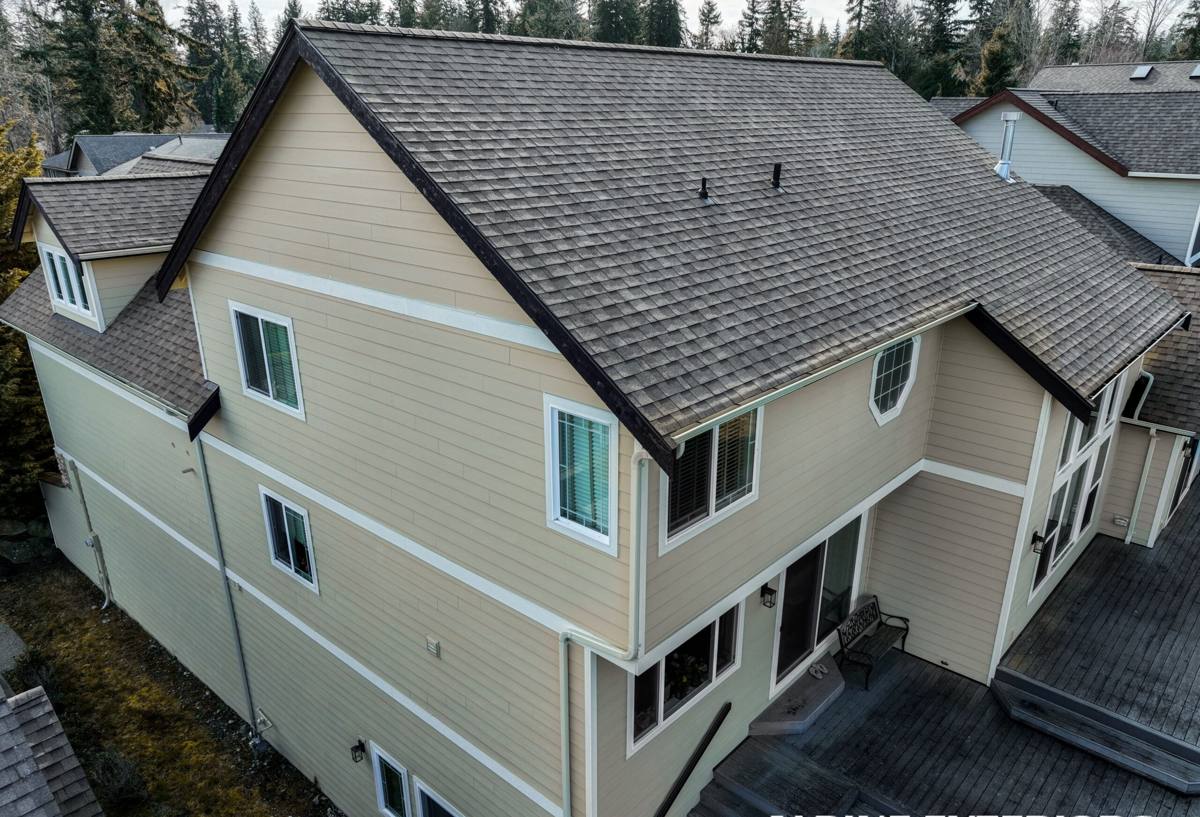
What This Climate Actually Does to an Outdoor Deck
Before talking about materials or process, it helps to understand what a deck in Nooksack is actually up against year-round.
Salt Air and Corrosion
Homes closer to Bellingham Bay and the Sound catch a steady drift of salt-laden air, and it travels further inland on windy days than most homeowners expect. Salt air accelerates corrosion on any exposed metal — screw heads, joist hangers, post bases, railing hardware. Standard zinc-coated fasteners that would be fine in a dry inland climate can start streaking rust within a season or two out here. This is a fastener and hardware decision, not a decking decision, and it's one of the most commonly skipped details on a rushed deck build.
Driving Rain
Rain here rarely falls straight down. Wind-driven rain gets pushed sideways and up under lap joints, behind ledger boards, and into any gap where flashing was skipped or installed loosely. Water that gets behind a ledger board and can't get back out is the single most common cause of structural rot in decks throughout Whatcom County — and it's usually invisible from the top until the damage is already done.
A Long Moss Season
Shaded yards, tree cover, and months of damp, mild weather give moss and algae everything they need. Moss on a deck surface isn't just an appearance problem — it holds moisture against the wood or composite cap, stays slick and slippery, and on wood decking it accelerates surface decay. Deck orientation, spacing between boards, and airflow underneath all affect how much moss a deck grows, and all of that gets decided at the design stage, not after the fact.
Choosing Decking Material for a Nooksack Property
There's no single right answer here — it depends on budget, how much sun the site gets, and how much maintenance a homeowner actually wants to do. Here's an honest comparison of the main options we install.
| Material | Moisture Behavior | Maintenance | Typical Lifespan Here |
|---|---|---|---|
| Pressure-treated lumber | Resists rot when sealed regularly; absorbs water if coating is neglected | Needs cleaning and re-sealing every 1-2 years in this climate | 15-20 years with upkeep |
| Cedar | Naturally rot-resistant, but surface grays and softens without maintenance | Annual cleaning, periodic oil or stain | 15-25 years with upkeep |
| Composite decking | Doesn't absorb water or rot, but can trap moss/algae on the surface if not rinsed | Periodic washing, no staining or sealing | 25-30+ years, manufacturer-dependent |
| PVC/capped composite | Fully sealed surface, best resistance to staining and moisture | Lowest maintenance of the group | 25-30+ years, manufacturer-dependent |
Composite and capped composite boards have become the more common choice for shaded, moss-prone yards simply because they don't rot and don't need refinishing. Wood decking still has a place — it's often the better fit stylistically or budget-wise — but it asks for more consistent maintenance in a climate this wet. We'll walk through the real trade-offs for your specific site rather than push one product line.
What a Properly Built Deck Involves
Footings Below Frost Depth
Footings need to be dug and poured to the depth required for this area, sized correctly for the load they'll carry, and positioned so the post won't shift over time. Shortcuts here — shallow footings, undersized concrete, skipped inspections — don't show up as a problem for years, which is exactly why they're tempting to cut and why they matter.
Ledger Board Attachment and Flashing
The ledger board, where the deck attaches to the house, is the single most important connection on the whole structure and the most common point of water intrusion. Correct practice means proper flashing integrated with the house's existing water-resistive barrier, structural lag bolts or through-bolts (not just deck screws) sized to the load, and a gap or flashing detail that lets any water that does get in find its way back out instead of sitting against the framing.
Fasteners and Hardware Rated for the Coast
Given the salt air here, we use stainless steel or heavy hot-dip galvanized fasteners and connectors rather than standard coated hardware, particularly on joist hangers, post bases, and any structural connection that can't easily be inspected or replaced later. It costs more up front. It's cheap compared to what it prevents.
Airflow and Drainage Underneath
A deck built low to the ground or against a slope with no ventilation underneath traps moisture against the framing and encourages both rot and moss growth on the underside. Grading, gravel or drainage beneath the structure, and adequate clearance between the framing and the ground all factor into how long the substructure lasts.
Permits and Code in Ferndale and Whatcom County
Most decks above a certain height or attached to the house require a building permit and inspection, along with guardrail height, baluster spacing, and stair requirements that follow the state building code. Skipping the permit doesn't just risk a fine — it means nobody with authority ever checked the footings, ledger connection, or structural framing before it was covered up. We handle the permit process as part of the job so the structural work gets verified while it's still visible, not after the fact.
Our Process for a Nooksack Deck Build
- On-site assessment — we look at sun exposure, drainage, slope, and how the house's existing siding and flashing meet the ledger location.
- Design and material selection — sized to actual use (grilling, seating, hot tub load, etc.), with decking material matched to the site's shade and moisture exposure.
- Permit submission — drawings and structural details submitted before any digging starts.
- Footings and framing — footings poured to depth, framing built with corrosion-resistant hardware throughout.
- Ledger flashing and waterproofing — integrated with the house's existing water barrier, not just caulked over.
- Decking, railing, and stairs — installed to code with attention to board spacing for drainage and airflow.
- Final inspection and walkthrough — city inspection passed, then a walkthrough with you before we call it done.
Keeping a Nooksack Deck Moss-Free Year-Round
A well-built deck still needs some seasonal attention in this climate. A short list we give every homeowner:
- Sweep debris and standing leaves off the deck surface regularly through fall — trapped organic matter is what feeds moss growth
- Rinse composite or capped decking a few times a year to keep algae from taking hold, especially in shaded sections
- Re-seal or re-stain wood decking on the schedule the product calls for — don't wait until it's visibly gray
- Check gaps between boards seasonally to make sure they haven't filled with debris that blocks drainage
- Look at the ledger connection and any flashing once a year for staining or gaps, since this is the hardest area to inspect casually
- Keep gutters above the deck clear so overflow isn't dumping extra water directly onto the structure
Why a Crew That Already Works in Nooksack Matters
A contractor who builds decks across a range of climates has to relearn the local conditions on every job. A crew that already works Nooksack and the surrounding Whatcom County area knows which yards sit in enough shade to need extra attention to moss and drainage, knows what the local permitting office expects to see on a set of drawings, and has already made the fastener and flashing decisions that hold up against salt air and driving rain — because we've gone back and seen what happens when those details get skipped elsewhere. That's not a marketing point, it's just fewer surprises for you during and after the build.
Ready to Talk Through Your Deck Project?
If you're planning a new deck or replacing one that's showing its age, we're happy to come take a look, walk the site with you, and put together a straightforward estimate — no pressure, no obligation. Use the form below to get started.