 Ferndale Siding
 Siding for Nooksack Has to Answer to the Weather, Not Just Look Good
Nooksack sits in a part of Whatcom County that takes weather seriously. You're close enough to the water to pick up salt-laden air, far enough inland to sit under the low gray ceiling that parks over this valley most of the year, and surrounded by enough tree cover and shade that moss has plenty of time to get established on anything that stays damp. That combination is hard on exterior materials in a way that a lot of siding products simply weren't built for. We install James Hardie fiber cement siding here because it's engineered for exactly this kind of climate, and we think homeowners in this area deserve to understand why that distinction matters before they sign a contract.
This page isn't a general overview of James Hardie siding. It's specifically about what a James Hardie installation needs to do for a home in the Nooksack area — what the climate throws at your walls, what correct installation looks like, and what our process is when we take on a project here.
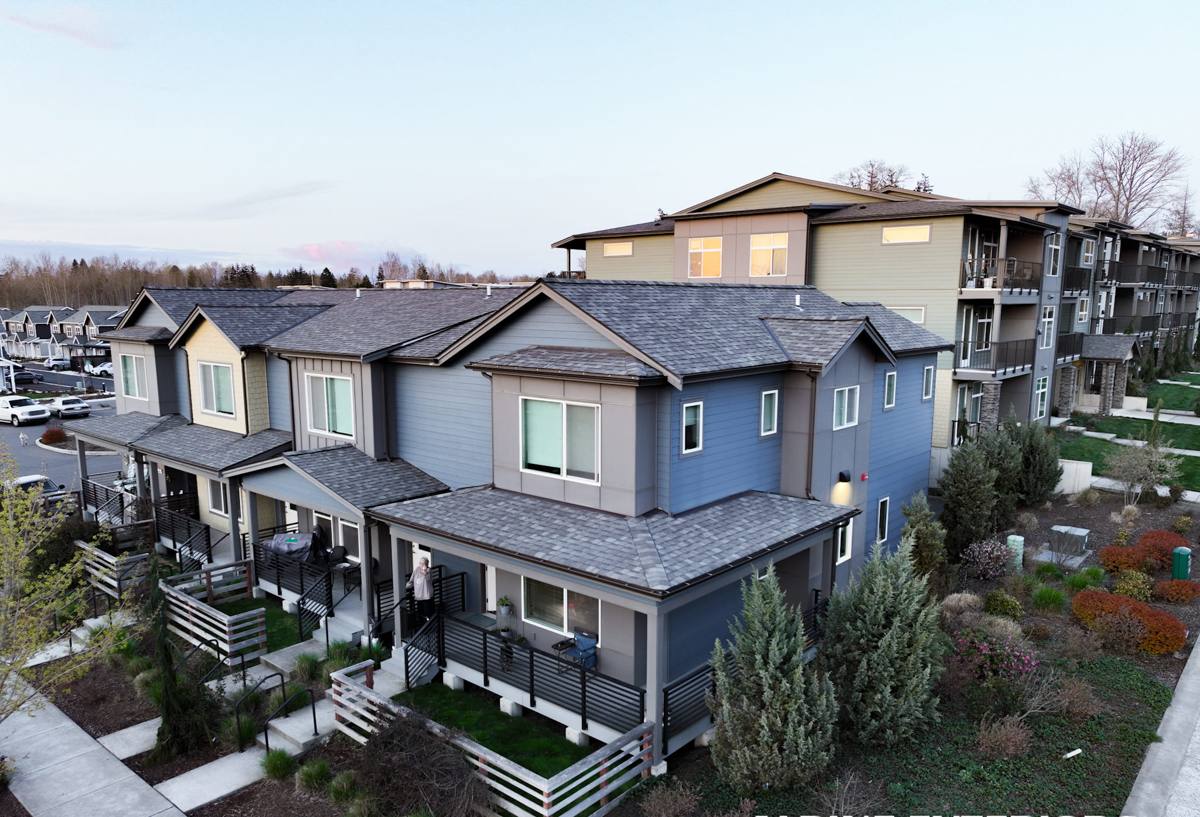
What Salt Air, Driving Rain, and Moss Season Actually Do to a House
Each of these three factors causes a different kind of damage, and a siding system has to hold up against all three at once, year after year.
Salt Air
Airborne salt is corrosive to metal fasteners, flashing, and trim, and it accelerates the breakdown of paint films and cheaper composite materials. Over years, homes closer to the water show chalking, fading, and edge deterioration faster than the same products would show inland. Siding that isn't factory-finished for coastal exposure often needs repainting on a shorter cycle than the homeowner was told to expect.
Driving Rain
Whatcom County storms don't just fall straight down — wind-driven rain gets pushed sideways into laps, seams, and butt joints. If those details aren't installed correctly, water finds its way behind the siding and into the wall assembly, where it can sit against sheathing and framing for months without anyone noticing until there's a soft spot or a stain on drywall inside.
Long Moss Season
This region's combination of shade, moisture, and mild temperatures gives moss and algae a long window to take hold — often eight or nine months of the year on north-facing walls and anywhere siding stays damp longer than it should. Moss holds moisture against the surface, which speeds up rot in wood-based products and stains paint film on almost anything. A siding product's ability to resist and shed that growth, and to be cleaned without damage, matters more here than in drier climates.
Why We Only Install James Hardie in the Nooksack Area
We made a decision as a company to install James Hardie fiber cement exclusively — no vinyl, no LP SmartSide, no Cemplank, no Allura, no primed wood species like spruce or cedar. That's not a marketing position, it's a practical one, built on what actually holds up in this climate over a 20 to 30 year window.
Vinyl softens, warps, and can crack in freeze cycles, and its seams are a weak point for wind-driven rain. Wood-based and engineered wood products, no matter how well treated, are still organic material at their core — moisture and moss exposure over enough years will find the weak points. Fiber cement doesn't have that vulnerability. It's made from cement, sand, and cellulose fiber, which means it doesn't rot, it isn't a food source for moss and mildew the way wood is, and it holds paint and factory finish far longer than wood-based alternatives. In a climate that stays wet more months than it's dry, that difference compounds year over year.
Choosing the Right Hardie Product for This Climate
James Hardie makes climate-engineered product lines, and picking the right one for a Nooksack home is part of doing the job correctly, not an upsell. The table below covers the main options we discuss with homeowners here.
| Product Line | Best Fit For | Why It Matters Here |
|---|---|---|
| HardiePlank Lap Siding, HZ5 formulation | Most homes in this region | Engineered for climates with freeze-thaw cycles and sustained moisture exposure, which describes most of Whatcom County |
| ColorPlus factory finish | Homeowners who don't want a repaint cycle | Baked-on finish resists fading and chalking from salt air and UV far longer than field-applied paint |
| HardieTrim | Corners, fascia, window and door trim | Matches the siding's moisture resistance so trim doesn't become the weak point in the system |
| HardiePanel (vertical) | Accent walls, gable ends, some architectural styles | Same fiber cement performance in a different profile for design variety |
We'll walk through which combination fits your home's exposure — north-facing walls that stay shaded and damp longer often get more attention to detail than south- or west-facing walls that dry out faster between rain events.
What a Correct Installation Actually Involves
James Hardie siding performs the way it's designed to only when it's installed to the manufacturer's specifications. Most of the siding failures we get called out to inspect on older homes trace back to installation shortcuts, not the material itself. For this climate specifically, a handful of details matter more than usual:
- Correct water-resistive barrier and flashing behind the siding, with proper overlap at every horizontal seam, so wind-driven rain has nowhere to get behind the wall
- Manufacturer-specified fastener spacing and type, including corrosion-resistant fasteners appropriate for salt-air exposure
- Proper clearance between the bottom edge of the siding and grade, decks, and roof lines, so moisture and moss have less opportunity to sit against the material
- Correctly caulked and sealed butt joints and trim transitions, using sealants rated for the exposure rather than whatever's cheapest
- Factory-cut and factory-primed edges kept intact wherever possible, since field-cut edges need to be properly sealed to maintain the product's moisture resistance
- Adequate gap and flashing at windows and doors, which are the single most common source of hidden water intrusion behind siding
Skipping any one of these doesn't necessarily show up right away — it shows up in year four or five as a stain, a soft spot, or moss that won't stop coming back no matter how often it's cleaned.
Our Process, Start to Finish
When we take on a James Hardie project in the Nooksack area, the process looks like this:
- On-site assessment: We look at your home's specific exposure — sun, shade, prevailing wind direction, drainage around the foundation, and the condition of the existing siding and sheathing.
- Product and color selection: We recommend the Hardie product line and ColorPlus color that fits the home's exposure and your preferences, and explain the reasoning rather than just handing you a swatch book.
- Written estimate: A clear scope of work and cost, with no vague allowances hiding what's actually included.
- Tear-off and inspection: Once old siding comes off, we inspect the sheathing and framing underneath for any existing moisture damage before anything new goes up — this is often the first time hidden problems get found.
- Weather barrier and flashing installation: Done to manufacturer spec, since this layer does most of the actual water management work.
- Siding installation: Installed to James Hardie's fastening, clearance, and sealing specifications, not shortcuts that save an afternoon.
- Final walkthrough: We go over the finished work with you before we consider the job done.
What Affects Cost on a Nooksack Job
Every home is different, so we won't quote a number without seeing the house, but these are the factors that typically move the price up or down.
| Factor | Effect on Cost |
|---|---|
| Extent of existing sheathing or framing damage | Repairs found during tear-off add cost but prevent covering up a problem |
| Home's height and roofline complexity | Multi-story homes and steep or complex rooflines increase labor and staging needs |
| Trim and architectural detail | More corners, gables, and trim transitions mean more precision work |
| Product line and finish chosen | ColorPlus factory finish costs more upfront than field paint but eliminates a repaint cycle |
| Site access | Tight lots, fencing, or landscaping close to the house can slow staging and setup |
Living with James Hardie Siding in This Climate
One of the practical advantages of fiber cement here is how little it asks of you afterward. It doesn't need repainting on the schedule wood does, it isn't a moss food source, and it holds up to pressure washing far better than vinyl or wood trim. That said, a light annual rinse to keep organic buildup from accumulating on shaded, north-facing walls is a good habit in this climate — not because the material is fragile, but because staying ahead of moss is easier than removing it once it's established. Keeping gutters clear and grading water away from the foundation also protects the bottom courses of siding, which see the most splash-back during heavy rain.
Why It Matters That We Already Work in Nooksack
A crew that's worked this specific area knows which walls on a typical lot get the most shade and moss pressure, how local wind patterns drive rain into certain elevations harder than others, and what the freeze-thaw pattern here actually does to fasteners and seams over time. That's not something you get from a national installer working off a generic spec sheet. It shows up in small decisions — where extra flashing attention goes, which product line makes sense for a shaded lot versus an open one — that add years to how long the siding performs.
If you're considering siding work on a Nooksack-area home, we're happy to come take a look and walk you through what your specific house needs. The estimate is free, there's no pressure, and you'll get a straight answer about what the job actually involves — just use the form below to get started.