 Ferndale Siding
 Why Nooksack-Area Homes Take a Different Kind of Beating
Homes in and around Nooksack sit in one of the more demanding exterior environments in Whatcom County. You've got marine air drifting in off the Salish Sea, long stretches of driving rain riding sideways on winter storms, and a moss season that seems to start earlier and last longer every year under the tree cover and cloud ceiling typical of this part of Washington. None of that is unusual for someone who's lived here a while — but it's exactly the combination that wears out the wrong siding material years before it should fail.
Siding replacement out here isn't just a cosmetic upgrade. It's a decision about what's going to stand between your framing and three things working against it at once: salt-laden moisture, sustained wind-driven rain, and organic growth that holds water against the wall longer than it should sit there. Get the material and the installation right, and you get decades of low-maintenance protection. Get it wrong, and you're looking at soft trim, moss staining, and hidden rot within a decade.
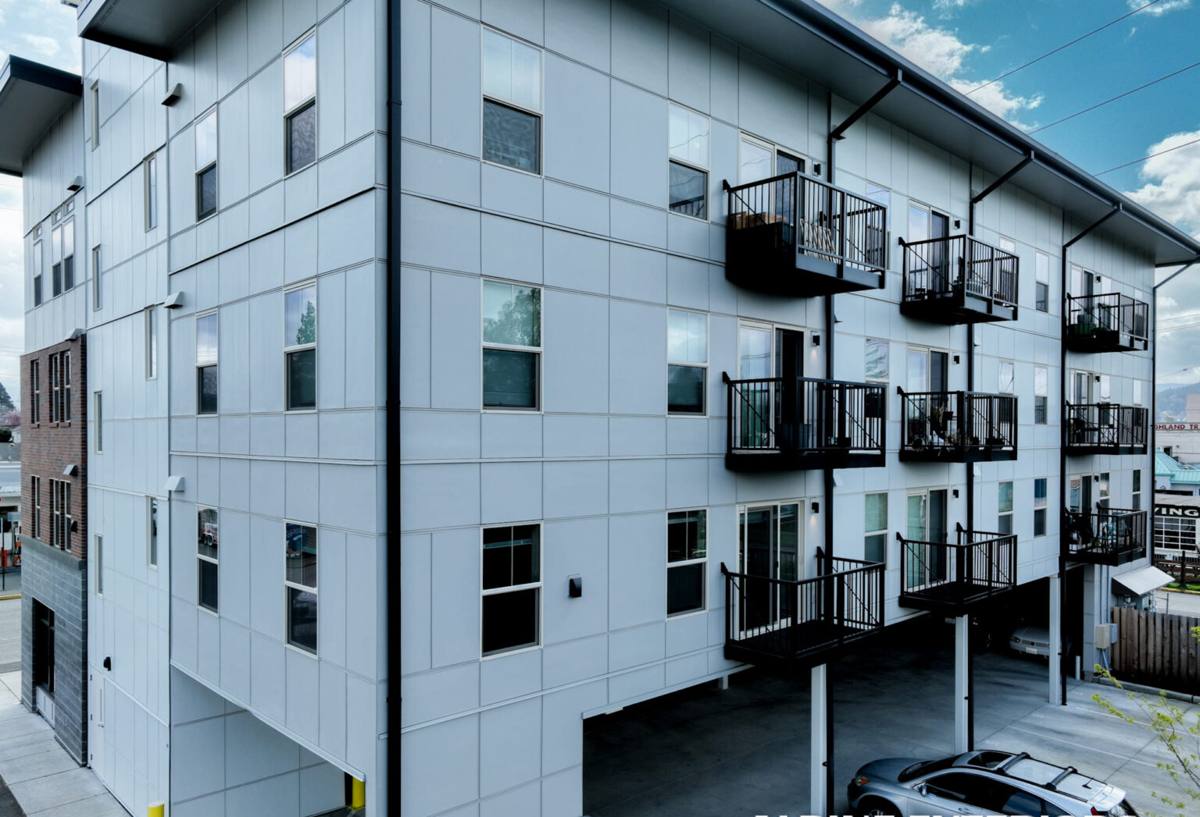
What Driving Rain, Salt Air, and Moss Actually Do to Siding
It helps to understand the mechanism, not just the symptom.
Driving Rain
Wind-driven rain doesn't just run down a wall — it gets pushed sideways and upward, finding every lap joint, seam, and fastener penetration. Siding that isn't dimensionally stable, or that relies on caulk and paint film to stay sealed, opens up gaps as it expands, contracts, and ages. Once water gets behind the cladding, it's the water-resistive barrier and flashing details doing the real work — the siding is only the first line of defense.
Salt Air
Even a few miles inland from the water, airborne salt accelerates corrosion on fasteners and metal trim, and it speeds up the breakdown of lower-quality paint finishes and adhesives. Coatings that hold up fine in a dry inland climate can chalk, fade, or lose adhesion faster here.
Moss and Sustained Moisture
Whatcom County's tree cover and long damp season mean moss and algae get a real foothold on north-facing and shaded walls. Moss holds moisture against the siding surface far longer than open sun and wind would allow it to dry. Over years, that constant damp cycle is what causes swelling, delamination, and rot in siding materials that aren't built to shrug off standing moisture.
Signs a Nooksack Home Needs Siding Replacement, Not Just Repair
Not every issue means a full tear-off. But these are the signs we tell homeowners not to ignore:
- Soft or spongy spots when you press on the siding, especially near the bottom courses or below windows
- Visible cupping, warping, or buckling panels
- Paint that's peeling or bubbling rather than just fading — that usually points to moisture underneath, not just an old paint job
- Persistent moss or algae staining that comes back within a season or two of cleaning
- Cracked or missing caulk at seams, corners, and trim that's let water tracking start
- Rising interior humidity, musty smells near exterior walls, or visible staining on interior drywall near the siding line
- Siding that's original to a home more than 20-25 years old, particularly if it's an engineered wood or vinyl product not rated for this climate
If you're seeing two or more of these, it's worth a full inspection before deciding between spot repair and replacement.
What a Correct Siding Replacement Job Actually Involves
Tear-Off and Inspection
A proper job starts with removing the old siding and actually looking at what's underneath — sheathing, framing, and any existing water-resistive barrier. This is the step that gets skipped by crews trying to move fast, and it's exactly where hidden rot or improperly flashed windows get discovered. Skipping it means sealing existing damage behind brand-new siding.
Water-Resistive Barrier and Flashing
In a climate with this much driving rain, the housewrap and flashing details around windows, doors, and penetrations matter as much as the siding itself. Properly lapped house wrap, correctly integrated window flashing, and flashing at every horizontal trim and butt joint are what actually keep water out — the siding sheds the bulk of it, but the drainage plane behind it handles what gets through.
Installation to Manufacturer Spec
Fastener spacing, clearance from grade and roof lines, proper gapping at butt joints, and correct nailing patterns aren't optional details — they're what the product's warranty is actually contingent on. Installing James Hardie siding without following Hardie's published installation requirements can void the warranty even if the material itself is right.
Finish and Detailing
Corner trim, caulking at appropriate joints (not all of them — over-caulking traps moisture), and touch-up painting at cut edges finish the job. This is also where factory-finished products have a real advantage over field-painted ones, since factory finishes are applied and cured under controlled conditions rather than on a job site at the mercy of the weather.
Why We Install Only James Hardie Fiber Cement
We get asked regularly why we don't offer vinyl, LP SmartSide, or other engineered wood products, given that they're often less expensive up front. It's a fair question, and the honest answer is climate and long-term performance.
Vinyl siding is affordable and low-maintenance in a lot of climates, but it's a thin material that expands and contracts significantly with temperature swings, can crack in impact or extreme cold, and its seams and J-channels give wind-driven rain more opportunities to work behind it over time. Engineered wood products like LP SmartSide use wood strand technology that performs well when installation and maintenance are perfect, but they're more sensitive to sustained moisture exposure than fiber cement — and sustained moisture is exactly what a moss-prone, high-rainfall area produces. Once the engineered wood substrate takes on water and swells, that damage doesn't reverse.
James Hardie fiber cement is a genuinely different material: it's non-combustible, dimensionally stable across wet and dry cycles, and doesn't support the kind of moisture-driven swelling that ends engineered wood siding's service life early. Hardie's ColorPlus factory finish is baked on and warrantied against fading and peeling separately from the substrate itself, which matters in a salt-air environment where lesser paint finishes chalk out faster. Hardie also engineers specific product lines (their HZ5 line, for instance) for climates with more moisture exposure, which is the right fit for Whatcom County. We standardized on it because it's the one product we can install and stand behind for the long haul in this specific climate, not because it's the cheapest option on the table.
Cost Factors for a Nooksack Siding Replacement
Every home is different, but these are the variables that actually move the number:
| Factor | Why It Matters |
|---|---|
| Home size and wall complexity | More corners, gables, and dormers mean more cutting, trim, and labor hours |
| Condition of sheathing underneath | Rot discovered during tear-off requires repair before new siding goes on |
| Siding profile chosen | Lap, shingle, and panel styles carry different material and labor costs |
| Trim and accessory scope | Fascia, soffit, and trim replacement alongside siding adds to the project |
| Access and site conditions | Steep grades, tree cover, or tight lot lines affect staging and labor time |
| Existing paint or coating removal | Older siding with lead-era paint may require special handling during tear-off |
We walk through each of these during the estimate so you know exactly what's driving the number, not just a lump sum.
Our Process, Start to Finish
- On-site inspection and honest assessment of your current siding and what's underneath
- Written estimate that breaks out material, labor, and any sheathing or trim repair separately
- Scheduling built around Whatcom County's weather windows, so tear-off doesn't sit exposed longer than necessary
- Full tear-off, sheathing inspection, and repair of any hidden damage before new material goes up
- Housewrap and flashing installed per manufacturer spec at every window, door, and penetration
- James Hardie siding installed to Hardie's published fastening and clearance requirements
- Final trim, caulking, and touch-up, followed by a walk-through with you before we call it done
Why Local Experience in Nooksack Actually Matters
A crew that already works this specific area knows which walls take the worst of the wind-driven rain, how much shade and moss exposure to expect on a given lot, and what tends to go wrong when a house sits close to tree cover or on a slope with poor drainage. That's not something you learn from a spec sheet — it comes from doing this work repeatedly on homes in this exact stretch of Ferndale and the surrounding Whatcom County communities. It shows up in small decisions: where we add extra flashing attention, which elevations we double-check for moss staining before quoting, and how we sequence a job around the weather instead of fighting it.
If your Nooksack-area home is due for new siding, we're happy to take a look and give you a straightforward, no-pressure estimate — including an honest read on whether you're looking at a full replacement or something less. Fill out the form below to get started.