 Ferndale Siding
 Building Decks for Point Roberts' Marine Climate
Point Roberts sits right on the water, and that changes what a deck has to survive. Homes here deal with salt-laden air blowing off the Strait of Georgia, long stretches of driving rain through fall and winter, and a moss season that can run most of the year in shaded spots. A deck built with generic materials and generic assumptions about "Pacific Northwest weather" often struggles here specifically because the salt exposure is heavier than it is a few miles inland in Ferndale proper. We build decks for this peninsula with that exposure in mind from the first design conversation, not as an afterthought.
A custom deck isn't just a platform — it's a system of framing, fasteners, decking, flashing, and drainage that all have to work together over years of wet, salty weather. Get one part wrong and the whole thing ages faster than it should.
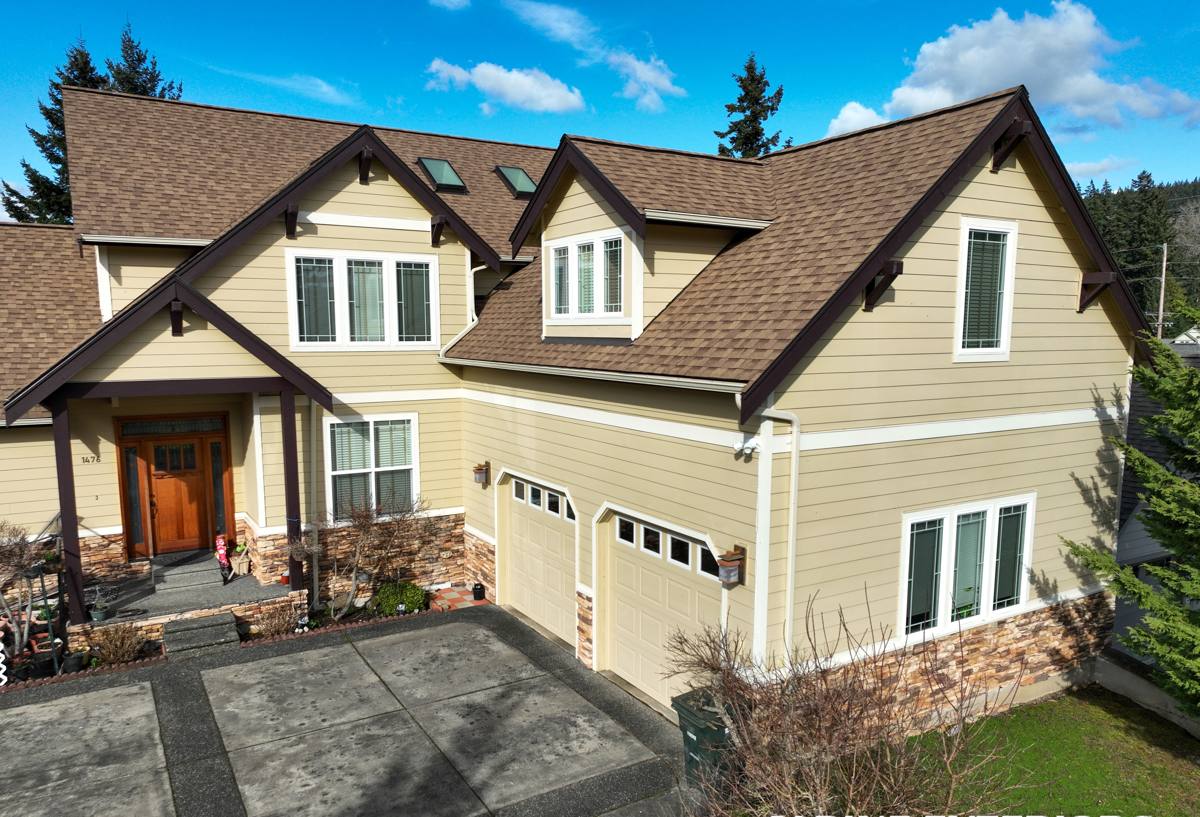
What Salt Air and Driving Rain Actually Do to a Deck
It helps to understand the specific ways coastal weather attacks a deck, because it explains almost every material and hardware choice we make.
Salt Air and Corrosion
Airborne salt accelerates corrosion on anything metal — fasteners, brackets, railing hardware, even some cheaper aluminum trim. Standard hot-dip galvanized screws can start showing rust streaks on a deck near the water years before they would inland. Once a fastener corrodes, it weakens, stains the surrounding wood or composite, and can eventually fail structurally.
Driving Rain and Moisture Intrusion
Wind-driven rain doesn't just fall on a deck — it gets pushed sideways into ledger connections, under railing posts, and into any gap where flashing is missing or installed poorly. Whatcom County building code requires proper flashing at ledger-to-house connections for exactly this reason, but flashing quality varies a lot between installers. A deck attached to the house without correct flashing is one of the most common causes of hidden rot we find on older decks in this area.
Moss, Algae, and Surface Buildup
Shaded, damp decks in this climate grow moss and algae on the surface, especially on wood and lower-end composite boards. Beyond looking bad, a mossy deck surface gets slick and dangerous in wet weather, and moss holds moisture against the board, which shortens its life.
Choosing Decking Materials That Actually Hold Up Here
There's no single "right" decking material for every homeowner — budget, look, and maintenance tolerance all factor in. But some materials are a better match for Point Roberts conditions than others, and we'll walk through the honest trade-offs rather than just push the highest-margin product.
| Material | Upfront Cost | Salt/Moisture Resistance | Maintenance | Typical Lifespan |
|---|---|---|---|---|
| Pressure-treated wood | Lowest | Fair — needs sealing to perform well | Annual cleaning, re-sealing every 1-2 years | 10-15 years with upkeep |
| Cedar | Moderate | Good natural resistance, but surface still weathers | Regular cleaning, periodic oil or sealant | 15-20 years with upkeep |
| Composite decking | Higher | Very good — won't rot, resists moss better than wood | Periodic washing, no sealing/staining | 25-30+ years, manufacturer-warrantied |
| PVC decking | Highest | Excellent — fully synthetic, no wood fiber to hold moisture | Occasional washing | 30+ years, manufacturer-warrantied |
For a deck fully exposed to salt spray and shade, we typically steer homeowners toward composite or PVC decking, because the wood-fiber content in cheaper composite blends can still absorb moisture and support moss growth over time — a fully synthetic PVC board avoids that almost entirely. For a covered or more sheltered deck, quality cedar can be a perfectly good and more affordable choice. We'll tell you honestly which fits your specific site.
The Structure Underneath: Framing, Footings, and Flashing
The decking boards are what you see, but the framing underneath is what determines whether the deck is still safe in fifteen years. A few things we treat as non-negotiable on every Point Roberts project:
- Footings sized and set to Whatcom County frost depth and soil requirements, not guessed
- Ledger board flashing installed as a continuous, properly lapped barrier — this is the single most common failure point we see on existing decks
- Joist tape or a moisture barrier on top of framing lumber, so standing water and driving rain don't sit directly on cut end grain
- Corrosion-resistant structural hardware rated for the fastener and connector combination being used, not mixed metals that accelerate galvanic corrosion
- Proper drainage slope so water sheds off the deck surface instead of pooling near the house
None of this is visible once the deck is finished, which is exactly why it matters who builds it. A deck can look great for the first year or two regardless of what's underneath — the difference shows up later, usually as soft spots, staining, or a ledger connection that's quietly taking on water.
Fasteners and Hardware: Where Corrosion Starts First
On a coastal deck, the fasteners often fail before the decking material does. We use stainless steel or high-grade coated fasteners rated for saltwater-adjacent exposure on structural connections and visible hardware, and we match fastener type to the decking material's manufacturer specifications — using the wrong screw with certain composite or PVC boards can void the product warranty even if the board itself is fine. Railing posts and post bases get the same attention, since they take direct weather exposure and structural load at the same time.
How Our Process Works
1. On-Site Consultation
We walk the property with you, look at sun and wind exposure, drainage patterns, and how close the deck will sit to salt spray, and talk through what you actually want to use the space for.
2. Design and Material Selection
We put together a design and give you an honest material comparison for your specific site — not a one-size-fits-all recommendation — along with a clear cost breakdown.
3. Permitting
Most decks above a certain height or attached to the house require a permit in Whatcom County. We handle the permit process and make sure footings, ledger attachment, and railing meet current code.
4. Construction
Footings and framing go in first, with flashing and moisture barriers installed before decking ever goes down. We don't rush this stage — it's the part nobody sees later.
5. Final Walkthrough
We go over the finished deck with you, including basic care specific to the material you chose, so you know what upkeep to expect and what's covered by manufacturer warranty versus our workmanship.
What Drives Deck Project Costs
| Factor | Why It Matters |
|---|---|
| Decking material | Pressure-treated, cedar, composite, and PVC span a wide price range per square foot |
| Size and shape | Multi-level decks, curves, and built-in benches or planters add labor |
| Height off grade | Taller decks need more substantial framing, railing, and often stairs |
| Site access and soil | Difficult access or poor soil conditions can affect footing work |
| Railing style | Cable, glass, and metal railing systems cost more than standard wood or composite balusters |
| Covered vs. open | A roof or pergola over the deck adds structural and material cost but reduces long-term weathering |
We give you a firm, itemized quote before work starts, so you know exactly what you're paying for and why — no vague allowances that turn into surprise add-ons.
Deck Maintenance Checklist for Point Roberts Conditions
Whatever material you choose, a little seasonal attention goes a long way in this climate:
- Sweep debris and standing water off the surface regularly, especially in shaded areas prone to moss
- Wash the deck surface at least once a year to remove salt residue and organic buildup before it takes hold
- Check railing posts and fastener heads for early rust staining
- Inspect the ledger flashing area (where visible) for staining on the house siding above the deck, which can signal water intrusion
- Re-seal wood decking on the manufacturer's recommended schedule — don't wait until it looks dry and gray
- Clear gutters and downspouts near the deck so overflow isn't dumping directly onto it
Why Hiring a Crew That Already Works Point Roberts Matters
Point Roberts has its own logistics — it's a peninsula, and access, permitting, and even material delivery timing work differently than a standard Ferndale or Bellingham job. A crew that already builds decks out here knows the practical realities: what exposure a given site actually gets, how local building department reviews decks and railings, and which materials genuinely hold up versus which ones look good on a spec sheet but underperform once salt air and winter rain get to them. That local experience shows up in fewer surprises, a more accurate quote, and a deck that's built for the site it's actually going on.
If you're planning a new deck or replacing one that's showing its age, we're happy to take a look and give you a straightforward, no-pressure estimate — just fill out the form below to get started.