 Ferndale Siding
 Point Roberts is not a typical Whatcom County job. It sits on its own peninsula south of the 49th parallel, cut off from the rest of Washington by land — the only way to drive in or out is through Canada. That geography shapes almost everything about how a window project gets planned and scheduled here, on top of the coastal exposure that already makes this one of the harder stretches of the county on a window's hardware, seals, and finish.
We treat custom windows as a distinct category of work in Point Roberts, not a smaller version of a standard replacement job somewhere closer to the shop. The measuring, the ordering lead time, the delivery logistics, and the installation details all change once a window isn't a stock size, and they change again once the jobsite is only reachable by crossing an international border. This page covers what that actually looks like — what local homes need, what a correct install involves, and why it matters that we already work out here regularly instead of treating Point Roberts as a one-off trip.
Why Point Roberts Is a Different Kind of Job Site
Point Roberts is a small peninsula bordered by Boundary Bay to the east and the Strait of Georgia to the west, and it's connected to the mainland United States only through Canada. A crew, a delivery truck, or a load of custom windows headed to Point Roberts from Ferndale has to cross into Canada and back into the U.S. to get there — there's no direct overland route that stays inside Washington. That's not a complaint about the drive, it's a fact that has to be built into scheduling, lead times, and how a job gets planned from the first estimate.
The community itself is small and seasonal in character, with a year-round population that grows considerably in the warmer months as part-time and seasonal residents open up their places. That mix of full-time homes, seasonal cottages, and vacation properties built or renovated over several decades is a big part of why custom window openings come up so often here — a lot of housing stock predates modern standard sizing, or was added onto in ways that never matched a manufacturer's off-the-shelf dimensions.
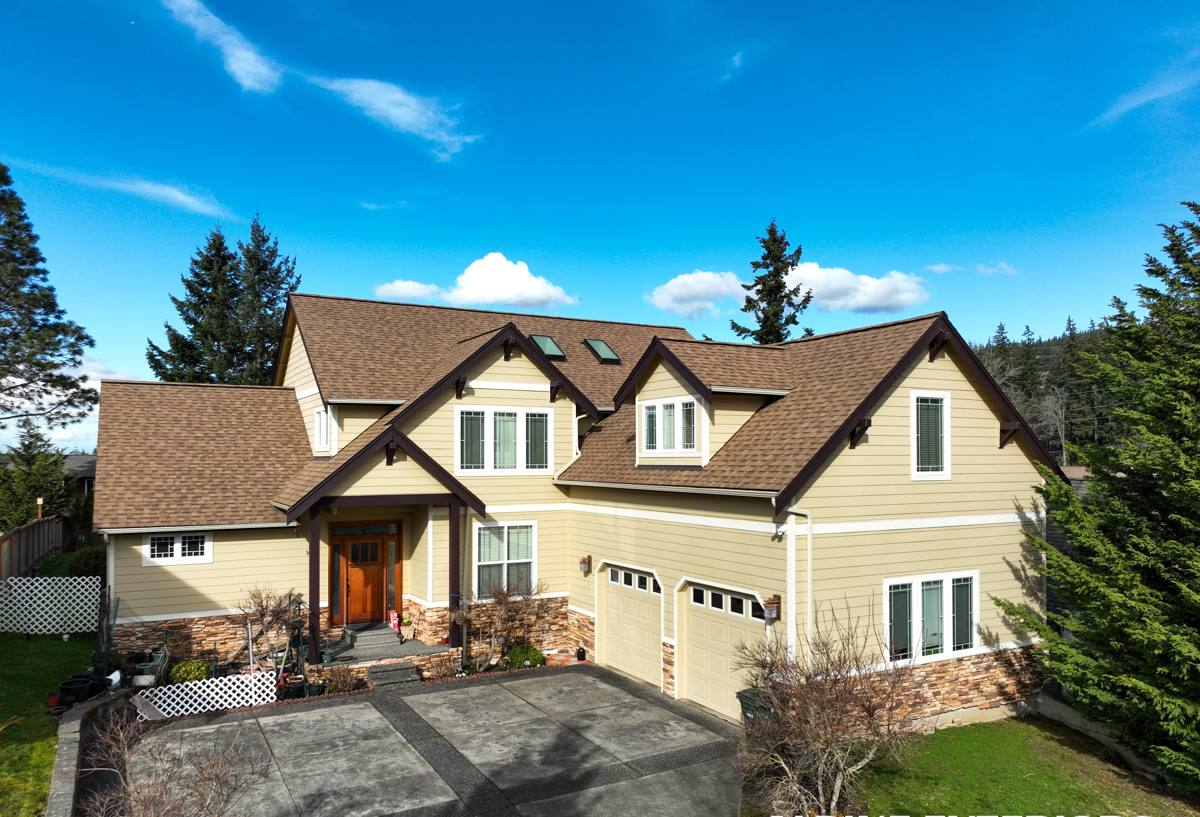
Why Older and Waterfront Homes Here End Up Needing Custom Sizes
A few patterns repeat across Point Roberts jobs. Older cabins and cottages were framed to whatever dimensions made sense at the time, long before today's standard window sizes existed, so a true like-for-like replacement often means a custom order rather than a stock swap. Additions and remodels create openings that don't match anything original to the house. And because so much of the appeal of a Point Roberts property is the water — Boundary Bay on one side, the Strait of Georgia on the other — homes here are more likely than average to have picture windows, bay windows, or oversized units sized for the view rather than for what happens to be in stock.
None of that is unusual for us. It does mean the job starts with careful field measurement and a straightforward conversation about lead time, since a custom unit is built to order, and ordering for a remote peninsula job takes a bit more planning than a job a few blocks from the shop.
The Climate Load on Point Roberts Windows
Being surrounded on three sides by water puts Point Roberts homes in a tougher environment than standard manufacturer installation guidance assumes. Salt-laden marine air speeds up corrosion on hardware, fasteners, and lower-grade frame components faster than it would a few miles inland. Storms coming off the Strait of Georgia push rain sideways into wall assemblies and window flashing instead of letting gravity carry it straight down, which finds gaps that would never get tested in a calmer setting. And the shade and dampness common on this stretch of coastline support a moss and mildew season that can run most of the year on north-facing walls, sills, and trim.
Custom windows raise the stakes on all of that. A bay window has more perimeter that needs to be flashed correctly. A large picture window has more glass area for wind load to push against. A wider sill has more surface for water to pool on if it isn't sloped and detailed right. None of this rules out custom windows — it means the installation has to account for the added complexity instead of getting treated like a routine stock swap.
Where the Risk Actually Concentrates
The glass and frame material are rarely what fails first on a well-built custom unit. It's the transition points — where a bay window's roof meets the main wall, where a wide sill meets the siding below it, where a reframed opening meets the original wall assembly. Those spots need extra flashing attention, and they're also the spots a rushed install is most likely to shortcut, because doing them right takes real time.
Frame and Glazing Choices That Hold Up Out Here
Not every frame material handles a marine, salt-air environment the same way. We walk homeowners through the real trade-offs rather than defaulting to one product for every job, since the right choice depends on the specific opening, the home's exposure, and the budget.
| Frame Material | Marine/Salt-Air Behavior | Maintenance |
|---|---|---|
| Vinyl | Good corrosion resistance since there's no bare metal hardware exposed to the weather; performs well on most exposures | Low — occasional cleaning |
| Fiberglass | Very stable in temperature swings and salt air; holds paint and finish well over time | Low to moderate |
| Aluminum | Strong but needs a quality marine-grade finish; bare or lower-grade coatings corrode faster in salt air | Moderate — finish needs monitoring |
| Wood-clad | Good appearance, but any breach in the cladding exposes wood to moisture in a high-moss, high-moisture environment | Higher — cladding seams need regular checks |
None of these materials are automatically wrong for Point Roberts. The decision comes down to how exposed the specific opening is, how the homeowner wants the finished window to look, and how much upkeep they're realistically willing to put in over the years.
What a Correct Custom Install Actually Involves
A custom window job has more steps than a standard replacement, and skipping any of them is where problems start.
- Precise field measurement of the existing or reframed opening, taken more than once when the shape is irregular
- A flashing sequence planned around the specific opening — a bay window's roof-to-wall transition is not the same job as a standard rectangular opening
- Sill detailing that sheds water outward instead of relying on caulk as the only line of defense
- Frame material and hardware chosen for the exposure that specific wall actually faces
- A realistic lead time built around ordering a to-order unit, not a stock size pulled off a shelf
- A delivery and install schedule that accounts for getting materials and crew across the border and back
Skip the measuring step and the unit doesn't fit. Skip the flashing sequence and water finds its way behind the siding within a few seasons, not decades. Skip the border-logistics planning and a homeowner ends up waiting on a delivery that missed its window, sitting on a jobsite that's harder to get back to on short notice than a job across town.
What Drives the Cost of a Custom Window Project
Costs on a custom window project vary quite a bit from house to house, and we'd rather walk through the real factors than quote a number that doesn't mean much without seeing the opening.
| Cost Factor | Why It Matters |
|---|---|
| Size and shape | Non-standard shapes like bays, bows, or arched tops require custom fabrication, not just a resized stock unit |
| Frame material | Vinyl, fiberglass, aluminum, and wood-clad carry different material and finish costs |
| Glazing package | Impact-rated or upgraded low-E glass adds cost but can matter more on an exposed water-facing wall |
| Opening condition | Reframing a non-standard or damaged opening adds labor before the window ever goes in |
| Lead time and logistics | Ordering and coordinating delivery for a Point Roberts job takes more planning than a mainland job, which factors into scheduling more than into the base price |
Our Process for a Point Roberts Project
- Initial visit and measurement. We come out, look at the opening or openings, talk through what you're trying to accomplish, and take field measurements.
- Ordering and lead time. Once the scope is set, we place the order for the custom unit and give an honest lead-time estimate that accounts for both manufacturing time and the logistics of getting it to Point Roberts.
- Delivery and prep. We coordinate delivery and any opening prep — reframing, sheathing repair, flashing removal — ahead of install day so the actual installation goes smoothly.
- Installation. We install and flash the window to hold up against the salt air and wind-driven rain this exposure sees, not just to pass a quick visual check.
- Walk-through and follow-up. We walk the finished work with you, and because we're already out here regularly, a warranty check-in isn't a special trip.
Why a Crew That Already Works Point Roberts Matters
A contractor based on the mainland can absolutely do good window work. What's harder to replicate is the logistics familiarity that comes from actually working Point Roberts on a regular basis — knowing how to plan a materials delivery around the border crossing, knowing to batch multiple stops into one trip instead of making several separate crossings, and knowing that a callback or warranty visit here isn't a quick five-minute drive, so it has to be planned into the schedule from the start rather than treated as an afterthought.
That familiarity shows up in things that don't come up in a sales conversation — how far in advance materials need to be ordered to land on a workable install date, which opening types in this community tend to need extra flashing attention, and how to structure a project timeline so a homeowner isn't left waiting on a delivery that got held up by something outside anyone's control. Those are the details that decide whether a custom window project on Point Roberts goes smoothly or turns into a frustrating string of delays.
What to Ask Before Hiring for Custom Window Work Here
- Ask how often they actually work in Point Roberts, not just whether they're willing to make the trip
- Ask how they plan lead time and delivery around the border crossing
- Ask to see examples of custom shapes or sizes they've installed, not just standard replacements
- Confirm current Washington contractor licensing and insurance
- Ask how a warranty visit would actually get scheduled if something needs attention after install
If you're weighing a custom window for an older Point Roberts cottage, planning an addition, or looking at a bay or picture window to make the most of a water view, it's worth having someone look at the actual opening before you start pricing units. We offer free, no-pressure estimates for custom window projects in Point Roberts and the rest of Whatcom County — use the form below to get a time on the schedule.