 Ferndale Siding
 Point Roberts Is a Different Siding Job Than Most of Whatcom County
Point Roberts sits on its own peninsula, surrounded on three sides by saltwater and cut off from the rest of Whatcom County by the international border. That geography matters more than most homeowners realize when it comes to siding. Homes here take a steady diet of salt-laden wind off the water, driving rain that comes in sideways during winter storms, and a shaded, damp understory in the wooded lots that keeps moss and algae growing nearly year-round. A siding product that performs fine in a drier inland part of the county can struggle here within a few years.
We're a Ferndale-based crew, and Point Roberts is part of our regular service area. We're not describing this climate from a brochure — it's a place we actually schedule jobs, order materials for, and stand behind after the trucks leave.
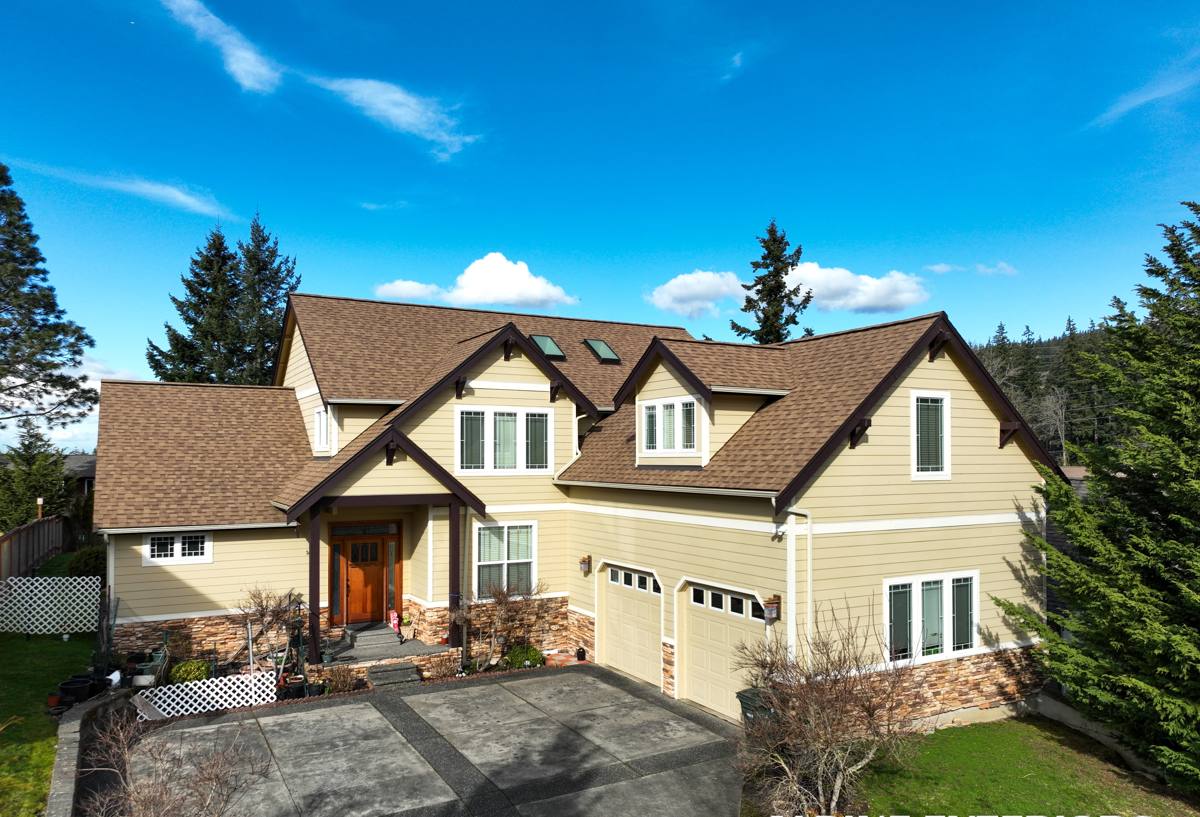
What the Point Roberts Climate Actually Does to Siding
Salt Air
Airborne salt is corrosive to exposed metal fasteners, trim flashing, and any siding product that relies on a painted or coated surface film to keep moisture out. Once that surface layer is compromised by salt exposure and UV, water finds a way in underneath.
Driving Rain
Wind-driven rain off the Strait of Georgia doesn't just wet the face of a wall — it pushes water sideways into every lap, joint, and penetration. Siding installed with tight, correct laps and properly flashed openings sheds that water. Siding installed loose or with shortcuts at the seams lets it track behind the cladding, where it does damage you can't see until it's expensive.
Moss and Algae Season
Shaded, moisture-heavy lots common on the peninsula stay damp long after a storm passes. Moss and algae take hold on any surface that retains that moisture, and on absorbent or poorly sealed siding materials, that growth can work its way into the material itself over time, not just sit on top of it.
Why We Only Install James Hardie Fiber Cement Here
We made a standing decision as a company to install James Hardie fiber cement siding exclusively — we don't install vinyl, LP SmartSide, Cemplank, Allura, or primed wood products like spruce or cedar. That's not a marketing position, it's a maintenance and durability call, and it matters even more on a site like Point Roberts.
Fiber cement is non-combustible and dimensionally stable, meaning it doesn't expand, contract, or warp with moisture swings the way wood-based products can. James Hardie's ColorPlus finish is baked on at the factory under controlled conditions, which gives it better long-term color and moisture resistance than field-applied paint on wood or engineered wood siding. Hardie also makes HZ5 and HZ10 product lines specifically engineered for different climate zones — including wetter, coastal Pacific Northwest conditions — which is a meaningful difference from a one-size-fits-all siding product.
None of this means other products are junk. Vinyl is inexpensive and low-maintenance in the right setting. Engineered wood siding can look great when it's kept dry and maintained. But on a saltwater peninsula with heavy moss pressure, those products ask more of the homeowner in upkeep, and their failure modes — cupping, moisture wicking at seams, coating breakdown — show up faster in this climate than inland. We'd rather install one product correctly, stand behind it, and not sell a homeowner something we know will need more attention than they were told.
What a Correct Siding Installation Actually Involves
The siding itself is only part of the job. Most siding failures we get called to inspect — regardless of brand — trace back to installation shortcuts, not the material. A correct installation on a Point Roberts home includes:
- A drainage plane (weather-resistive barrier) installed and lapped correctly, with no gaps at seams or penetrations
- Rainscreen or furring strips where the wall assembly needs a gap for water to drain and air to circulate behind the siding
- Correct nailing pattern and fastener spacing per James Hardie's installation instructions — not "close enough"
- Proper flashing at every window, door, and roof-to-wall intersection, not caulk used as a substitute for flashing
- Minimum clearance from grade, decks, and roof lines so siding isn't sitting in standing water or splash-back
- Factory-cut or properly sealed field cuts, since an unsealed cut edge is where moisture intrusion usually starts
- Correct caulking and joint treatment at butt joints and corners, sized for the product's expansion and contraction
Skip any one of these and you can end up with siding that looks fine from the curb for a couple of years while moisture is already working behind it — especially in a climate that gives water this many chances to get in.
How Siding Performs Here: A Practical Comparison
| Factor | James Hardie Fiber Cement | Vinyl | Engineered Wood (LP-type) | Primed Cedar / Spruce |
|---|---|---|---|---|
| Salt air / coastal exposure | Engineered HZ lines built for it | Can become brittle over time | Coating and edge sealing critical | Needs regular refinishing |
| Moss / algae resistance | Factory finish resists growth | Grows on surface, hard to prevent | Absorbent if coating fails | Naturally moisture-absorbent |
| Driving rain / lap performance | Rigid, holds tight laps | Can flex and gap over time | Swells at damaged laps | Swells and cups with moisture |
| Maintenance burden | Low — factory finish, periodic caulk check | Low, but limited repair options | Moderate — coating upkeep matters | High — repainting/sealing cycle |
| Fire resistance | Non-combustible | Melts/deforms under heat | Combustible | Combustible |
What Drives Cost on a Point Roberts Job
Every home is different, so we won't quote a number without seeing the house, but the main cost factors on a project out here are usually the same handful of things:
| Cost Factor | Why It Matters |
|---|---|
| Amount of existing damage/rot | Water intrusion behind old siding often means sheathing repair before new siding goes on |
| House size and wall complexity | More corners, gables, and trim detail add labor time |
| Siding profile chosen | Lap width, shingle-style panels, and trim boards vary in material and labor cost |
| Access and logistics | Point Roberts is only reachable through Canada or by water/air, which affects material delivery scheduling |
| Whether a rainscreen is being added | Upgrading drainage detailing on an older home adds a step but pays off long-term here |
Why a Ferndale Crew That Already Works Point Roberts Matters
Point Roberts is a U.S. exclave — the only way in by land is through Canada, which means every material delivery, crew trip, and dump run has to account for a border crossing. A contractor who doesn't regularly work out here will underestimate that logistics cost, or worse, get partway through a project and struggle to keep it moving. We build Point Roberts trips into our scheduling deliberately: we plan crew days, order and stage materials in advance, and don't treat the peninsula as an inconvenient add-on to a Ferndale route.
That local familiarity also means we've seen how homes out here actually age — which sides of a house take the worst weather, where moss builds up fastest, and where past siding installations (regardless of brand) tended to fail first. That's the kind of thing you only learn by working the same peninsula repeatedly, not from a general knowledge of siding.
Choosing a Contractor for a Point Roberts Siding Project
Whoever you hire, a few questions will tell you a lot about whether they're set up to do this job right:
- Have they installed siding on Point Roberts before, and do they understand the border-crossing logistics for materials and crew?
- Do they install a drainage plane and rainscreen detailing as standard, not an upsell?
- Can they explain their flashing details at windows, doors, and roof lines specifically?
- Are they installing to the manufacturer's written instructions, and will they say so plainly?
- What does their warranty actually cover — material only, or workmanship too?
- Will they walk you through why they recommend the specific siding product they're proposing?
A straight answer to each of these tells you more than a low bid ever will, especially on a site where a bad installation is harder to fix once it fails.
Get a Free Estimate for Your Point Roberts Home
If your siding is showing moss buildup, cupping, cracking, or you're just planning ahead for a home that has to hold up to salt air and driving rain, we're glad to come take a look. There's no pressure and no cost to get our honest read on your home's siding — just fill out the form below to get started.