 Ferndale Siding
 Siding Replacement Built for Point Roberts' Unusual Exposure
Point Roberts sits on its own peninsula, surrounded by water on three sides and cut off from the rest of Washington by the international border. That geography is part of what makes it a beautiful place to own a home — and part of why siding here takes more punishment than siding a few miles inland. Homes on this point face near-constant marine air, wind-driven rain off the Strait of Georgia and Boundary Bay, and a moss and mildew season that runs longer than almost anywhere else in Whatcom County.
We're based in Ferndale and have done siding replacement work throughout the county, including the drive out to Point Roberts. This page is about that one job — full siding replacement on a Point Roberts home — and what it actually takes to get it right in this specific environment.
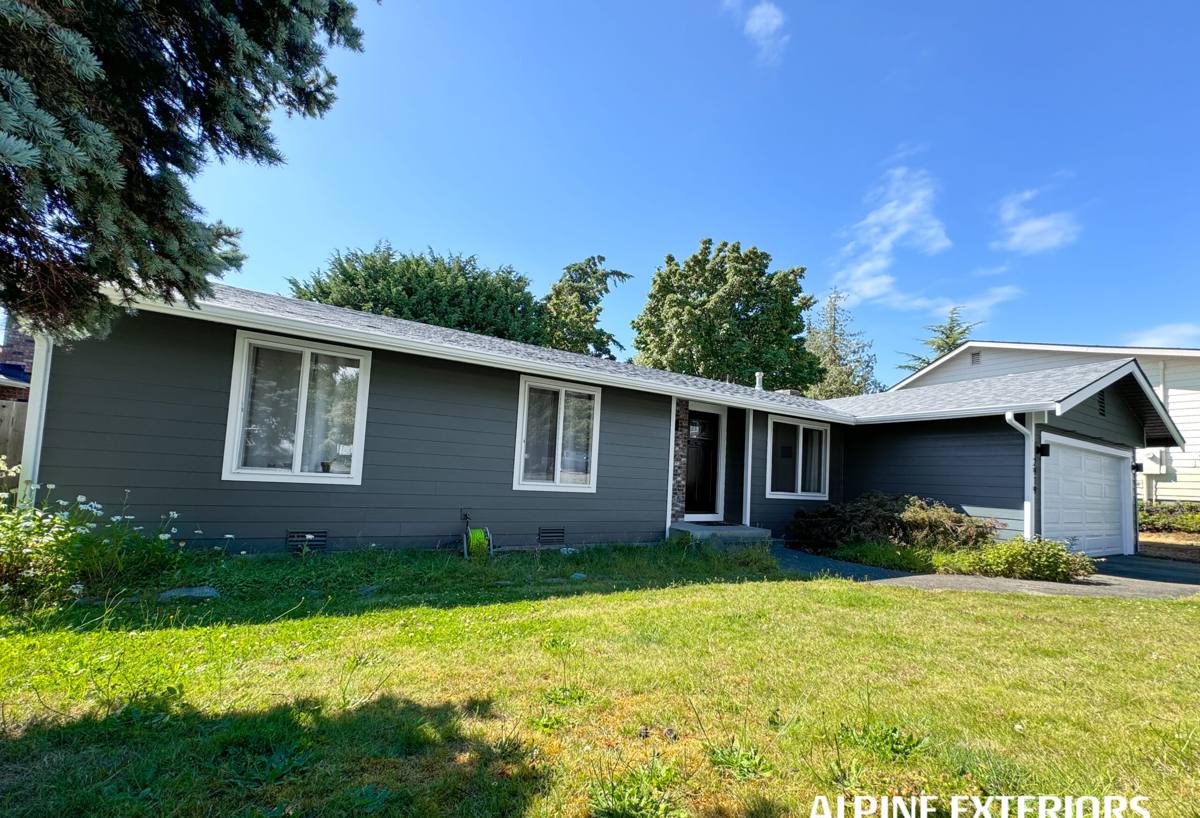
What Salt Air, Driving Rain, and Moss Actually Do to Siding
Every siding material ages differently depending on what it's exposed to. Point Roberts stacks several of the hardest conditions on top of each other:
- Salt air: Airborne salt from the surrounding water accelerates corrosion on fasteners, flashing, and any exposed metal trim, and it works into small cracks in painted or coated surfaces faster than it would inland.
- Driving rain: Wind off the water doesn't just wet a wall — it drives moisture sideways and upward, testing every seam, joint, and piece of trim, not just the flat field of the siding.
- Long moss season: Shaded north and west-facing walls, especially under trees or close to neighboring structures, stay damp long enough for moss, algae, and mildew to take hold and hold moisture against the wall longer than the sun ever gets a chance to dry it.
Individually, any one of these is manageable. Together, over years, they're what turns a siding job that was installed "close enough" into one that's failing at the seams, the trim, and the bottom courses — usually years before the field of the siding itself looks worn out.
Signs a Point Roberts Home Needs Siding Replacement, Not Just Repair
Because of the exposure here, damage often shows up first in specific spots rather than across the whole wall. Watch for:
- Soft or spongy spots near the bottom few courses, around hose bibs, or below window sills
- Persistent black or green streaking on shaded walls that comes back within weeks of cleaning
- Paint that's chalking, peeling, or bubbling in patches rather than evenly across the wall
- Visible gaps opening up at butt joints, corners, or trim where caulk has failed
- A musty smell or visible staining on interior walls that back onto exterior siding
Any one of these can sometimes be patched. But when several show up together, or when the underlying material itself has absorbed moisture, patch repairs just delay a full replacement — and can mask how much damage has already reached the sheathing behind the siding.
Why We Install Only James Hardie Fiber Cement
We don't install vinyl, LP SmartSide, cedar, primed spruce, Cemplank, or Allura. That's a deliberate standard, not a matter of preference, and it matters more in a place like Point Roberts than almost anywhere else we work.
Vinyl expands and contracts with temperature swings and can warp or loosen at the edges, which gives wind-driven rain a path to work behind it. Wood-based products, including engineered wood siding, rely on their outer coating to keep moisture out — once that coating is compromised by salt exposure and constant damp, the wood substrate underneath is vulnerable to swelling and rot. Cedar and primed spruce need regular refinishing to keep performing, and a long moss season shortens the window between recoats.
James Hardie fiber cement is cement, sand, and cellulose fiber — it doesn't rot, it doesn't provide the organic material moss and mildew feed on the way wood does, and it holds up to repeated wetting and drying without warping. The factory-applied ColorPlus finish is baked on under controlled conditions, so it resists the chalking and peeling that field-applied paint is prone to in constant moist air. It's also noncombustible, which matters given how much of Whatcom County borders forested land.
What a Correct Siding Replacement Job Involves
Tear-Off and Inspection
Full replacement starts with removing the old siding and trim down to the sheathing, then inspecting what's underneath. This is the step that gets skipped when a job is done fast and cheap, and it's the one that matters most in a marine environment — hidden rot at the sheathing or framing has to be found and repaired before anything new goes on, or the new siding is just covering the same problem.
Weather-Resistive Barrier and Flashing
Behind every Hardie installation we do, there's a continuous weather-resistive barrier and properly lapped flashing at every window, door, and penetration. In a location that takes wind-driven rain from multiple directions, the flashing details around openings and at the bottom of the wall are what actually keep water out — the siding itself is the second line of defense, not the first.
Installation to Manufacturer Spec
James Hardie publishes specific installation requirements — fastener type and spacing, minimum clearances from grade, roofing, and decks, gaps at butt joints, and caulking requirements at penetrations. Hardie's warranty is tied to installation done to that spec. Skipping clearances or fastening incorrectly doesn't just risk premature wear, it can void the warranty the product is supposed to carry.
Trim and Finish Details
Corners, trim boards, and joints are where salt air and driving rain find the weak points first. We pay particular attention to caulking joints, back-priming cut edges, and using corrosion-resistant fasteners throughout, since ordinary fasteners are exactly what salt air degrades fastest.
Our Process, Start to Finish
- On-site assessment: We look at existing siding condition, exposure on each elevation, and any visible moisture damage before quoting anything.
- Written estimate: A clear scope covering tear-off, repairs if needed, materials, and installation — no vague allowances.
- Material selection: Choosing the right Hardie product line and ColorPlus finish for the home's exposure and style.
- Tear-off and sheathing repair: Removing old material and fixing anything compromised underneath before new siding goes up.
- Weather barrier and flashing installation: The unglamorous work that determines how the job performs in year five and year fifteen, not just on day one.
- Siding installation to spec: Fastening, clearances, and joints done to manufacturer requirements so the warranty is actually valid.
- Final walkthrough: Reviewing the finished work with the homeowner before we consider the job done.
Cost Factors for Siding Replacement in Point Roberts
Every home is different, but the same handful of factors drive cost up or down on jobs out this way:
| Factor | Why It Matters Here |
|---|---|
| Extent of hidden moisture damage | Salt air and driving rain mean sheathing repair is more common than in drier inland areas |
| Number of elevations facing prevailing wind and rain | Water-facing walls often need more flashing detail and trim work |
| Existing siding material | Removing wood or vinyl is generally straightforward; some older materials require extra care during tear-off |
| Trim and architectural detail | More corners, windows, and transitions mean more flashing and caulking labor |
| Access and site conditions | Point Roberts' access via the border crossing is factored into scheduling, not typically a major cost driver |
Why a Crew That Already Works in Point Roberts Matters
Point Roberts is part of Whatcom County but reached by driving through Canada, which means fewer contractors treat it as routine territory. That has real consequences for homeowners: crews unfamiliar with the drive may quote a rush job, skip a site visit, or treat the border crossing as a reason to cut a project short. A crew that already plans for the crossing, understands the exposure specific to this peninsula, and has seen how salt air and prolonged dampness actually behave on siding here is going to make better decisions on your job — from where extra flashing is warranted to which walls need the most attention.
We also don't treat Point Roberts jobs differently in terms of material standards. The same James Hardie products and the same installation spec we use everywhere else in Whatcom County apply here, adjusted for the specific exposure of the home.
A Quick Checklist Before You Replace Your Siding
- Walk the exterior and note any soft spots, staining, or persistent moss/algae growth
- Check window and door trim for gaps, cracked caulk, or visible water staining below them
- Note which walls face the water or prevailing wind — these usually need the closest inspection
- Ask any contractor you're considering what weather-resistive barrier and flashing details they use
- Confirm in writing whether the installation will meet manufacturer spec required for warranty coverage
If your Point Roberts home is showing signs of wear from salt air, driving rain, or a long moss season, we're happy to take a look and give you a straightforward, no-pressure estimate — no obligation, just an honest read on what your siding actually needs. The form below gets you started.