 Ferndale Siding
 Roofing on Lummi Island Is a Different Job Than Roofing Inland
Lummi Island sits out in the salt water, and that changes what a roof goes through year to year compared to a house a few miles inland in Ferndale. The island gets more direct exposure to wind off the water, more salt-laden air working into fasteners and flashing, and long stretches of damp shade under fir and cedar canopy that keep roof surfaces wet longer than they'd stay in a more open, sun-exposed spot. None of that means island roofs fail faster as a rule — it means they fail differently, and a repair crew needs to know where to look.
We're based in Ferndale and have worked homes on Lummi Island for years, which matters more than it might sound. A roofer who only works subdivisions on flat, exposed inland lots isn't necessarily looking for the same failure patterns as one who regularly climbs roofs shaded by mature trees, sitting a stone's throw from salt water, reachable only by ferry. This page is about roof repair specifically for that setting — what tends to go wrong, what a correct fix actually involves, and how we handle the logistics of working on the island.
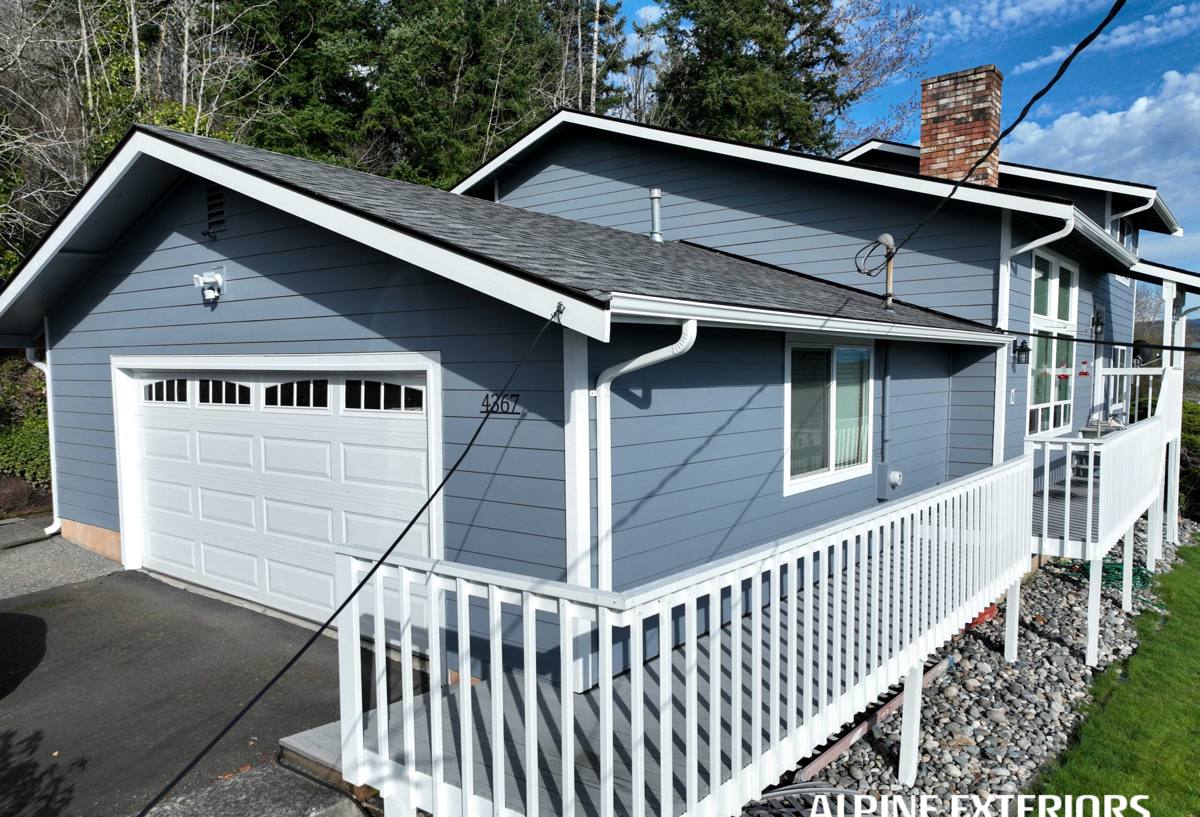
What Whatcom County's Climate Does to a Roof Over Time
Three things drive most of the roof repair calls we get from Lummi Island and the surrounding waterfront areas:
Salt Air
Airborne salt accelerates corrosion on exposed metal — nail heads, flashing, vent boots with metal collars, gutter hardware, and any fasteners that aren't rated for coastal exposure. On a roof a mile or two inland this is a minor factor. Right on the water, it's one of the first things we check, because a corroded nail or a rusted-through flashing seam is a leak waiting to happen even when the surrounding roofing material still looks fine.
Driving Rain
Whatcom County gets plenty of rain, but the wind-driven variety that comes off open water is the kind that actually causes leaks. Rain falling straight down mostly runs off a properly shingled roof without issue. Rain being pushed sideways by wind finds every marginal lap, every under-driven nail, every spot where flashing was cut a little short, and pushes water where gravity alone never would. Roofs on more exposed parts of the island see more of this than a typical Ferndale in-town lot.
A Long Moss Season
Shaded, damp roof sections — north-facing slopes, areas under overhanging trees — stay wet for weeks at a stretch through fall, winter, and much of spring here. That's ideal moss and algae growing conditions. Moss isn't just cosmetic: as it establishes, it lifts shingle edges, holds moisture directly against the roofing material and the deck underneath, and works itself into laps where it can slowly force water backward under otherwise sound shingles.
Common Repair Calls We See From Lummi Island Homes
Every roof and every property is different, but a handful of issues come up repeatedly in this specific setting:
- Flashing failure at chimneys, skylights, and wall intersections — corrosion or original installation shortcuts show up here first, especially on older homes.
- Moss-related shingle lift and granule loss on shaded north- and east-facing slopes.
- Gutter and edge metal corrosion from long-term salt exposure, sometimes leading to water backing up under the first course of shingles.
- Wind-lifted or missing shingles after storm events, particularly on more exposed elevations facing open water.
- Vent boot cracking — rubber boots around plumbing vents degrade with age and UV exposure and are a very common, very fixable source of slow leaks.
- Deck rot at valleys and eaves where long-term moisture intrusion went unnoticed for a season or more before symptoms showed up inside the house.
What a Correct Roof Repair Actually Involves
A roof repair that holds up is diagnosis-first, not patch-first. That distinction matters more on a coastal, tree-shaded property than almost anywhere else, because the visible symptom — a stain on a ceiling, a curling shingle — is often several feet away from the actual entry point, since water travels along the deck or underlayment before it shows itself indoors.
Our Process
- Roof-level inspection. We get on the roof (weather and safety permitting) and physically check flashing, fasteners, shingle condition, and moss/algae extent rather than assessing from the ground.
- Trace the source, not just the symptom. Interior stains and exterior damage don't always line up directly — we follow the likely water path back to where it's actually getting in.
- Check what's underneath. Where there's been sustained moisture, we check the deck itself for soft spots or rot before doing any surface repair, since patching over a compromised deck doesn't solve the underlying problem.
- Match materials and technique to the original roof wherever possible, so the repair blends structurally and visually rather than creating a new weak point.
- Address the cause, not just the leak. If moss lifted the shingles, we deal with the moss and the growing conditions that caused it, not just reseal the spot it damaged.
Repair vs. Replacement: How We Help You Decide
Not every roof problem needs a new roof, and not every leak is a quick patch. The honest answer depends on the roof's age, how localized the damage is, and what we find once we're actually up there.
| Factor | Points Toward Repair | Points Toward Replacement |
|---|---|---|
| Roof age | Under roughly 15-20 years, depending on material | At or past the material's typical service life |
| Extent of damage | Localized — one flashing point, one section of moss lift | Widespread granule loss, multiple failure points across the roof |
| Deck condition | Solid, no rot found on inspection | Soft or rotted decking in more than a small, isolated area |
| Leak history | First occurrence or isolated to one area | Recurring leaks in different spots over recent years |
| Salt/moss exposure | Surface-level corrosion or growth, caught early | Long-term unaddressed corrosion or moss affecting multiple slopes |
We'll always tell you plainly which side of that line your roof is on, including when a repair is genuinely the right call and a full replacement would be more than the situation calls for.
Working on Lummi Island: The Logistics Side
Being based in Ferndale, we're a short drive and a ferry crossing from the island, and we plan repair visits around the ferry schedule so a trip out isn't wasted on timing. A few things we account for that a mainland-only crew might not think through:
- Scheduling material and equipment loads to make efficient use of ferry crossings, rather than multiple partial trips.
- Weather windows — wind and rain patterns on the island can differ from what's happening in town, and roof work needs a genuinely safe, dry window to be done right.
- Access considerations for tree-shaded or steep-lot properties, which are common on the island.
- Coordinating with homeowners who may split time between the island and elsewhere, so scheduling works around when you're actually on-site or reachable.
None of this is complicated, but it's the kind of planning that goes smoother when a crew has done it before rather than figuring it out on the first trip out.
Maintenance That Extends the Life of an Island Roof
Given the moss, salt, and rain factors covered above, a little regular attention goes a long way toward avoiding repair calls altogether.
A Simple Seasonal Checklist
- Clear moss and debris from shaded slopes before it establishes and lifts shingle edges — late summer or early fall, ahead of the wet season, is the better window.
- Keep gutters clear so water isn't backing up under the roof edge during heavy rain.
- Trim back overhanging branches where practical, to reduce shading and debris buildup on north-facing sections.
- After any significant windstorm, do a visual check (from the ground is fine) for obviously lifted or missing shingles.
- Have flashing and vent boots checked every few years rather than waiting for a visible leak, since these are the components most affected by salt air corrosion and UV aging.
We're glad to do this kind of check as a standalone visit — it's a lot cheaper than a repair call, and a lot cheaper than that repair call turning into deck replacement because a small leak went unnoticed for a season.
Why Local Experience on This Specific Coastline Matters
Roofing technique doesn't change from town to town, but roofing judgment does — knowing which flashing points fail first in salt air, which slopes hold moss longest given the tree cover and orientation common on the island, and which fastener and flashing materials actually hold up out here rather than just meeting a generic code minimum. That judgment comes from doing the work in this specific environment repeatedly, not from a general roofing background applied to a coastal property for the first time.
We're a Ferndale-based crew, which keeps us close enough to Lummi Island to respond without the delay of a contractor coming from Bellingham or further afield, while still being genuinely local to Whatcom County rather than a company passing through on a storm-chasing basis.
Get a Free, No-Pressure Estimate
If you're dealing with a leak, some visible moss buildup, or just want a second opinion on a roof before it becomes an urgent problem, we're happy to take a look. Fill out the form below and we'll get back to you to schedule a straightforward, no-pressure estimate for your Lummi Island property.