 Ferndale Siding
 Roofing Built for the Lummi Nation Waterfront Climate
Homes in and around Lummi Nation sit close to Bellingham Bay and the open water of Whatcom County, and that location shapes everything about how a roof ages here. Salt-laden air corrodes exposed metal faster than it does even a few miles inland. Wind-driven rain off the water doesn't just fall straight down — it gets pushed sideways under shingle tabs, flashing edges, and anywhere a roof system has a weak seam. And the tree cover and persistent damp that define this part of the county mean moss and moisture have months at a time to work into a roof's weak points every year.
A roof replacement out here isn't the same job as one on a dry inland lot. Every material choice, flashing detail, and ventilation decision has to account for salt exposure, wind-driven rain, and a moss season that can run from fall through spring. We've replaced enough roofs in this specific stretch of Whatcom County to know which shortcuts fail first and which details actually hold up.
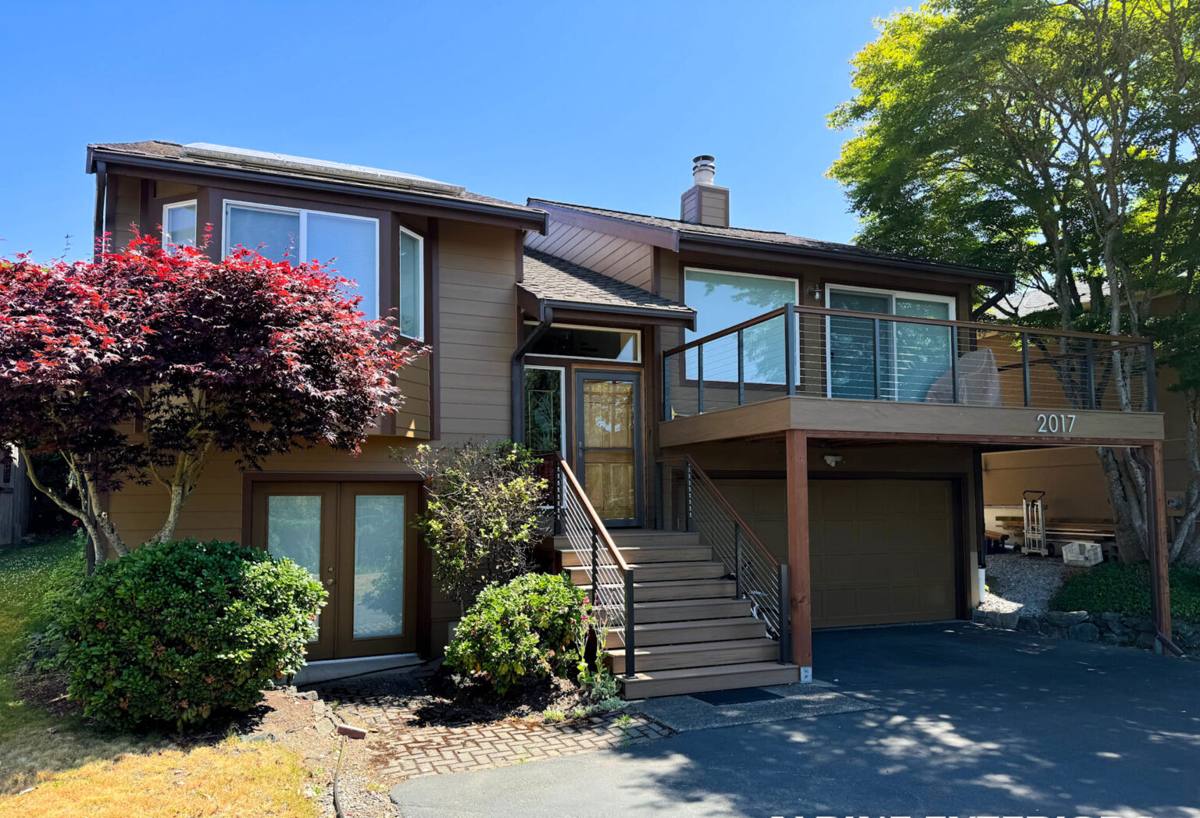
What Local Homes Need From a Roof Replacement
Three conditions drive almost every roofing decision on a Lummi Nation home: salt air, driving rain, and moss. Each one attacks a different part of the roof system, so a correct replacement has to address all three at once rather than treating them as separate problems.
Salt Air
Airborne salt accelerates corrosion on exposed fasteners, flashing, and any unprotected metal. Roofs closer to the water need corrosion-resistant fastener and flashing choices, not just whatever is cheapest at the supply house that week.
Driving Rain
Wind off the bay pushes rain sideways and upward under roof edges, valleys, and penetrations. Standard nailing patterns and minimal flashing details that pass inspection on a calm inland roof can still let water in here during a real storm.
Moss and Sustained Moisture
Shade, humidity, and a long wet season give moss time to establish on roof surfaces, especially north-facing slopes and anywhere debris collects. Moss holds moisture against the roofing material, and over years that moisture retention shortens the life of shingles and accelerates decking rot underneath.
What a Correct Roof Replacement Actually Involves
A roof replacement done right is not just stripping off old shingles and nailing down new ones. On a home exposed to this kind of weather, skipping any of the following steps is how a roof ends up leaking or failing years ahead of schedule.
- Full tear-off — removing old roofing down to the decking so hidden rot, soft spots, and prior repair mistakes aren't buried under a new layer.
- Decking inspection and repair — replacing any plywood or sheathing that's soft, delaminated, or moisture-damaged before anything new goes down.
- Ice and water shield at vulnerable points — eaves, valleys, and around penetrations, where wind-driven rain is most likely to force its way under the roofing.
- Synthetic underlayment across the full roof deck as a secondary water barrier beneath the primary roofing material.
- Corrosion-resistant flashing and fasteners at chimneys, walls, skylights, and roof-to-wall transitions — chosen with salt air in mind, not just cost.
- Balanced ventilation — intake at the eaves and exhaust at the ridge, so moisture and heat don't get trapped in the attic and condense against the new decking.
- Proper valley and edge detailing to shed water fast rather than letting it pool or back up under wind pressure.
Choosing a Roofing Material for This Climate
There's no single "best" roofing material for every home — the right choice depends on budget, roof pitch, architectural style, and how much long-term maintenance a homeowner wants to take on. What matters near the water is how each option handles salt exposure, wind-driven rain, and moss resistance.
| Material | Salt Air Performance | Moss Resistance | Typical Lifespan |
|---|---|---|---|
| Architectural Asphalt Shingle | Good with corrosion-resistant fasteners and flashing | Moderate — benefits from algae/moss-resistant granules and regular upkeep | 25–30 years |
| Standing Seam Metal | Very good with the right coating and fastener spec | Excellent — smooth surface sheds moss and debris | 40–50+ years |
| Synthetic/Composite Shingle | Good, low-maintenance in coastal conditions | Good — resists moisture absorption better than wood-based products | 30–50 years |
We install these based on what actually suits the home and the homeowner's priorities. We steer clients away from wood shake and untreated cedar-style products in this specific location not because the material is bad in general, but because sustained coastal moisture and moss pressure demand more upkeep than most homeowners want to commit to, and the maintenance burden and moisture behavior over time don't line up well with a low-maintenance goal. That's a professional judgment call about trade-offs, not a knock on any manufacturer.
Ventilation and Moisture Control Matter as Much as the Shingles
A new roof with poor attic ventilation will underperform no matter how good the shingles are. In a climate with this much sustained humidity, trapped moisture condenses on the underside of the decking, feeding mold and rot from the inside while moss works on the outside. Correct ventilation balances intake vents at the soffits with exhaust at the ridge, so air actually moves through the attic space instead of stagnating. We check and correct ventilation as a standard part of every replacement here — not as an upsell, but because it's the difference between a roof that reaches its full rated lifespan and one that doesn't.
Our Roof Replacement Process
- On-site inspection and estimate — we walk the roof, check the decking where accessible, and talk through material options and honest cost ranges.
- Material selection — matched to your budget, roof pitch, and how much long-term maintenance you want.
- Scheduling around the weather — we plan tear-off and dry-in around forecast windows so the deck isn't exposed to driving rain any longer than necessary.
- Tear-off and deck inspection — old roofing removed, decking checked and repaired as needed.
- Underlayment and flashing installation — ice and water shield, synthetic underlayment, and corrosion-resistant flashing at every vulnerable point.
- Roofing installation — installed to manufacturer spec, with attention to nailing patterns and edge details suited to wind-driven rain.
- Ventilation check — intake and exhaust balanced before we call the job finished.
- Final walkthrough — we go over the finished roof and warranty coverage with you before we leave.
What Roof Replacement Typically Costs
Every roof is different, so exact pricing depends on size, pitch, material, and what we find once the old roofing comes off. In general terms, the biggest cost drivers on a Lummi Nation home are:
| Factor | Why It Affects Cost |
|---|---|
| Roof size and pitch | Steeper roofs take longer and require more safety setup and material overage |
| Material choice | Standing seam metal costs more upfront than asphalt but lasts significantly longer |
| Decking condition | Rot or soft spots found during tear-off require repair before new roofing goes down |
| Number of penetrations | Chimneys, skylights, and vents each require additional flashing labor |
| Access and site conditions | Tree cover, driveway access, and roof complexity affect labor time |
We give straightforward, written estimates after seeing the roof in person — no inflated numbers designed to be negotiated down, and no surprise add-ons once the work starts unless we find something during tear-off that genuinely needs addressing.
Signs Your Roof May Need Replacing
- Shingles that are curling, cracking, or missing granules
- Moss buildup that keeps returning even after cleaning
- Daylight visible through the attic decking
- Water stains on interior ceilings, especially after wind-driven storms
- Soft or spongy spots when walking the roof deck
- Rusted or deteriorating flashing around chimneys and vents
- A roof approaching or past its material's expected lifespan
Why a Crew That Already Works Lummi Nation Matters
Roofing crews who haven't worked this specific stretch of coastline often underestimate how much salt air and wind-driven rain change the job. They spec fasteners and flashing the same way they would on an inland roof, skip the extra underlayment at vulnerable points, or don't think twice about ventilation balance — and the homeowner finds out those shortcuts mattered a few winters later. Working this area regularly means we've already seen which details hold up through a full wet season and which ones fail early, and we build every replacement around that experience rather than a generic install checklist.
After the Replacement: Keeping It Performing
A correctly installed roof still benefits from basic upkeep in this climate. Keep gutters and valleys clear of debris so water has somewhere to go, have moss treated or removed before it spreads across a full slope, and get an occasional visual check after major storms. None of this is heavy maintenance — it's mostly about not letting small issues sit through an entire wet season unaddressed.
If your roof is showing its age or you just want an honest read on its condition, we're glad to come take a look. Reach out for a free, no-pressure estimate — we'll walk the roof, tell you what we find, and give you real options with no hard sell attached.