 Ferndale Siding
 Sandy Point Sits Right at the Edge of the Weather
Sandy Point is about as exposed to the elements as a residential neighborhood in Whatcom County gets. Homes here sit close to open water, which means every roof is dealing with a combination most inland Ferndale properties never see at the same intensity: salt-laden air moving off the Strait, wind-driven rain that hits shingles sideways instead of straight down, and a shaded, moisture-heavy shoulder season that lets moss get a foothold fast. Any one of those factors is manageable on its own. All three, working on the same roof for years at a time, is what shortens the life of an ordinary asphalt shingle roof and makes metal roofing worth a serious look for homeowners out here.
This page is specifically about metal roofing for Sandy Point homes — not metal roofing in general, and not siding, gutters, or other exterior work. If you're comparing options for a roof on this stretch of coastline, this is the detail that actually matters.
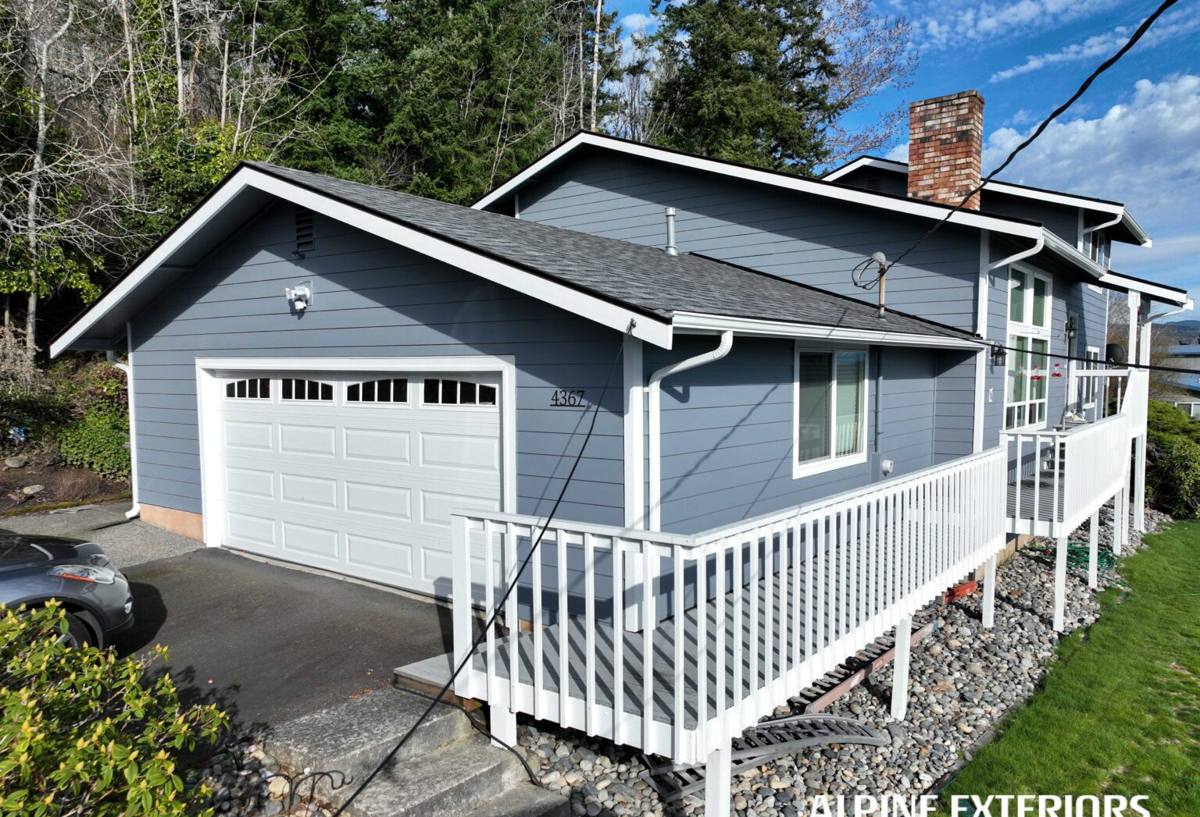
What Salt Air, Wind, and Moss Actually Do to a Roof
Salt Air and Corrosion
Airborne salt is corrosive to unprotected or poorly coated metal, and it accelerates the breakdown of exposed fasteners, flashing, and any hardware that isn't rated for a marine-adjacent environment. It also works its way into asphalt shingle granules and adhesive strips over time, which is part of why standard shingle roofs closer to the water tend to show wear earlier than the same product would inland.
Driving Rain
Wind off the water doesn't just add volume to a storm — it changes the angle rain hits the roof. Water gets pushed up under shingle tabs, into ridge caps, and around penetrations that would stay dry in a calmer inland setting. A roof system here needs details — laps, seams, flashing — that are built to handle rain moving sideways and upward, not just downward.
The Long Moss Season
Whatcom County's wet, mild winters and shaded north-facing roof slopes give moss a long growing window. Moss holds moisture against roofing material, works into seams, and on shingle roofs it can lift edges and create channels for water to travel where it shouldn't. A roof surface that moss can't easily colonize is a real practical advantage on a shaded Sandy Point lot.
Why Metal Roofing Fits This Environment
Metal roofing isn't the right fit for every home or every budget, and we'll say so plainly if that's the case for yours. But for a lot of Sandy Point properties, it addresses the three problems above directly:
- A continuous, largely seamless surface gives moss far less to grip onto compared with shingle tabs and granule texture.
- Properly coated steel or aluminum panels resist salt-air corrosion far better than exposed fasteners or bare metal components.
- Standing seam profiles in particular shed wind-driven rain because the water path never crosses an exposed horizontal seam.
- A correctly installed metal roof typically outlasts two or more asphalt shingle roof cycles, which matters when you're weighing cost over the time you plan to own the home.
Choosing the Right Metal System for a Coastal Lot
Not all "metal roofing" is the same product, and the differences matter more here than they would a few miles inland. The table below compares the main options we install and how each holds up in a salt-air, high-wind setting like Sandy Point.
| System | Fastener Exposure | Wind/Rain Performance | Best Fit |
|---|---|---|---|
| Standing seam (concealed fastener) | None — fasteners hidden under raised seams | Excellent; seams sit above the water path | Full-exposure lots, direct water view, high wind |
| Exposed-fastener panel | Screws penetrate the panel face | Good if maintained; fasteners are the weak point over time | Sheltered lots, garages, outbuildings |
| Metal shingle/shake profile | Interlocking, mostly concealed | Good; more seams than standing seam but still low-maintenance | Homes wanting a traditional look with metal's durability |
For homes with direct or near-direct water exposure, we lean toward standing seam because there's simply less on the roof surface for salt air and wind to attack. Exposed-fastener panels aren't a bad product — they're a good value for a shop or outbuilding — but on a primary residence at Sandy Point, the long-term maintenance burden of re-torquing or replacing corroding fasteners is worth factoring into the real cost of the roof, not just the sticker price.
Coatings Matter as Much as the Panel
The steel or aluminum substrate is only half the story — the paint or coating system is what actually faces the salt air day to day. We spec coatings rated for coastal exposure rather than a builder-grade finish, because the difference shows up as chalking, fading, and early corrosion at fastener heads within a handful of years if it's skipped.
Where Coastal Metal Roofs Actually Fail — and How We Prevent It
Almost every metal roof problem we get called out to inspect on the coastal side of the county traces back to one of three things: a fastener that was over- or under-driven, a flashing detail that wasn't sealed correctly for wind-driven rain, or ventilation that trapped moisture underneath the panel where nobody could see it. Metal itself rarely fails — installation details do.
Fastener Torque and Placement
On exposed-fastener systems, screws that are overdriven crush the washer and stop sealing; underdriven screws back out under thermal cycling and wind uplift. We set torque and check it, not eyeball it.
Flashing at Every Penetration
Chimneys, vents, skylights, and wall transitions are where a roof fails first, and it's worse in wind-driven rain because water is being pushed into laps that would stay dry in calm weather. Every penetration gets flashing sized and lapped for that reality, not the minimum code detail.
Ventilation Underneath the Panel
Metal doesn't breathe the way some other roofing materials do, so the assembly underneath it has to manage moisture on its own. We install proper underlayment and, where the roof design allows it, ventilation that keeps condensation from forming on the underside of the panel — a detail that's easy to skip and expensive to fix later once panels are down.
Our Process for a Sandy Point Metal Roof
- On-site assessment. We look at slope, exposure direction (which side of the home faces the water and prevailing wind), existing decking condition, and any moss or moisture staining already present.
- System selection. Based on that exposure, we recommend a panel type and coating, and explain the trade-offs honestly rather than defaulting to the highest-margin option.
- Tear-off and deck inspection. Old roofing comes off and the deck gets inspected for rot or soft spots before anything new goes down — a step that matters more here given how long moisture can sit under a failing shingle roof before it's noticed.
- Underlayment and flashing. A high-quality synthetic or self-adhered underlayment goes down first, with flashing detailed at every penetration and edge for wind-driven rain specifically.
- Panel installation. Panels are set, seamed or fastened per the manufacturer's coastal-exposure specifications, with fastener torque checked as we go rather than at the end.
- Final walk-through. We review the finished roof with you, including what regular maintenance looks like for your specific system.
Maintaining a Metal Roof in a Marine Environment
Metal roofing is low-maintenance, not no-maintenance — especially this close to the water. A short seasonal checklist keeps a coastal metal roof performing the way it's supposed to:
- Rinse off salt film and debris once or twice a year, especially after a stretch of dry weather followed by wind — that's when salt residue builds up most.
- Check fastener heads on exposed-fastener systems for early rust or backing-out, particularly after a hard windstorm.
- Clear gutters and valleys of needles and moss debris before the wet season sets in, since Sandy Point's tree cover sheds into roof valleys more than open inland lots.
- Look at flashing around chimneys, vents, and skylights annually — these are the first place a small leak shows up.
- Address any moss growth on adjacent shaded areas (fascia, trim) promptly, since it can migrate toward roof edges over time even on a metal surface.
Cost Factors for a Sandy Point Metal Roof
Metal roofing costs more upfront than asphalt shingles, and the honest answer to "what will it cost" depends on panel type, roof complexity, and how much tear-off and deck repair is involved. Rather than quote a number that won't hold up house to house, here's what actually moves the price:
| Factor | Why It Matters Here |
|---|---|
| Panel system chosen | Standing seam runs higher than exposed-fastener panel, reflecting less long-term maintenance |
| Roof complexity | More valleys, dormers, and penetrations mean more flashing labor — common on Sandy Point's varied home styles |
| Deck condition | Moisture-damaged decking found during tear-off adds repair cost but prevents a bigger problem later |
| Coating grade | Coastal-rated finishes cost more than standard but hold color and resist corrosion far longer in salt air |
| Access and site conditions | Waterfront lots can have tighter access or staging constraints that affect labor time |
We walk through these factors on-site so the estimate reflects your actual roof, not a generic average.
Why It Matters That We Already Work This Area
A crew that mainly works inland Whatcom County jobs doesn't always think about wind direction relative to the water, or spec fasteners and coatings for salt exposure by default — because most of their work doesn't require it. Working Sandy Point and the surrounding Ferndale coastline regularly means we already know which details to over-build rather than treat as optional: heavier flashing at penetrations, coastal-rated coatings as the standard spec rather than an upsell, and fastener choices that account for salt air from the start. That's the difference between a metal roof that looks right on installation day and one that's still performing correctly on the coast a decade later.
If you're weighing a metal roof for a Sandy Point home, we're glad to walk the roof with you, talk through what your specific exposure and slope actually call for, and give you a straightforward estimate — no pressure, no upsell script. The form below gets you started.