 Ferndale Siding
 Why Sandy Point Roofs Take a Different Kind of Beating
Sandy Point sits close enough to the water that its homes deal with a combination most inland Whatcom County roofs never see: near-constant marine air, wind that comes off the water with real force during winter storms, and a shoreline microclimate that keeps roofs damp longer than homes just a few miles inland. Add in the tree cover common around Ferndale and the moss problem gets worse, not better, because shaded, salt-damp roofs are exactly the conditions moss and lichen prefer.
A storm doesn't have to be dramatic to cause damage here. A steady stretch of wind-driven rain, repeated freeze-thaw cycles in a cold snap, or one hard gust event during an autumn system can all quietly compromise a roof that looked fine the week before. The damage that matters most on a Sandy Point roof is rarely the obvious kind — it's the granule loss, lifted tab, or worked-loose fastener that lets water in slowly over the following weeks.
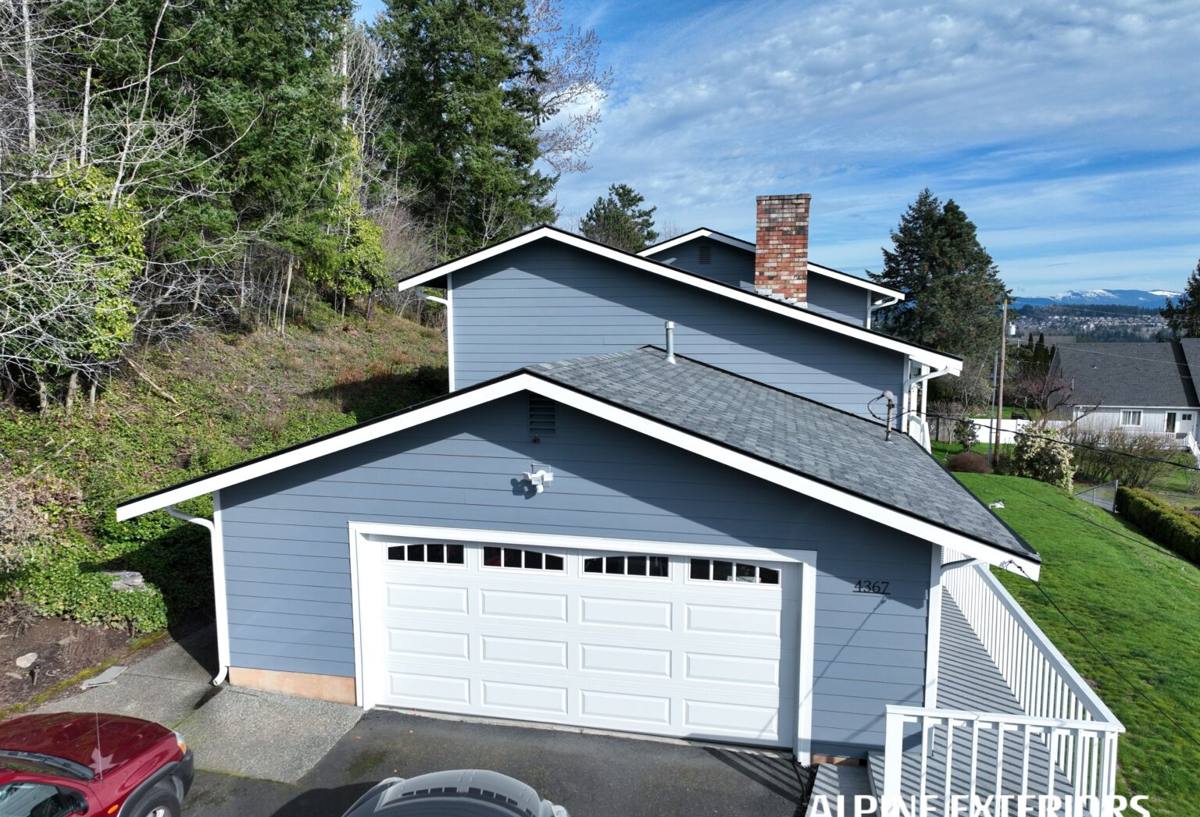
What Storm Damage Actually Looks Like on a Whatcom County Coastal Roof
Wind Damage
Sustained coastal wind doesn't just tear shingles off — more often it lifts tabs and breaks the sealant bond without removing the shingle entirely. From the ground, the roof can look untouched. Up close, you'll find shingles that flap in the next breeze, exposed nail heads, and edges that no longer lie flat. This is the damage that leads to a slow leak discovered months later, usually during the next hard rain.
Salt Air and Corrosion
Metal components age faster this close to the water. Flashing, drip edge, exposed fasteners, and any galvanized or lower-grade metal on the roof are the first things to show rust or pitting. Once flashing starts to corrode at a seam or valley, that's a direct path for water into the roof deck — and it's damage that's easy to miss from the ground because flashing failures rarely announce themselves with a visible hole.
Moss and Trapped Moisture
Ferndale's long, wet moss season is hard on any roof, but a Sandy Point roof holds moisture longer because of the marine humidity. Moss doesn't just look bad — it holds water against the shingle surface, works its way under tabs and around flashing, and accelerates granule loss. On a roof that's already taken storm damage, moss buildup can hide the very areas that need inspection most.
Debris Impact
Branches and wind-carried debris are common during winter storm systems, and even a glancing hit can crack a shingle, dent metal flashing, or knock granules loose in a way that isn't visible unless someone gets up on the roof and looks.
Visible Damage vs. the Damage You Can't See From the Ground
This is the single biggest reason storm damage repair goes wrong when it's rushed: most of what actually causes leaks isn't visible from the driveway. A homeowner who checks the roof with binoculars after a storm is checking for missing shingles — but the more common failure points are underneath the surface layer.
- Underlayment tears beneath shingles that still look intact from above
- Nail pops that back out slightly during wind flex and never reseat
- Flashing seams around chimneys, vents, and skylights that separate under repeated wind pressure
- Valley wear where water volume concentrates during heavy rain events
- Deck-level moisture that hasn't reached the interior ceiling yet but is already staining sheathing
A correct storm damage repair has to check all of these, not just replace what's obviously missing. Patching over a missing shingle without checking the underlayment and deck underneath it is the most common shortcut that leads to a repeat call within a year.
What a Correct Storm Damage Repair Involves
Repair, done right, is a sequence — not a single step. Skipping or shortcutting any one of these is where problems come back.
- Full roof inspection, not just the area that was reported damaged. Storm damage rarely stays confined to one spot.
- Documentation of the damage as found, before anything is touched — this matters for insurance claims and for the homeowner's own record.
- Deck assessment at every point where water may have intruded, since a rotted or soft deck section needs replacing, not just covering.
- Underlayment repair or replacement in affected sections, matched to what the rest of the roof uses so there's no mismatch in moisture performance.
- Flashing repair at every penetration and valley near the damaged area, since flashing failures are often the actual root cause even when shingles get the blame.
- Shingle or material replacement using matching product where possible, with attention to proper nailing pattern and sealant strip activation — both of which matter more in windy, marine conditions than they do inland.
- Cleanup and moss treatment of the surrounding roof area so the repaired section isn't immediately undermined by moss growth that was already established nearby.
Our Process for Sandy Point Storm Repairs
We treat every storm call the same way, whether it's a single lifted section or damage across multiple slopes.
1. Inspection First, Estimate Second
We get on the roof — not just in the yard with binoculars — before we tell a homeowner what's wrong or what it will cost. Given how much storm damage here hides under the surface, a ground-level guess isn't a real estimate.
2. Insurance-Ready Documentation
If a homeowner plans to file a claim, we photograph and note the damage in a way that holds up with an adjuster. This is one of the most overlooked parts of storm repair — damage that isn't documented before repair work starts is much harder to claim after the fact.
3. Repair Scoped to the Actual Cause
We repair what's actually broken, including the flashing, underlayment, and deck issues that caused the visible symptom, not just the symptom itself.
4. Weather-Aware Scheduling
Whatcom County storm systems tend to come in waves. We prioritize temporary protection (tarping, sealing exposed areas) immediately when needed, then schedule the permanent repair for a workable weather window rather than rushing a permanent fix into active rain.
5. Follow-Up Check
Coastal conditions test a repair harder than an inland roof would. We check back after the repaired section has been through a real weather cycle to confirm it's holding.
Repair Materials: What Holds Up Near the Water
Not every roofing product performs the same way this close to the Strait. The table below reflects what we weigh when repairing or replacing sections on a coastal Sandy Point roof.
| Material / Component | Coastal Performance Consideration | Maintenance Trade-Off |
|---|---|---|
| Standard asphalt shingle | Good performance when properly sealed and nailed; sealant strip needs full activation to resist wind uplift | Moderate — benefits from periodic moss treatment |
| Impact/wind-rated shingle | Better resistance to gust-driven lifting common in this area | Slightly higher material cost, lower repeat-repair likelihood |
| Galvanized flashing | Vulnerable to corrosion over time in salt-laden air | Lower upfront cost, shorter effective lifespan here |
| Aluminum or coated metal flashing | Holds up better against salt air corrosion | Higher upfront cost, longer service life near the water |
| Synthetic underlayment | Better moisture resistance under prolonged damp conditions than older felt products | Slightly higher material cost, meaningfully lower risk of deck moisture damage |
None of these choices are about one product being "bad" — it's about matching material to the specific exposure a Sandy Point roof actually deals with, and being upfront about the maintenance and lifespan trade-offs of each option before work starts.
Why It Matters That We Already Work in Sandy Point
A crew that's repaired roofs in this neighborhood before already knows which slope orientations take the worst wind, where moss tends to establish first because of tree cover and shade, and how quickly a coastal roof can go from "minor lift" to "active leak" compared to a roof further inland. That local pattern recognition shortens the inspection and reduces the chance of missing a related problem nearby the reported damage.
It also means we're not guessing at appropriate materials for the exposure — we're applying what we've already seen hold up, and what hasn't, on roofs facing the same wind and salt conditions as yours.
After a Storm: A Homeowner's Quick-Check List
Before a crew ever gets on the roof, there are a few things a homeowner can safely check from the ground or from inside the home after a storm passes through Ferndale.
- Check gutters and downspouts for granules, which indicate accelerated shingle wear
- Look for shingle pieces or flashing fragments in the yard after high wind
- Check ceilings and upper closets for new staining, even faint discoloration
- Note any new drafts or light gaps around attic vents or skylights
- Watch for water pooling near the foundation that could indicate gutter or downspout damage
- Avoid climbing onto the roof yourself — storm-damaged roofs can have weak spots that aren't visible
None of these replace a proper inspection, but they help a homeowner know when to call sooner rather than waiting for a leak to show up inside the house.
Timing and Insurance Considerations
Storm damage claims often come with a documentation window, and adjusters generally respond better to damage that's been recorded close to the event rather than weeks later. If you suspect storm damage after a wind or rain event, getting an inspection scheduled sooner — even if repair happens later — protects your ability to file a clean claim. We're glad to provide documentation whether or not you decide to pursue insurance coverage for the repair.
If your Sandy Point home has taken recent storm damage, or you just want a professional set of eyes on the roof after a rough stretch of Whatcom County weather, we're happy to take a look. Use the form below to request a free, no-pressure estimate — we'll walk the roof, tell you honestly what we find, and lay out your options before anything gets scheduled.