 Ferndale Siding
 Why Sudden Valley Siding Wears Differently
Sudden Valley sits in a part of Whatcom County where the exterior of a home works harder than it does in drier inland climates. Salt-tinged marine air moves through this corner of the Pacific Northwest most of the year, driving rain arrives sideways more often than straight down, and the tree cover that makes these lots so pleasant to live on also keeps siding shaded and damp long after a storm has passed. That combination — salt, wind-driven moisture, and a long moss season that can run from fall through spring — is exactly the kind of environment that exposes weak siding systems faster than a homeowner expects.
None of this means Sudden Valley is a uniquely harsh place to build. It means the margin for error in material choice and installation detail is smaller here than it is in a lot of the country, and it's worth understanding what that margin looks like before you sign a contract.
What Salt Air and Shade Actually Do to Siding
Salt-laden air accelerates corrosion on fasteners, flashing, and trim — especially where a product wasn't designed or coated for coastal exposure. Shade from mature trees slows evaporation after rain, so any siding that absorbs moisture or traps it behind the panel stays wet longer, which is precisely the condition that feeds rot, mold, and moss growth. Homes with a lot of tree cover in Sudden Valley tend to show moss and green staining on the north- and west-facing walls first, well before any visible damage shows up on the south side.
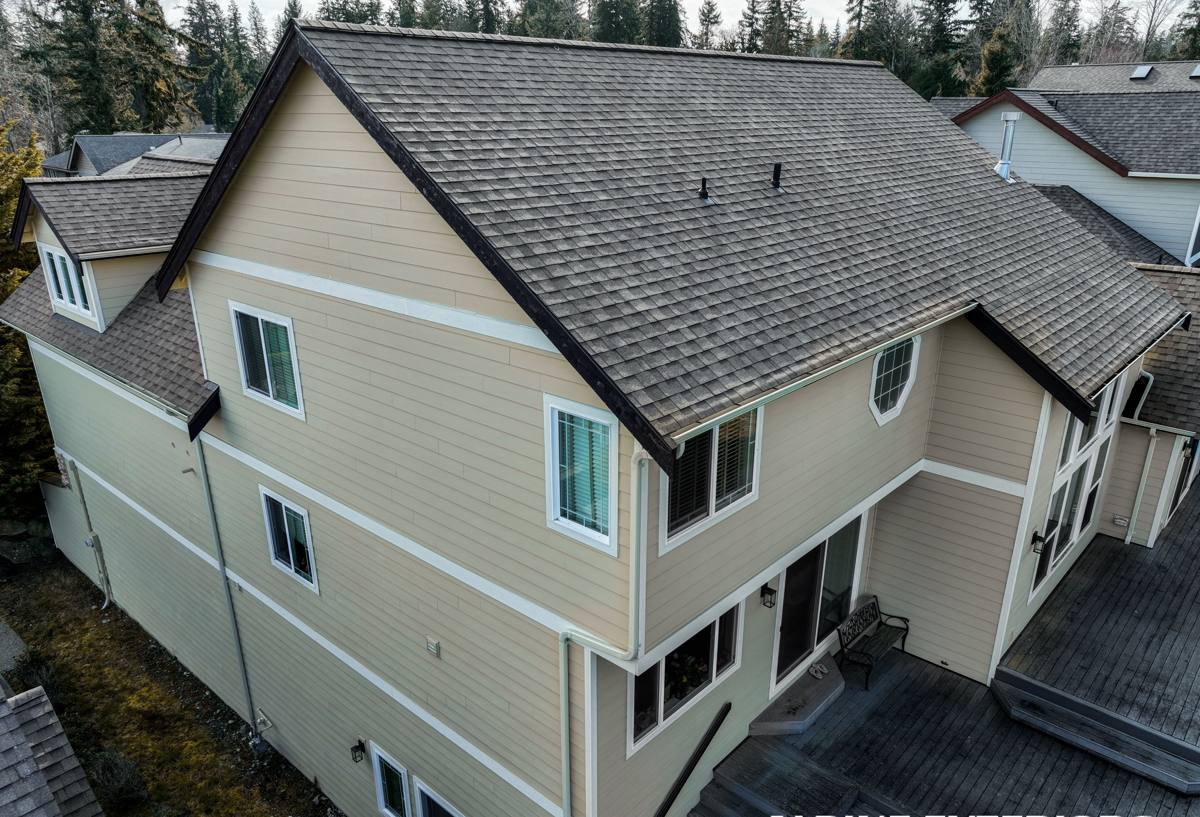
Signs a Sudden Valley Home Needs Replacement, Not a Patch
A lot of siding problems in this area get treated as cosmetic when they're actually structural. Caulking over a crack, painting over a soft spot, or pressure-washing off moss without addressing why it's growing there all buy a little time but don't solve anything. Replacement becomes the right call — rather than spot repair — when the damage has moved past the surface.
- Soft or spongy panels when you press on them, especially near the bottom courses or around window trim
- Persistent moss or algae staining that returns within weeks of cleaning
- Visible warping, buckling, or panels pulling away from the wall
- Paint that won't hold — bubbling, peeling, or repeated repainting every year or two
- Soft trim boards, especially at corners and under windows where water collects
- Musty smells or staining on interior walls that share an exterior wall with damaged siding
If you're only seeing one or two of these and they're localized, a repair might genuinely be enough. If several are showing up at once, or if a contractor pulls a panel and finds soaked sheathing underneath, that's a sign the whole wall system needs to come off and be done right.
What a Correct Siding Replacement Involves
Siding replacement isn't just swapping old panels for new ones. Done correctly, it's a full rebuild of the wall's moisture-management system, and skipping steps here is where most siding failures — regardless of brand — actually start.
Tear-Off and Inspection
Removing the old siding is also the only chance to see what's actually happening behind it. A proper job includes checking the sheathing for soft spots or rot, verifying the condition of the framing at window and door openings, and identifying any areas where previous flashing was missing or installed backward — a common issue on homes that have had informal repairs done over the years.
Water-Resistive Barrier and Flashing
The house wrap and flashing details matter more than the siding material itself. Every window, door, and penetration needs properly lapped flashing so water sheds down and out, never behind the barrier. In an area with driving rain, this step is not optional — it's the actual line of defense, with the siding as the second layer, not the first.
Fastening and Clearances
Fiber cement siding needs to be fastened according to the manufacturer's specification for the local wind and exposure zone, with the correct nail pattern, spacing, and depth. Ground clearance and gaps at trim and corners also need to be maintained so water can drain and air can circulate — tight-caulked, zero-clearance installations are a common cause of premature rot, even with a good product.
Why We Install Only James Hardie Fiber Cement
We standardized on James Hardie fiber cement siding for every home we side, including in Sudden Valley, and we don't install vinyl, LP SmartSide, or wood-based products like cedar or primed spruce. That's a deliberate call, not a default.
Vinyl can work loose or become brittle with age and temperature swings, and it doesn't hold paint if a homeowner ever wants a color change. Wood-based and engineered-wood products can perform well for a while, but they depend heavily on maintenance — sealing cut edges, repainting on schedule, and staying ahead of moisture — to avoid the swelling and rot that wood-based siding is naturally prone to in a wet, shaded climate. In an environment with this much moss season and driving rain, that maintenance burden is real, and it's the kind of thing that catches up with homeowners a few years in.
Fiber cement doesn't share those weaknesses. It's non-combustible, it doesn't expand and contract the way wood or vinyl does, and it holds a factory-applied finish designed to resist fading and cracking for decades rather than years. That's the trade-off we're comfortable putting our name behind.
Product Lines That Fit This Climate
James Hardie makes climate-engineered product lines specifically for different regions, and for Pacific Northwest exposure we spec products built for higher moisture and cooler, wetter conditions rather than a generic version. Combined with the ColorPlus factory finish — which is baked on rather than field-painted — homeowners get a color that's warranted against fading and doesn't need repainting on the same short cycle that wood or vinyl often does.
Our Process, Start to Finish
- Walkthrough and assessment: we look at the whole exterior, not just the section that looks bad, and check for hidden moisture issues around windows, trim, and grade level.
- Written estimate: a clear scope of work — what's being removed, what's being replaced, what happens to trim, flashing, and any rot repair.
- Tear-off and sheathing repair: old siding comes off, damaged sheathing or framing gets replaced, not covered up.
- Weather barrier and flashing: house wrap and flashing installed to current best practice, not just matched to what was there before.
- Hardie installation: panels, fasteners, and clearances installed to manufacturer spec for this exposure.
- Final walkthrough: we go over the finished work with the homeowner before calling the job done.
Cost Factors for a Sudden Valley Siding Replacement
Every home is different, and we don't quote sight-unseen, but the factors that move a siding replacement estimate up or down are consistent. Here's what typically drives cost on a job in this area:
| Factor | Why It Matters |
|---|---|
| Extent of hidden water damage | Sheathing and framing repair found during tear-off adds labor and material that can't be priced until the old siding is off |
| Home size and number of stories | More wall area and taller walls mean more material, more staging, and more labor time |
| Trim and detail complexity | Homes with more corners, dormers, or window trim take longer to flash and finish correctly |
| Access and site conditions | Tree cover, slope, and tight side yards common on wooded lots can slow staging and material handling |
| Siding profile chosen | Lap width, texture, and trim style affect material cost and installation time |
Why a Crew That Already Works Sudden Valley Matters
Every neighborhood has its own quirks — typical lot layout, common home styles, the way trees sit relative to walls, which sides of a house take the worst weather. A crew that's already worked in Sudden Valley isn't guessing at those things; they've seen where moss builds up fastest, where old flashing tends to have been done wrong, and what wall assemblies are common in the homes here. That familiarity shows up in fewer surprises during tear-off and a tighter, more accurate estimate up front.
It also matters for something less obvious: being a Ferndale-based crew means we're not driving in from out of the area for a one-off job and disappearing. If a question comes up after the work is done, we're local, and that's part of standing behind the work rather than just finishing it.
Caring for New Siding in This Climate
Fiber cement is low-maintenance compared to wood or vinyl, but "low-maintenance" isn't "no-maintenance," especially with this area's moss season. A yearly rinse to keep organic growth from taking hold, keeping gutters clear so water doesn't sheet down the wall face, and trimming back vegetation that keeps a wall shaded and damp all go a long way toward getting the full lifespan out of a new install. None of this is labor-intensive — it's the difference between a wall that stays clean for twenty-plus years and one that needs attention within a few.
Questions to Ask Before Hiring for This Job
- Will you inspect and repair sheathing found during tear-off, or just cover what's there?
- What house wrap and flashing details will you use around windows and doors?
- Is the siding manufacturer's fastening and clearance spec being followed for this exposure?
- What's actually included in the written estimate — trim, paint-matching, disposal of old material?
- Have you worked on homes in this neighborhood before, and what's typically different about them?
If a contractor can't answer these clearly, that's worth noticing before work starts, not after.
If your Sudden Valley home is showing moss buildup, soft trim, or siding that just isn't holding up the way it used to, we're happy to take a look. Reach out for a free, no-pressure estimate — no obligation, just a straight assessment of what your home actually needs.