 Ferndale Siding
 Why Sudden Valley Decks Take More Abuse Than Most
Sudden Valley sits in a part of Whatcom County that gets more moisture exposure than a typical inland neighborhood. The combination of salt-tinged coastal air, long stretches of driving rain through fall and winter, and a moss season that can stretch six months or more puts real, ongoing stress on any deck. Wood fibers swell and contract with every wet-dry cycle, fasteners corrode faster in salt-laden air, and shaded, tree-covered lots hold moisture against decking boards long after a storm has passed.
None of that means a deck in this area is doomed — it means it needs to be built and repaired with those conditions in mind, not treated the same way you'd treat a deck in a dry, open, low-humidity climate. A repair that looks fine on a sunny August afternoon can fail within a season if it doesn't account for what this climate does over the following winter.
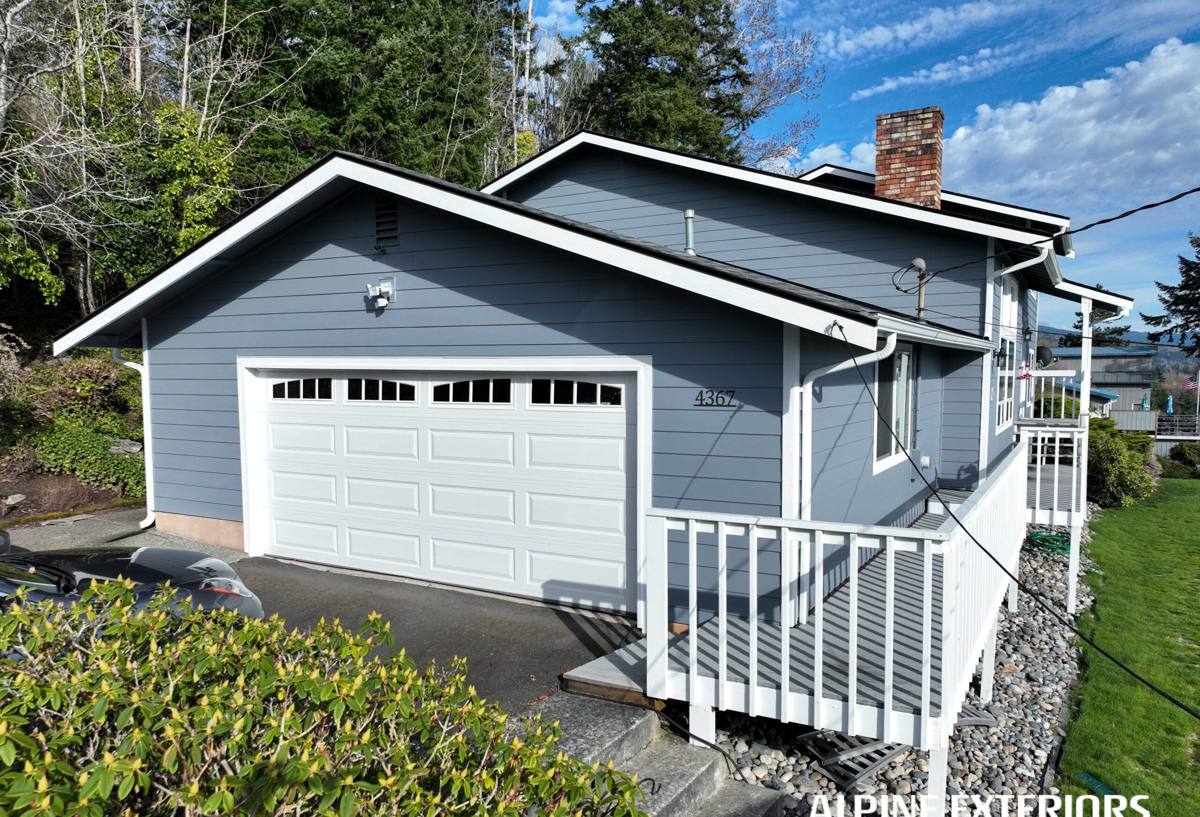
Signs Your Deck Needs Repair
Structural Warning Signs
These are the issues that affect safety, not just looks, and shouldn't wait:
- Soft, spongy, or bouncy spots when you walk across the deck
- Loose or wobbly railings and posts
- Visible gaps or separation where the deck meets the house (the ledger board connection)
- Rust streaks or crumbling around joist hangers and fasteners
- Stairs that flex, shift, or feel uneven underfoot
Cosmetic Issues That Aren't Just Cosmetic
Graying wood, surface mildew, and light moss growth are mostly cosmetic and can often be cleaned and sealed. But moss and algae that's been left to build up for a season or more starts holding moisture directly against the board surface, which accelerates rot underneath a stain that still looks intact from a few feet away. What looks like a cleaning job can turn into a board-replacement job if it's ignored through another wet winter.
| What You See | Likely Cause | Urgency |
|---|---|---|
| Deck feels springy near the house | Rotted ledger board or failed flashing | High — structural |
| Dark green film on boards, especially shaded areas | Moss/algae from prolonged moisture | Moderate — worsens over time |
| Rust stains around screws or nails | Corroding fasteners not rated for this climate | Moderate to high |
| Gaps opening between boards | Normal wood movement, or under-fastened decking | Low to moderate |
| Post base feels loose or spongy | Rot at ground contact or footing movement | High — structural |
What a Correct Deck Repair Actually Involves
A proper repair starts below the surface, not with swapping out the boards that look bad. We check the framing first — joists, beams, and posts — because a deck can have brand-new decking on top of a compromised structure underneath, and that's a repair that fails again within a year or two.
The Ledger Board Connection
Where the deck attaches to the house is the single most common failure point we find, and it's also the most safety-critical. Poor flashing at this joint lets water run behind the siding and into the framing over years of driving rain, hidden from view until the wood is already soft. Correcting this properly means pulling back the connection, replacing rotted framing, and installing flashing that actually sheds water away from the house — not just caulking over the problem.
Fasteners and Hardware
Salt-tinged marine air is hard on standard fasteners. We use hardware rated for corrosion resistance in coastal-adjacent climates, because a repair held together with the wrong screws or joist hangers just relocates the failure point a few years down the road.
Decking, Railings, and Stairs
Individual boards get replaced where they're rotted, split, or delaminating, not the whole deck if the framing is sound. Railings and stairs are checked against current code requirements for spacing and load, since older decks — especially ones built or last repaired years ago — sometimes predate the standards in place now.
Repair or Replace? How We Help You Decide
Not every deck problem calls for a full replacement, and not every deck is worth saving as-is. The honest answer depends on how much of the structure is still sound.
| Factor | Leans Toward Repair | Leans Toward Replacement |
|---|---|---|
| Framing condition | Joists and beams are solid, isolated damage | Widespread rot in structural framing |
| Age of deck | Under 15-20 years, well-built originally | Older, or built with undersized/outdated materials |
| Ledger connection | Flashing intact, minor fixes needed | Long-term water intrusion at the house connection |
| Footings/posts | Stable, properly set | Settling, shifting, or undersized for current code |
| Budget goals | Extend usable life at lower cost | Want a fresh layout, material upgrade, or long-term reset |
We'll tell you plainly if we think a repair is throwing money at a deck that's better off replaced — and just as plainly if we think a full tear-out is more than the deck actually needs.
Our Repair Process
1. On-Site Inspection
We check the framing, ledger connection, footings, fasteners, and decking surface — not just the parts that are visibly damaged. Rot often extends further than it appears from the top.
2. Written Scope and Straight Talk on Cost
You get a clear explanation of what's actually wrong, what needs to happen to fix it correctly, and what it will cost — including whether we think repair or replacement is the better long-term move for your situation.
3. The Repair Work
Damaged framing, boards, and hardware are replaced with materials suited to this climate. Flashing at the house connection gets corrected if it's contributing to the problem, not just patched around.
4. Protection Going Forward
Where it applies, we'll clean and seal exposed wood surfaces and talk through what regular upkeep looks like for your specific deck, so the repair actually holds up through the next several wet seasons instead of needing revisiting in a year.
Materials: What We Use and Why
Framing lumber is pressure-treated for ground and moisture contact — this isn't optional in a climate that stays wet for months at a stretch. For visible decking and railings, homeowners generally choose between a few paths:
- Pressure-treated lumber — the most budget-friendly option, but it needs regular cleaning and re-sealing to hold up against moss and driving rain, and it will show wear faster if that maintenance gets skipped.
- Cedar — naturally more rot- and insect-resistant than most softwoods, with a warmer look, but still needs periodic sealing and isn't maintenance-free in this climate.
- Composite decking (brands like Trex and TimberTech are common examples) — higher upfront cost, but resists moisture absorption and moss staining far better than wood, which matters a lot for shaded, wooded lots. It still needs occasional cleaning, and the substructure underneath still has to be built correctly — composite boards don't fix a bad frame.
We'll walk through the honest trade-offs — upfront cost, maintenance burden, and how each material actually behaves in a wet, shaded, coastal-influenced climate — rather than pushing whatever's easiest for us to install.
Maintenance That Extends the Repair's Life
A good repair job can be undone by a few seasons of neglect. This list covers what actually matters in this climate:
- Sweep leaves and debris off the deck regularly, especially in fall — trapped organic matter holds moisture and feeds moss
- Clean visible moss and algae before it builds up a season's worth of growth
- Check and re-seal or re-stain wood decking every 1-3 years, depending on sun/shade exposure
- Keep gutters and downspouts near the deck clear so runoff isn't draining directly onto it
- Inspect the ledger board area at the house connection once a year for gaps, staining, or soft wood
- Tighten or replace any fasteners showing rust before it spreads into the surrounding wood
Why It Matters to Hire a Crew That Already Works in Sudden Valley
Wooded, lake-adjacent lots like the ones common throughout Sudden Valley create their own microclimate — more shade, slower drying after rain, and heavier moss pressure than a deck out in the open a few miles away. A crew that's worked in this specific area knows to look harder at shaded framing and ground-contact posts, because that's where problems tend to show up first here.
Communities like Sudden Valley also often have their own association guidelines around exterior work, which can affect timelines and what needs sign-off before work starts. Knowing that going in — rather than discovering it mid-project — keeps things moving instead of stalling out on paperwork nobody expected.
Beyond the practical side, it also means an honest assessment. We're not guessing at how this climate treats a deck over time — we're telling you what we've actually seen hold up and what hasn't, specific to lots like yours.
What Affects the Cost of Deck Repair
Costs vary a lot depending on scope, so we won't quote a number without seeing the deck. In general, the price is driven by how much structural framing needs replacement versus surface-level board and railing work, the material you choose for visible decking, and how much of the ledger connection needs to be corrected. Small, isolated repairs — a handful of boards, a loose railing section — sit at the lower end. Anything involving framing, footings, or the house connection runs higher because it's labor-intensive work that has to be done right the first time.
If your deck in Sudden Valley is showing any of the signs above, or you just want an honest read on how much life it has left, we're glad to take a look. Fill out the form below for a free, no-pressure estimate — we'll tell you what we actually find, not just what's easiest to sell.